
Johari Window Explained: The Definitive Guide to Self-Awareness
Johari Window explained: Discover the four quadrants, why self-awareness matters, and how to use this model to reveal blind spots and improve relationships.


Estimated reading time: 7 min
The Johari Window is a psychological model that explains self-awareness by mapping how we see ourselves versus how others see us, using four key quadrants: open, blind spot, hidden, and unknown. It reveals the gaps—our 'blind spots'—between our self-perception and how others perceive us, providing a practical framework for personal growth, stronger relationships, and better communication.
Key Takeaways
- The Johari Window maps self-awareness using four quadrants: open, blind spot, hidden, and unknown.
- It helps uncover discrepancies between self-perception and others’ perceptions—known as psychological blind spots.
- Developed by Joseph Luft and Harrington Ingham in 1955, it’s a foundational tool in psychology and leadership.
- Regular feedback and self-disclosure expand your open area, improve trust, and boost self-awareness.
Johari Window Explained: What It Is and Why It Matters
The Johari Window is a simple yet powerful framework for understanding self-awareness and interpersonal dynamics. It illustrates how information about ourselves is divided between what we know, what others know, and the unknown. Self-awareness—knowing your strengths, weaknesses, motives, and how you’re perceived—is crucial for personal growth, emotional intelligence, and effective relationships.
Why is self-awareness important? Research shows that high self-awareness leads to better decision-making, communication, and leadership. Conversely, signs of low self-awareness include misunderstanding social cues, defensiveness, and repeated interpersonal conflicts.
Origin: Joseph Luft and Harrington Ingham, 1955
The Johari Window model was created in 1955 by psychologists Joseph Luft and Harrington Ingham. The name "Johari" blends their first names. Their goal: help people better understand themselves and improve group dynamics by making the invisible—your blind spots—visible. Since then, the Johari Window has become a classic tool in psychology, counseling, executive coaching, and team building.
The Four Quadrants of the Johari Window
The window is divided into four quadrants, each representing different aspects of self-awareness:
- Open (Arena): Known to self and others. These are traits, feelings, and behaviors you recognize in yourself and others see too.
- Blind Spot: Known to others but not to self. This is where your friends or colleagues notice things about you that you don’t realize—your psychological blind spots.
- Hidden (Facade): Known to self but not to others. Aspects you keep private, such as insecurities or personal goals.
- Unknown: Unknown to both self and others. Untapped potential, subconscious motives, or experiences yet to surface.
For a deeper dive, see our full Johari Window Test guide.
How the Johari Window Works: Self-Disclosure and Feedback
The Johari Window grows or shrinks each quadrant based on two activities:
- Self-disclosure: Sharing information about yourself moves content from the hidden to the open area, building trust.
- Feedback: Receiving honest feedback from others reveals your blind spots, expanding your open area and improving external self-awareness.
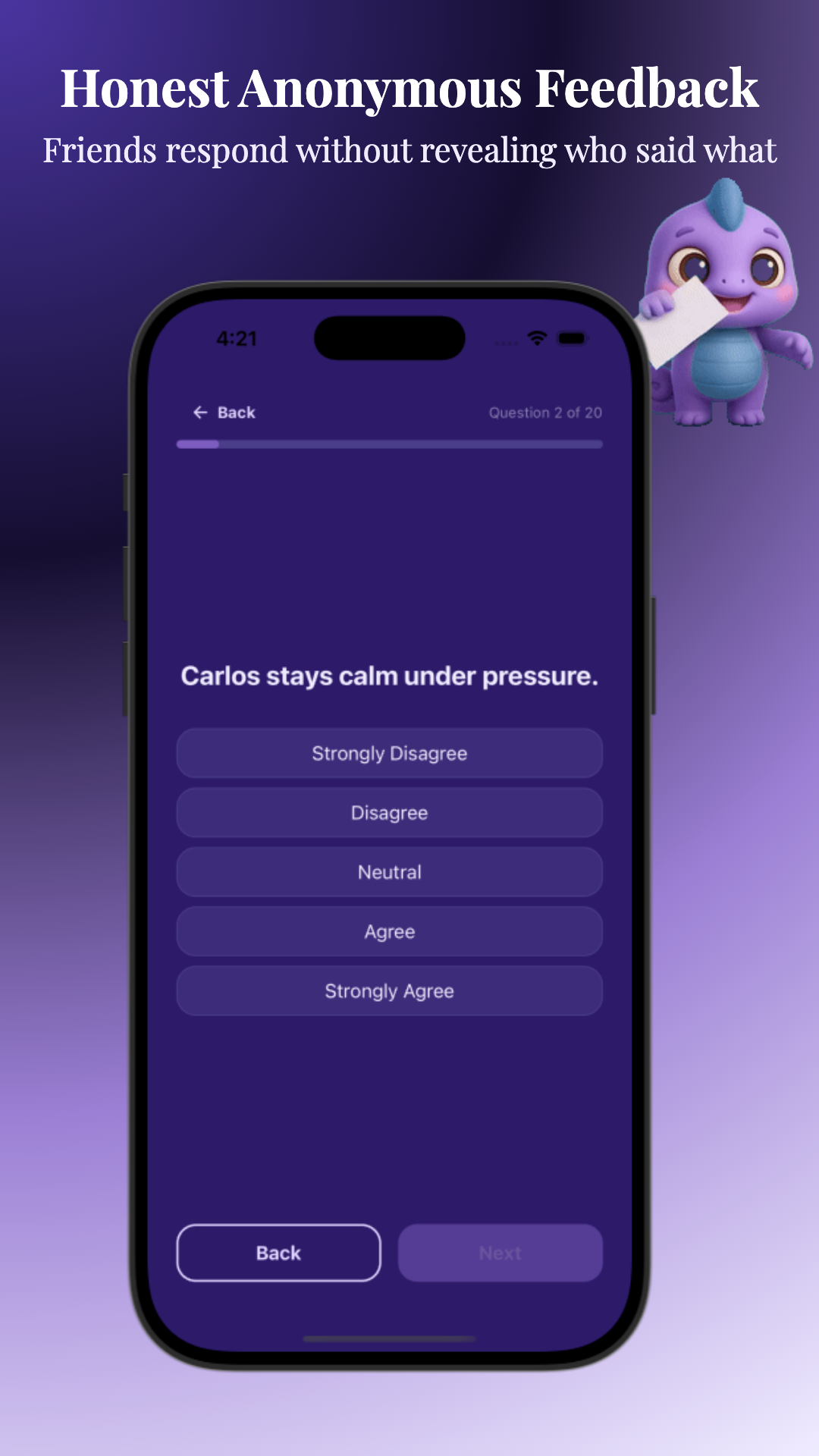
Apps like Blindspot make this process easy and safe, letting friends anonymously answer questions about you to uncover blind spots you might never notice on your own. Try a practical exercise with our Johari Window Questionnaire or the What My Friends Think of Me Quiz to start your journey.
Using the Johari Window for Teams, Leadership, and Growth
In teams and leadership settings, the Johari Window encourages open communication, trust, and psychological safety. Leaders who invite feedback and model self-disclosure create more transparent and effective organizations. Team exercises often involve sharing adjectives or feedback to grow the open quadrant and reduce misunderstandings. This process helps everyone spot and address low self-awareness, improving both internal and external self-awareness.
To uncover your own blind spots and understand how friends shape your self-image, see: How Friends Shape Our Self-Image.
Step-by-Step: The Johari Window Exercise
Here’s how you can use the Johari Window to become more self-aware:
- Pick a set of adjectives (e.g., friendly, decisive, cautious).
- Choose those you feel describe you.
- Ask friends or colleagues to select which adjectives describe you from their perspective (anonymously, if possible).
- Compare the results: overlaps are your open area; adjectives others pick but you don’t are your blind spots; those you pick but others don’t are your hidden area.
Apps like Blindspot streamline this process, giving you AI-powered insights and a clear path to self-awareness. You can also try our guide to personality blind spots for more on understanding the gaps in self-perception.
FAQ
Q: What are the 4 quadrants of the Johari Window?
A: The four quadrants are Open (known to self and others), Blind Spot (known to others but not self), Hidden (known to self but not others), and Unknown (unknown to both self and others).
Q: How do you use the Johari Window exercise?
A: Select personal traits, have friends or colleagues do the same for you, and compare the overlaps and differences to identify your open area, blind spots, and hidden traits. Tools like Blindspot or online questionnaires make this process easier and more insightful.
Q: What is an example of the Johari Window in real life?
A: If you think of yourself as calm but your friends see you as anxious, that trait sits in your blind spot. By receiving feedback and discussing perceptions, you can move this insight into your open area and grow from it.
Q: Who created the Johari Window and when?
A: The Johari Window was created by Joseph Luft and Harrington Ingham in 1955 as a model to improve self-awareness and group dynamics.
Q: How does the Johari Window improve self-awareness?
A: It helps you discover discrepancies between your self-perception and how others see you, revealing blind spots and prompting personal growth through feedback and open communication.
Q: What is the blind spot in the Johari Window?
A: The blind spot is the area of your personality that others see but you don't recognize in yourself. Revealing and addressing these blind spots is key to becoming more self-aware.