Charisma Test: Discover Your Natural Charisma and Boost Your Influence
Take a free charisma test to evaluate your charm, confidence, and influence. Learn how to improve your charisma with practical tips and insights.


Estimated reading time: 17 min
Key Takeaways
- A charisma test measures your charm, confidence, influence, communication skills, and interpersonal connection in a structured way.
- Core charisma dimensions include presence, power, warmth, and authenticity, with an expanded six-domain framework offering a nuanced understanding of social and emotional dynamics.
- Social skills such as emotional expressivity, empathy, social initiative, adaptability, and confident communication are closely linked to higher charisma levels.
- Identifying your charisma style—whether leadership, social magnetism, persuasion, or seduction—enables targeted personal growth strategies.
- Practical improvement tips include mastering active listening, reading emotional cues, cultivating confident and clear communication, building self-confidence through incremental goals, and adapting socially to different contexts.
- Leveraging tools like Blindspot that incorporate anonymous peer feedback provides unique insight into your external charisma perception and blind spots.
Table of Contents
- Section 1: Understanding Charisma and Its Core Dimensions
- Section 2: The Six-Domain Charisma Framework Explained
- Section 3: Social Skills Linked to Charisma
- Section 4: Taking a Charisma Test – What to Expect
- Section 5: Interpreting Your Charisma Test Results and Scores
- Section 6: Different Types of Charisma and How They Manifest
- Section 7: Practical Ways to Improve Your Charisma
- Conclusion
- FAQ
Section 1: Understanding Charisma and Its Core Dimensions
What Is Charisma?
Charisma can be defined as a compelling charm or attractiveness that enables an individual to influence and inspire others effortlessly. It's often perceived as an invisible magnetism, but it's actually a composite of several psychological and behavioral traits that together create an engaging presence. This quality transcends mere charm or self-confidence—it involves an intricate balance of emotional intelligence, authenticity, and interpersonal effectiveness.
In both personal and professional settings, charisma is a critical factor for building rapport, fostering trust, and motivating others. For example, charismatic leaders in organizations often have higher employee engagement levels and can drive change more effectively because their presence encourages buy-in and enthusiasm.
Key Components of Charisma
At its core, charisma blends several qualities seamlessly. Understanding each component helps demystify what makes someone charismatic and highlights areas for development:
- Charm: This is the likability factor. It includes friendly body language, genuine smiles, and a warm demeanor that puts others at ease. For instance, a person who remembers names and personal details creates a charming impression that fosters connection.
- Confidence: Confidence is the belief in one’s abilities and value. It is often conveyed through steady eye contact, relaxed posture, and assertive speech. Someone who confidently shares ideas without hesitation naturally draws attention and respect.
- Influence: Influence is the capacity to affect others’ attitudes, beliefs, or behaviors. Charismatic individuals often use storytelling, persuasion, and emotional appeal to shape opinions effectively.
- Communication: This encompasses both verbal and nonverbal expression. Clear articulation, engaging tone, and congruent body language contribute to impactful communication.
- Interpersonal Connection: Genuine empathy and warmth allow a person to build trust and rapport quickly. This often manifests as active listening, validating others’ feelings, and responding with appropriate emotional cues.
Core Charisma Dimensions
Psychological research identifies four essential dimensions that underpin charisma. These dimensions are not isolated; rather, they dynamically interact to create the distinct presence of each charismatic individual.
- Presence (or attention): This refers to being fully engaged in the moment and making others feel truly heard and valued. For example, a charismatic speaker commands the room’s focus not by volume but by authenticity and attentiveness.
- Power (or confidence): This is the ability to convey strength and control without appearing domineering or intimidating. It involves a balance where one asserts influence while remaining approachable.
- Warmth (or empathy): Warmth is the demonstration of kindness, understanding, and genuine care. It softens power and presence, making charisma relatable and comforting.
- Authenticity: Being genuine and consistent with your values is crucial. Authenticity builds trust because people sense when someone is sincere rather than performative.
For example, a political leader exhibiting all four dimensions can inspire confidence (power), connect emotionally with citizens (warmth), engage fully during speeches and debates (presence), and maintain integrity (authenticity), thereby amplifying their charisma.
Section 2: The Six-Domain Charisma Framework Explained
Overview of the Six Domains
While the four dimensions provide a foundational understanding, the six-domain framework offers a more granular approach by dissecting charisma into distinct social and emotional domains. Mastery across these domains enhances your ability to project charisma effectively.
- Attention: The skill to capture and sustain others’ focus. This includes eye contact, engaging storytelling, and presence in conversations. For instance, using vivid imagery and pauses in speech can hold an audience’s attention longer.
- Meaning: The capacity to communicate a compelling message or purpose that resonates. This involves aligning your words, values, and actions to create coherence. Leaders who articulate a clear vision exemplify this domain.
- Trust: Building reliability and credibility so others feel safe to engage and follow. Demonstrating consistency, honesty, and transparency fosters trust. For example, admitting mistakes openly can increase trustworthiness.
- Self: Maintaining a strong and confident self-image. This includes self-awareness and self-regulation, which manifest as calmness under pressure and genuine self-assuredness.
- Risk: The willingness to be vulnerable or take social risks. Sharing personal stories or opinions that might not be popular can increase authenticity and deepen connection.
- Feelings: Expressing emotions appropriately to create emotional resonance. Using facial expressions, tone modulation, and empathetic responses enhances emotional connection.
Why These Domains Matter
Each domain plays a distinct role in shaping how others perceive your charisma:
- Attention ensures you are noticed and remembered, which is the first step in influence.
- Meaning provides substance and motivation behind your interactions, making your presence purposeful.
- Trust establishes a foundation for deeper relationships and influence.
- Self confidence projects competence and anchors your charisma in authenticity.
- Risk taking signals courage and openness, which humanizes you and invites reciprocal vulnerability.
- Feelings create emotional bonds that resonate beyond words, fostering loyalty and affection.
For instance, a charismatic public speaker often combines compelling meaning with emotional expressivity (feelings), while maintaining trustworthiness and presence to engage the audience fully.
Applying the Framework
Using the six-domain model allows you to pinpoint exact areas to develop. For example, if you excel at capturing attention and projecting confidence but struggle with expressing feelings or taking social risks, your charisma might feel strong but somewhat distant or unrelatable.
To improve, you might practice sharing small personal anecdotes in conversations or showing empathy through verbal and nonverbal cues. Over time, strengthening weaker domains results in a more balanced and authentic charisma.
Assessments like Blindspot incorporate such frameworks to provide multi-dimensional feedback, enabling targeted growth strategies.
Section 3: Social Skills Linked to Charisma
Emotional Expressivity
Charismatic people often convey their emotions clearly and vividly. This includes using facial expressions like genuine smiles or raised eyebrows to emphasize points, gestures that complement speech, and vocal variations in tone, pitch, and pace. For example, a speaker who modulates their voice to convey excitement or concern will draw listeners in more effectively than a monotone presenter.
Such expressivity not only transmits feelings but also signals sincerity, making others more receptive and emotionally engaged.
Social Initiative
Taking the lead in social settings—such as initiating conversations, suggesting group activities, or proposing ideas—is a common trait among charismatic individuals. This proactive behavior demonstrates confidence and a willingness to engage, encouraging others to follow their lead.
For example, in a networking event, a charismatic person might approach strangers with open body language and start interesting discussions, thereby becoming a social magnet within the group.
Empathy and Adaptability
Empathy involves accurately perceiving and understanding others' emotions, while adaptability is the skill of adjusting your behavior and communication style to fit different social contexts. Together, these create smooth, comfortable interactions that feel natural rather than forced.
For instance, recognizing when someone needs encouragement versus a moment of humor, and tailoring your response accordingly, enhances your interpersonal effectiveness and charm.
Confidence
Confidence is fundamental but must be balanced to avoid arrogance. It manifests as calmness, assertive posture, and clear speech. Confident individuals make decisions decisively and maintain composure under stress, signaling competence.
Research shows that people tend to trust and follow those who appear confident, especially in leadership roles.
How These Skills Interact
These social skills are interdependent and collectively amplify charisma. For instance, emotional expressivity combined with empathy allows you to connect emotionally, while social initiative and confidence enable you to lead interactions. Adaptability ensures you modulate these traits as appropriate, making your charisma versatile across different settings.
Developing these skills often involves deliberate practice, feedback, and reflection—areas where tools like Blindspot’s peer feedback can be invaluable.
Section 4: Taking a Charisma Test – What to Expect
What Is a Charisma Test?
A charisma test is a structured assessment designed to measure your natural charisma by evaluating various dimensions such as social behavior, emotional skills, and interpersonal traits. These tests use a combination of self-reported questionnaires and sometimes external feedback to form a comprehensive picture.
Most charisma tests aim to quantify traits like presence, warmth, confidence, and authenticity, often providing scores or profiles to help you understand your strengths and areas for improvement.
Free Online Charisma Self-Assessment
Many online platforms offer free charisma assessments that typically take between 10 and 15 minutes to complete. These tests usually include 20 to 50 questions probing your typical reactions in social situations, emotional expressiveness, and communication habits.
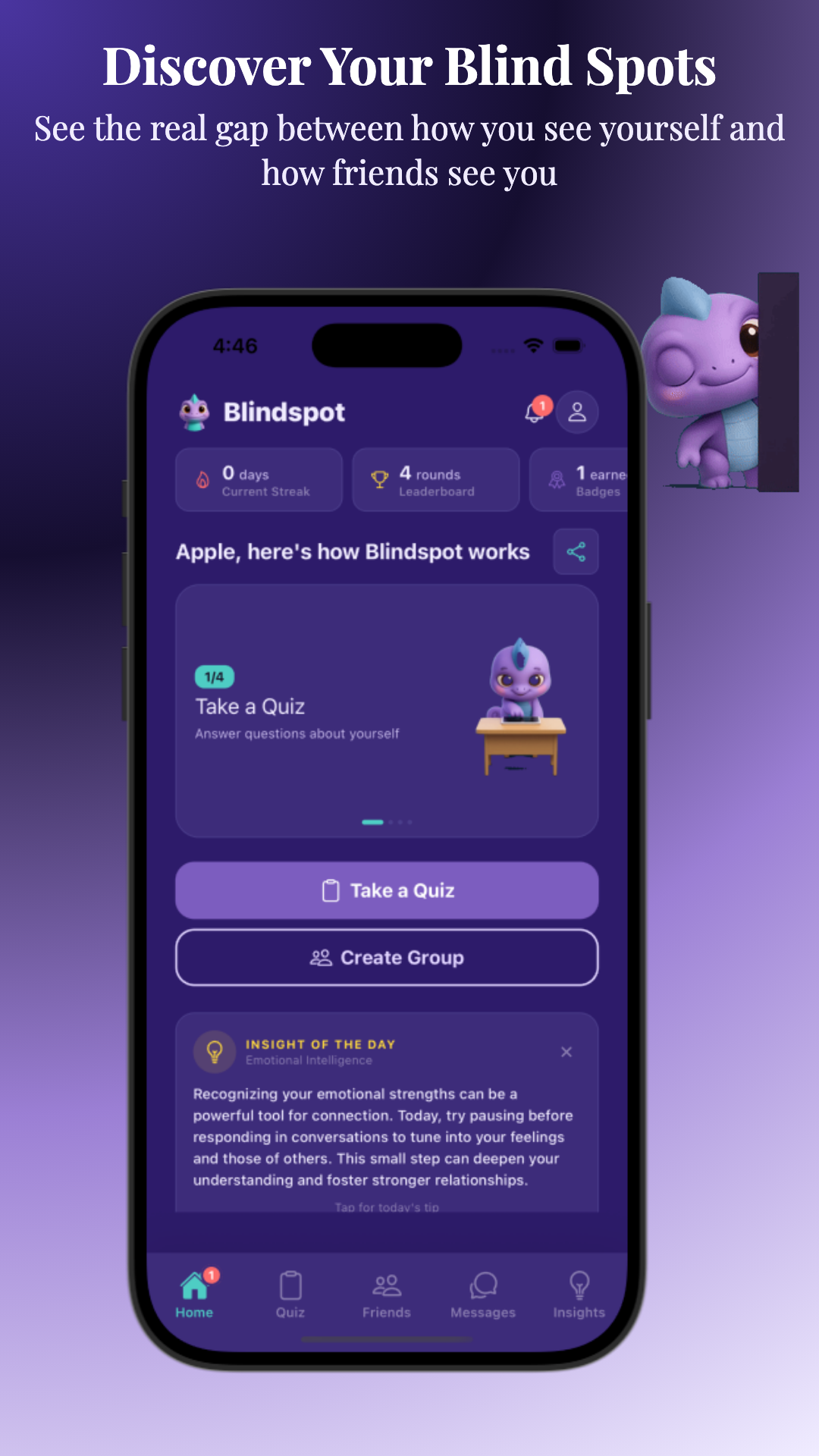
For example, Blindspot offers a distinctive approach by not only collecting your self-assessment but also gathering anonymous feedback from your friends. This peer input reveals how your charisma and social presence are perceived externally, which can be more accurate and insightful than self-evaluation alone.
Test Methodology and Privacy
- Questions are carefully designed to cover multiple charisma dimensions, including presence, warmth, confidence, and authenticity.
- Tests vary in methodology: some rely solely on self-reporting measures, while others, like Blindspot, incorporate peer feedback to enhance validity.
- Scoring systems typically provide an overall charisma score, with breakdowns for specific traits or domains, enabling detailed insights.
- Privacy is a key focus: feedback is often anonymous, personal data is encrypted and protected, and platforms usually comply with data protection regulations such as GDPR.
- It's important to recognize limitations: charisma tests are generally not clinically validated or diagnostic tools but serve as self-awareness and developmental aids.
When choosing a charisma test, consider one that offers multi-dimensional feedback and respects your privacy, such as Blindspot.
Section 5: Interpreting Your Charisma Test Results and Scores
Understanding Your Score
Charisma test scores are usually presented on a spectrum rather than a binary "charismatic" or "not charismatic" label. These scores illuminate your relative strengths and weaknesses across different charisma dimensions.
For example, a total score might be out of 100, with sub-scores for presence, warmth, confidence, and authenticity. A person scoring 80 overall with high presence and warmth but moderate confidence can identify specific areas to target.
Identifying Strengths and Weaknesses
- High Presence but Low Warmth: You command attention and engage others effectively but may come across as distant or unapproachable. Working on empathy and approachability, such as through active listening and softer body language, can enhance your warmth.
- Strong Warmth and Authenticity but Low Power: You are kind and genuine, but may lack assertiveness or influence. Building self-confidence through preparation and positive self-talk can improve your power domain.
- Balanced Scores: You exhibit a well-rounded charisma profile, which can be refined by enhancing weaker domains to increase overall impact.
For example, a feedback report from Blindspot might reveal that while you see yourself as confident, friends perceive you as hesitant in group settings, highlighting a blind spot to address.
Using Results for Growth
Test results are most valuable when used for targeted personal development. Identifying blind spots—differences between self-perception and others’ views—can transform your growth strategy by focusing on overlooked areas.
For instance, if results indicate low scores in risk-taking or emotional expressivity, you might practice sharing more personal stories or experimenting with varied vocal tone.
Complementary tools like the Johari Test expand self-awareness by revealing how you are perceived by others compared to your self-view, deepening understanding of your interpersonal impact.
Section 6: Different Types of Charisma and How They Manifest
Leadership Charisma
Leadership charisma is marked by decisiveness, vision, and the ability to inspire collective action. Such individuals often project confidence, convey clear purpose, and exhibit emotional resilience under pressure.
Examples include historical figures like Martin Luther King Jr. or contemporary CEOs who articulate compelling visions and mobilize teams effectively. Their charisma stems from combining power with presence and authenticity.
Social Magnetism
Individuals with social magnetism attract others effortlessly through warmth, humor, and ease in social settings. They excel at making people feel comfortable, valued, and included.
Social magnets often have a rich repertoire of social skills, including active listening, empathetic responses, and engaging storytelling. Think of popular hosts or community organizers who naturally draw diverse groups together.
Persuasive Communication
This charisma type centers on influencing others through compelling storytelling, clarity, and emotional appeal. Persuasive communicators are skilled at framing messages that resonate with audiences’ values and desires.
Politicians, salespeople, and advocates often exemplify this charisma, using rhetoric and emotional intelligence to shift opinions and motivate behavior.
Seducer’s Charisma
Focused on attraction and emotional connection, seduction charisma combines charm, mystery, attentiveness, and emotional sensitivity to create deep interpersonal allure.
This type is characterized by subtle cues such as flirtatious body language, strategic vulnerability, and emotional attunement. While often associated with romantic contexts, its principles apply broadly to building trust and intimacy.
Why Knowing Your Charisma Type Matters
Identifying your dominant charisma style helps you leverage innate strengths and develop complementary skills. For example, a leader might benefit from cultivating warmth to connect more deeply with their team, while a persuasive communicator might enhance presence through improved body language.
Moreover, understanding different charisma types can help you adapt your style to contexts, making your influence more effective and authentic.
Section 7: Practical Ways to Improve Your Charisma
Active Listening
Active listening is a cornerstone of presence and warmth. To practice it effectively:
- Focus fully on the speaker, minimizing distractions such as phones or wandering thoughts.
- Use nonverbal cues like nodding, maintaining eye contact, and leaning slightly forward to show engagement.
- Ask clarifying questions that demonstrate understanding and interest, such as "Can you tell me more about that?"
- Paraphrase or summarize points to confirm comprehension, e.g., "So what you’re saying is..."
These steps foster trust and make others feel valued, enhancing your charisma.
Reading Emotions
Develop emotional intelligence by honing your ability to read subtle cues:
- Observe facial expressions: microexpressions like fleeting frowns or smiles reveal genuine feelings.
- Listen to tone and pace: hesitation, volume changes, or voice cracks often signal underlying emotions.
- Notice body language: crossed arms may indicate defensiveness, while open posture suggests receptivity.
By accurately interpreting these signals, you can tailor your responses empathetically, deepening connection and adaptability.
Communicating Clearly and Confidently
Effective communication involves clarity, confidence, and congruent body language. To improve:
- Practice speaking at a moderate pace with varied intonation to maintain interest.
- Use simple, concrete language to avoid confusion.
- Maintain an upright posture and make purposeful gestures.
- Prepare key points in advance to reduce hesitation.
- Use positive self-affirmations to build speaking confidence.
With consistent practice, these techniques increase your influence and presence.
Building Self-Confidence
- Set achievable social goals, such as initiating a conversation with a new colleague once a week, and celebrate each success to build momentum.
- Challenge negative self-talk by reframing thoughts: replace "I’m awkward" with "I’m learning and improving."
- Engage in activities that highlight your strengths, such as public speaking clubs, volunteer leadership roles, or creative pursuits.
This gradual approach fosters genuine confidence that underpins charismatic behavior. For a comprehensive approach to building confidence and charm, consider exploring our complete guide to charisma and confidence.
Adapting Socially
Flexibility is key to connecting with diverse audiences. To adapt effectively:
- Observe social cues and adjust your tone, language, and energy accordingly.
- Modulate formality depending on the context, such as using more casual language in informal settings.
- Respect cultural differences in communication styles and expressions.
- Be willing to shift conversational topics based on others’ interests and reactions.
Social adaptability increases trust and influence by making interactions feel personalized and comfortable.
Leveraging Feedback
Constructive feedback is vital for uncovering blind spots and guiding improvement. Platforms like Blindspot facilitate anonymous feedback collection from friends, providing insights into how your charisma is perceived externally.
Use this feedback to identify discrepancies between self-perception and others’ views. For example, if friends note you appear less confident in group settings than you feel, you can target this area with practice and coaching.
Blindspot’s AI-driven analysis offers personalized growth plans based on your unique profile, making charisma development systematic and measurable.
Conclusion
Charisma is a multifaceted and dynamic quality that emerges from a blend of presence, confidence, warmth, and authenticity. Understanding charisma through frameworks such as the four core dimensions and the six-domain model provides a structured way to assess and enhance your social impact.
Taking a charisma test or a do I have charisma quiz can yield valuable insights into your natural strengths and highlight areas for growth. Recognizing your dominant charisma style—whether leadership, social magnetism, persuasive communication, or seduction—enables you to tailor your development efforts effectively.
Improving charisma requires intentional and sustained practice. Techniques such as active listening, emotional intelligence, clear and confident communication, social adaptability, and leveraging honest feedback are practical strategies to increase your influence and interpersonal effectiveness.
Tools like Blindspot uniquely empower you by revealing how others truly perceive you, uncovering blind spots, and guiding your journey to becoming a more influential, authentic, and self-aware individual. For deeper insight into your social connections and how they affect your charisma, our guide to understanding your friendships offers valuable perspectives.
FAQ
Q: What is a charisma test and what does it measure?
A: A charisma test evaluates qualities such as charm, confidence, communication skills, interpersonal connection, and influence. It measures core dimensions like presence, warmth, power, and authenticity to reveal your natural charisma level, often providing sub-scores for nuanced feedback.
Q: How can I tell if I am charismatic?
A: Charismatic people tend to attract attention easily, make others feel valued, communicate clearly, and inspire trust. Taking a charisma test or quiz can help you objectively assess these traits, supplemented by honest feedback from friends or colleagues.
Q: What are the signs of a charismatic person?
A: Signs include strong emotional expressivity, social initiative, empathy, confidence, adaptability, and the ability to influence others positively through authentic communication and presence.
Q: Can charisma be learned or improved?
A: Yes, charisma is not solely innate. Through practicing active listening, reading emotions, clear communication, building confidence, and social adaptability, anyone can enhance their charisma intentionally and measurably.
Q: What are the different types of charisma?
A: Common types include leadership charisma, social magnetism, persuasive communication, and seduction charisma, each with unique behavioral patterns and social functions that can be developed and adapted.
Q: How accurate are online charisma tests?
A: While helpful for self-awareness, online charisma tests have limitations and are not clinically validated. Combining self-assessment with anonymous peer feedback, like through Blindspot, improves accuracy and provides richer insights.
Free to start
Try the Blindspot app
Everything in this guide, in your pocket.
Get it on iPhoneGet it on Android