Why Friends See Us Differently: Uncovering the Gap in Self-Perception
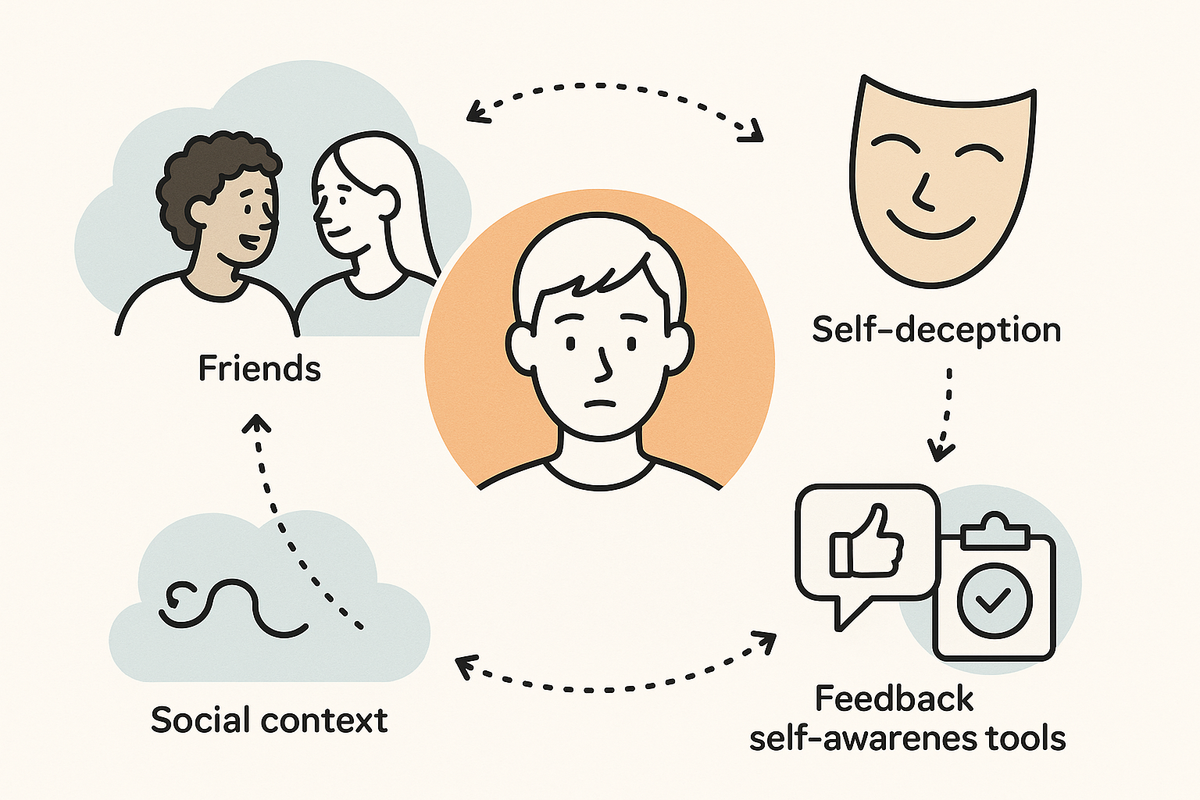
Explore why friends see us differently, the role of self-deception, social context, and how to bridge the gap with feedback and self-awareness tools.

Estimated reading time: 13 min
Key Takeaways
- Friends see us differently because they observe our repeated behavior across contexts—not just our intentions.
- Self-deception and blind spots cause a gap between self-image and how others perceive us.
- Social circles, group dynamics, and context shape the version of ourselves we present.
- Feedback from friends can reveal hidden patterns and help us grow more self-aware.
- Tools like Blindspot enable honest feedback and actionable insights for personal growth.
Table of Contents
- Section 1: The Psychology Behind Why Friends See Us Differently
- Section 2: The Role of Self-Deception and Blind Spots
- Section 3: Intentions vs. Actions—The Core of Perception Gaps
- Section 4: How Different Social Circles Bring Out Different Sides
- Section 5: Conflict, Mixed Signals, and the Roots of Misunderstanding
- Section 6: Closing the Gap—Practical Steps for Self-Awareness
- Conclusion
- FAQ
Section 1: The Psychology Behind Why Friends See Us Differently
How Perceptions Are Formed
Our friends’ perceptions of us are shaped by a rich tapestry of moments, memories, and shared experiences. Unlike our own self-image, which is often rooted in internal thoughts, intentions, and selective recollections, friends base their impressions on observable behavior—what we actually do and say in their presence. This difference is the foundation for why friends see us differently and why their feedback can be both surprising and illuminating.
- Observational Variation: Friends see us in various situations—happy, stressed, relaxed, or under pressure—leading to a more rounded, but sometimes fragmented, impression.
- Consistency vs. Selectivity: While we may focus on our best moments or our intentions, friends remember patterns of behavior across time.
- Context-Driven Judgments: The context in which behavior is observed (e.g., in a group vs. one-on-one) heavily influences perception.
For example, you might perceive yourself as generally calm, but if your friends repeatedly see you lose your temper during group projects, their impression will differ. They may not be privy to the internal dialogue or stress you are managing, causing a divergence in perception.
The Social Mirror Effect
Research shows that we all see ourselves through a kind of social mirror—an internal model shaped by how we imagine others see us. But because we lack access to their full, unfiltered thoughts, this mirror is often warped. Friends, on the other hand, may not know our internal struggles or motivations, so their view is based solely on what’s outwardly visible.
This social mirror is influenced by feedback, social cues, and even silence. For instance, if friends consistently laugh at your jokes, you may view yourself as funny, but you might miss the times when your humor falls flat. The absence of laughter or a polite smile can subtly shape your self-concept, even if it goes unspoken.
Comparing Self-Perception and Peer Perception
Studies using tools like the Johari Window (learn more about the Johari Window Test) demonstrate that blind spots—traits known to others but not to ourselves—are common. These gaps fuel misunderstandings and can both hinder and help our growth, depending on how we approach them.
For example, in a group exercise where participants label each other with adjectives, it’s not uncommon for people to be surprised by the traits others assign to them—sometimes positive, sometimes negative. This reveals how much of our personality is visible only in the eyes of others, and why soliciting feedback is so important for a balanced self-understanding.
The Johari Window model highlights four quadrants: open, blind, hidden, and unknown. The 'blind' area—what others see but we do not—is ripe for growth when illuminated. Regularly seeking feedback can help shrink these blind spots, leading to more congruent self and peer perceptions.
Section 2: The Role of Self-Deception and Blind Spots
Understanding Self-Deception
Self-deception is a natural psychological defense. It helps us maintain a positive self-view by filtering out uncomfortable truths. However, this filtering creates blind spots—areas where our self-perception diverges significantly from how others see us. These blind spots can cause us to overlook recurring habits, social faux pas, or emotional patterns that are clear to friends but invisible to us.
- Blind Spots Defined: Traits or behaviors noticeable to others but not recognized by the individual.
- Self-Protective Narratives: We explain away negative feedback or awkward moments to protect self-esteem.
- Impact on Relationships: Persistent blind spots can erode trust or cause confusion in friendships.
For instance, someone who constantly changes the topic during group conversations may be unaware of this habit. Friends might perceive them as uninterested or self-centered, while the individual might believe they are simply contributing or keeping the conversation lively.
Why Blind Spots Are Hard to Detect
We develop blind spots for several reasons:
- Habitual Thinking: We’re accustomed to our own patterns and may not notice them as unusual.
- Social Politeness: Friends may avoid sharing honest feedback to spare our feelings.
- Limited Self-Observation: We rarely see ourselves as others do, especially in group settings.
For example, if you tend to interrupt people, you might not notice it because it feels natural or unintentional. Unless someone points it out (and often, they won’t), this pattern continues unchecked. Similarly, cultural norms and social expectations can reinforce or conceal certain behaviors—what’s considered rude in one context might be normal in another, complicating self-awareness further.
Revealing Blind Spots with Honest Feedback
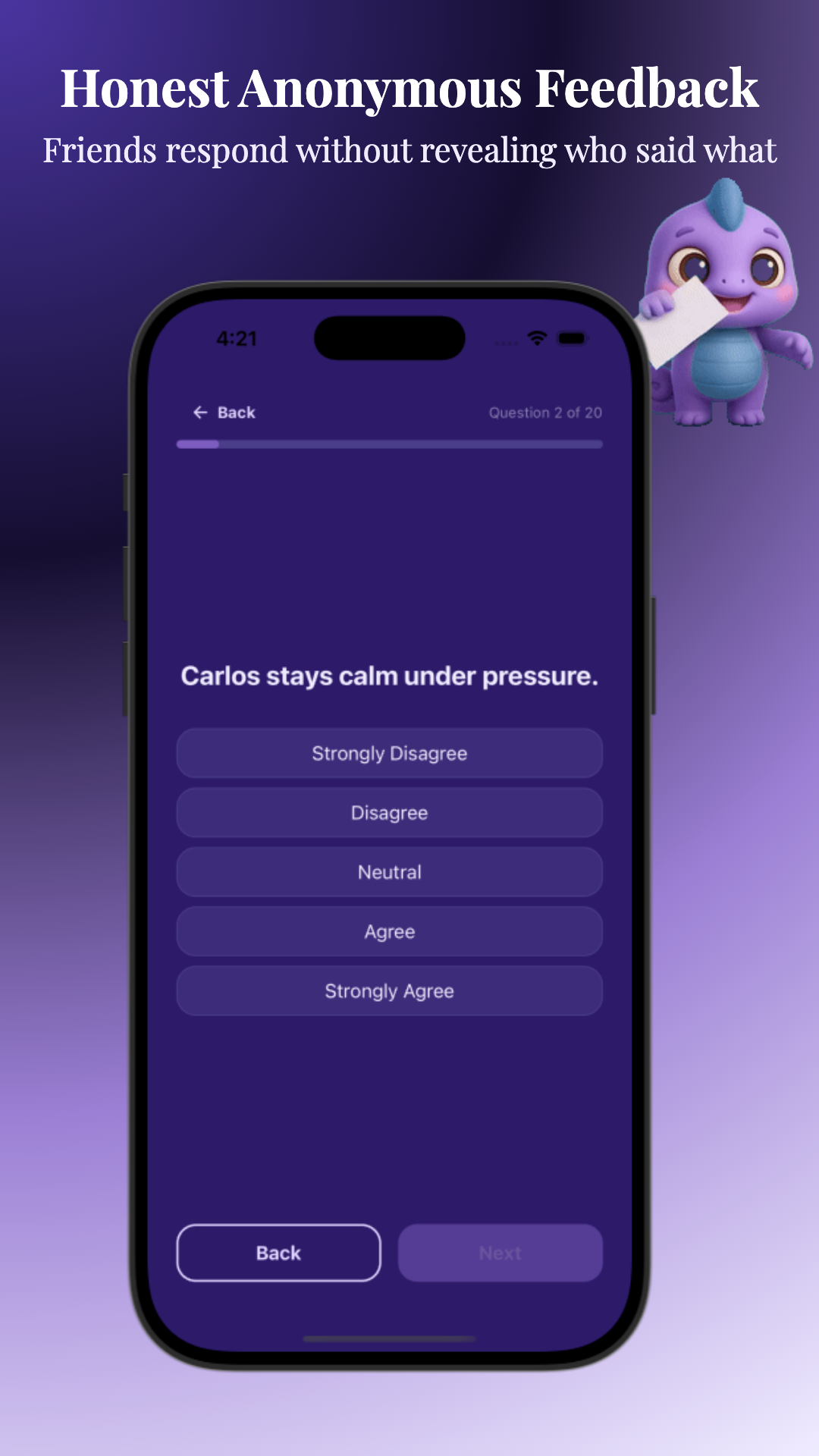
Honest, anonymous feedback—like what you can gather via Blindspot—is invaluable for discovering these hidden traits. By inviting friends to answer questions about us anonymously, we remove social pressures and get closer to the truth of how we’re actually perceived. This process, explored further in our practical guide to getting honest feedback, is essential for personal growth.
Blindspot enables users to craft custom surveys or select from curated questions, providing friends with an easy way to share candid impressions. For example, you might ask, "What’s one thing I could do to be a better listener?" or "Have you ever felt unsupported by me?" When responses are anonymous, friends are more likely to be truthful, which can reveal patterns you were previously unaware of.
Over time, tracking feedback—especially when multiple friends point out the same behaviors—can help you identify recurring themes. This creates an actionable map for personal development, rather than relying on sporadic or emotionally charged feedback.
Section 3: Intentions vs. Actions—The Core of Perception Gaps
Why Intentions Get Lost in Translation
Most of us judge ourselves by our intentions: what we meant to say or do, the reasons behind our actions, and our internal emotional states. Friends, however, can only judge us by our actions—what they see and hear. This discrepancy is at the heart of why friends see us differently.
- Intentions Are Invisible: Unless we communicate them directly, our friends don’t have access to our internal motivations.
- Actions Speak Louder: Repeated behaviors—being late, interrupting, showing kindness—form the basis of others’ judgments.
- Misreading Signals: Friends may misinterpret our actions if they don’t match the context or our usual patterns.
The disconnect between intention and action can be significant. For instance, someone may intend to be inclusive, yet their body language or forgetfulness about group invitations may signal otherwise. The friend group may develop an impression of aloofness or exclusivity, even if this is far from the individual’s intent.
Examples of Intention-Action Gaps
Consider someone who thinks of themselves as supportive, but rarely checks in on friends unless prompted. Their intention (to be supportive) clashes with the action (lack of outreach), leading friends to see them as distant or uninterested.
Another example is humor: You may view yourself as playful, but if your jokes come off as sarcastic or hurtful, people may see you as insensitive.
Similarly, someone who wants to be perceived as an active listener may unintentionally dominate conversations, steering them to their own experiences. While the intention is to relate and empathize, the impact is that others feel unheard or marginalized.
Bridging the Intention-Action Divide
To close this gap, it’s important to:
- Ask for concrete examples from friends when seeking feedback.
- Reflect on situations where your intentions didn’t match outcomes.
- Use tools like the What My Friends Think of Me Quiz to compare self-perception with friends’ views.
Additionally, keeping a log of key interactions can help. After a social gathering, write down what you intended versus what you think actually happened. Over time, you may spot patterns—such as always intending to include quiet friends but forgetting to check in with them. This creates opportunities for targeted improvement.
It’s also valuable to invite feedback immediately after specific events (“How did I come across in that discussion?”) rather than waiting for generic impressions. This specificity helps you match actions with intentions more accurately.
Section 4: How Different Social Circles Bring Out Different Sides
The Chameleon Effect
It’s common to act differently around various friend groups. This is not about being “fake,” but about natural social adaptation. Each group values different traits, has unique norms, and brings out different aspects of our personalities.
- Work Friends vs. Childhood Friends: You might be more reserved and professional in one group, but playful and candid in another.
- Shared Interests Influence Behavior: Hobby-based friends see you in a different light than family or neighbors.
For example, a person who is the life of the party among old friends might be seen as quiet or reserved at work events. This isn’t a contradiction, but a reflection of how social roles, expectations, and even group history shape our behavior. A recent survey found that over 70% of people admit to "toning down" or "amping up" certain personality traits depending on whom they’re with.
Situational Identity Shifts
Context and company shape our behavior:
- Role Expectations: Are you the “organizer,” “joker,” or “listener” in a particular group?
- Group Dynamics: The presence of certain individuals may encourage or suppress specific traits.
For example, you might be more assertive when among friends who value decisiveness, but more laid-back with those who prioritize harmony. The expectations and personalities of group members act as mirrors, reflecting and amplifying certain traits. Some people report feeling "like a different person" when switching between groups, which is a testament to the adaptability of social identity.
Group dynamics also matter—if another group member assumes the "leader" role, you might naturally step back, regardless of your usual tendencies elsewhere. This situational flexibility allows us to fit in, but can make it challenging to maintain a consistent self-image across all contexts.
Reconciling Multiple Self-Images
This social flexibility is healthy, but it can lead to confusion about who we “really” are. Friends from one circle may see us as outgoing, while others view us as quiet. Both impressions can be accurate, depending on context.
It’s useful to reflect on which traits feel authentic versus performative, and which situations bring out your best self. For example, are you more empathetic with your closest friends but more competitive with colleagues? By mapping these patterns, you can strive for greater self-integration: bringing desirable traits to all contexts and understanding why you adapt in certain ways. For a deeper exploration, see Personality Types: The Complete Guide to MBTI, Big Five, and Self-Discovery.
For a deeper dive into how friends shape our self-image, check out How Friends Shape Our Self-Image: The Hidden Impact.
Section 5: Conflict, Mixed Signals, and the Roots of Misunderstanding
How Misunderstandings Arise
Misunderstandings between friends are often caused by mixed signals: words, tone, and body language that don’t align. Even when you explain yourself, friends may misinterpret your meaning based on their own experiences and expectations.
- Nonverbal Cues: A tired sigh may be read as annoyance, even if you’re just exhausted.
- Ambiguous Messages: Jokes, sarcasm, or indirect feedback can be misread.
- Conflict History: Past arguments or unresolved issues color how future actions are perceived.
For example, if you tend to joke about serious topics, friends who are sensitive to those topics may take offense, even if none is intended. Or, if you’ve had a falling out in the past, neutral comments might be interpreted as passive-aggressive, simply because of the emotional residue left by prior conflicts.
Misunderstandings can also stem from differences in communication styles—direct versus indirect, expressive versus reserved. Cultural backgrounds further complicate interpretation, with nonverbal cues and politeness norms varying widely between groups.
Intentions vs. Impact
Even when you try to clarify your intentions, the impact may linger. Friends remember how they felt in the moment, not just your later explanations. This is why repeated misunderstandings can damage relationships if not addressed.
For instance, saying "I didn’t mean to hurt your feelings" may not erase the sting if the other person felt dismissed or belittled. Over time, if similar incidents occur, friends may start to see you as insensitive, defensive, or unresponsive to feedback, even if your intentions are positive.
Strategies to Minimize Misunderstandings
- Be explicit—don’t assume your intentions are obvious.
- Ask friends how they interpreted a specific situation.
- Seek recurring themes in feedback to identify patterns.
Additionally, practicing active listening—paraphrasing what you’ve heard, asking clarifying questions, and validating feelings—can go a long way toward preventing miscommunications. If you sense tension, address it early, rather than letting it fester and become a larger issue.
For actionable advice on uncovering misunderstandings and blind spots, explore the step-by-step guide to uncovering social blind spots.
Section 6: Closing the Gap—Practical Steps for Self-Awareness
Self-Awareness Exercises
Bridging the gap between how we see ourselves and how friends see us requires intentional effort. Here’s how to get started:
- Reflective Journaling: After social interactions, jot down what you intended and how you think you came across. Later, compare this with feedback.
- Johari Window Approach: Use tools like the Johari Window Questionnaire to map out known and unknown aspects of your personality.
- Ask Specific Questions: Instead of "How am I as a friend?", try, "Can you recall a moment when I made you feel supported—or let down?"
Other techniques include role-reversal exercises (imagining how you would feel on the receiving end of your own behavior) and mindfulness practices that help you observe your own habits with less judgment. The goal is to make self-reflection a regular, structured part of your routine. For a comprehensive approach, see Self-Awareness: The Definitive Guide to Understanding Yourself.
Seeking Direct and Anonymous Feedback
Sometimes, friends won’t be completely honest face-to-face. That’s where apps like Blindspot come in. By allowing friends to answer questions anonymously, you receive candid, actionable insights you might not otherwise hear.
- Try the 25 Insightful Questions to Ask Your Friends About Yourself for inspiration.
- Use a Free Question Generator to prompt honest, revealing discussions.
When using feedback tools, set the stage for honesty by assuring friends that you genuinely want constructive input. Explain why their perspective matters to you, and encourage them to focus on both strengths and areas for growth. The more specific the feedback, the more actionable it will be.
Turning Feedback into Growth
- Look for recurring themes, not one-off comments.
- Set small, specific goals based on feedback (e.g., "I’ll check in on friends weekly").
- Track your progress over time with self-awareness tools and follow-up conversations.
It’s important to approach feedback with curiosity and a growth mindset, rather than defensiveness. If friends suggest you can be impatient, for example, ask for examples and brainstorm ways to improve. Consider sharing your goals with a trusted friend who can provide accountability and encouragement.
Remember, self-awareness is a continuous journey. Regularly check in with your social circles, update your self-assessments, and be open to evolving. Over time, you’ll likely find that your self-image and others’ perceptions become more aligned—leading to stronger, more authentic connections.
If you’re curious about what a personality blind spot is and how it impacts your relationships, see What Is a Personality Blind Spot?
Conclusion
Understanding why friends see us differently is a powerful key to self-growth. The gap between self-image and friends’ perceptions is shaped by blind spots, social context, group dynamics, and the ever-present divide between intentions and actions. While this gap can sometimes lead to conflict or confusion, it’s also a unique opportunity: by embracing feedback—especially honest, anonymous insights—you can uncover patterns, correct misunderstandings, and become more authentically yourself. With tools like Blindspot, self-discovery is within reach, opening the door to deeper relationships and greater self-awareness.
FAQ
Q: Why do my friends see me differently than I see myself?
A: Friends base their perceptions on your actions and repeated behaviors, while you focus on your intentions and internal thoughts. Self-deception and blind spots also play a role, making it easy to overlook traits that are obvious to others. For more on this topic, see How Others See You: Understanding and Bridging the Perception Gap.
Q: Can your friends know you better than you know yourself?
A: In certain aspects, yes. Friends can notice patterns or habits you might miss or deny. However, only you have access to your true intentions and inner experiences, so a full picture requires both perspectives.
Q: Why do I act differently around different friend groups?
A: Social adaptation is natural. Different groups bring out different sides of your personality based on shared interests, group norms, and your role within each group. This flexibility helps us fit in, but can create varied impressions among friends.
Q: How can I find out how my friends really see me?
A: Ask for honest, specific feedback—either directly or anonymously using apps like Blindspot. Focus on recurring themes and concrete examples to gain meaningful insights.
Q: Why do people misunderstand me even when I explain myself?
A: Misunderstandings arise from differences in communication styles, nonverbal cues, and personal biases. Even with explanations, friends may interpret your behavior through their own lens or past experiences.
Q: What causes the gap between self-image and how others perceive you?
A: This gap is caused by blind spots, self-deception, differences between intentions and actions, and the influence of social context. Bridging it requires openness to feedback and self-reflection.