How Friends See You vs. Self-Perception: The Surprising Truth
Explore how friends see you vs. self-perception. Discover why there's a gap, how to bridge it, and boost self-awareness with real feedback and expert insights.

Estimated reading time: 14 min
Key Takeaways
- We rarely see ourselves exactly as our friends do—metaperception and biases play a huge role.
- Friends often spot strengths and weaknesses we miss, making their feedback a goldmine for growth.
- Comparing self-perception with friends’ views can boost self-awareness and emotional intelligence.
- Tools like Blindspot make it easier to uncover these discrepancies through anonymous, honest feedback.
- Social media can distort both self-image and how others see us, further widening the gap.
Table of Contents
- Section 1: What Is Metaperception? Understanding How Friends See You
- Section 2: Self-Perception vs. Others’ Perceptions—Where Do They Differ?
- Section 3: Are Friends’ Judgments More Accurate Than Self-Ratings?
- Section 4: The Looking Glass Self and Your Public Image
- Section 5: Biases That Distort Self-View and Friend-View
- Section 6: Closing the Gap—Comparing Self-Descriptions with Friend Feedback
- Section 7: Social Media vs. Real-Life Impressions
- Section 8: Emotional Stability, Self-Esteem, and Insight Into Others’ Views
- Conclusion
- FAQ
Section 1: What Is Metaperception? Understanding How Friends See You
Defining Metaperception
Metaperception is your ability to estimate how others perceive you. When you wonder “how friends see you vs. self-perception,” you’re tapping into metaperception—your sense of how you think your friends view your personality, habits, and traits. This isn’t just curiosity; it’s a crucial social skill linked to self-awareness and emotional intelligence.
Why Metaperception Matters
- Stronger Relationships: Accurately gauging how friends see you can help avoid misunderstandings and deepen connections.
- Personal Growth: Awareness of your image can reveal blind spots—traits and behaviors you might not notice but others do.
For example, you may see yourself as reserved, but friends might describe you as quietly confident or even aloof. The gap between these views can affect everything from job interviews to romantic relationships.
Everyday Metaperception in Action
- After a group conversation, you might replay moments, wondering if you seemed friendly or awkward.
- Receiving feedback from friends—directly or anonymously—can confirm or challenge your assumptions.
Apps like Blindspot facilitate this process, letting you gather honest, anonymous perceptions from your peers. This kind of insight helps you spot patterns in how you’re seen, which you might otherwise miss.
Section 2: Self-Perception vs. Others’ Perceptions—Where Do They Differ?
What Shapes Self-Perception?
Your self-perception forms from a mix of internal beliefs, past experiences, and your interpretation of feedback from others. It’s influenced by self-esteem, mood, personal goals, and even recent successes or failures.
- Self-perception: How you view your traits, abilities, and behaviors.
- Others’ perceptions: How people around you interpret your actions, words, and personality.
Common Gaps and Discrepancies
Research shows that people frequently misjudge how they’re seen by others. For example:
- You may believe you’re not funny, but friends might love your sense of humor.
- Some people think they’re open and approachable, while others experience them as distant.
One classic tool to explore these gaps is the Johari Window, which highlights the "blind spot"—traits visible to others but hidden from your self-view. For a deeper dive, see Johari Window Test: A Powerful Tool for Self-Discovery.
Why These Differences Matter
- Communication: Misalignments can lead to confusion or conflict.
- Reputation: Your public image may not match your intentions.
- Growth: Understanding discrepancies helps target self-improvement.
Recognizing these gaps is the first step to bridging them and aligning your self-image with how you’re truly perceived. For more on this topic, see how others see you and bridging the perception gap.
Section 3: Are Friends’ Judgments More Accurate Than Self-Ratings?
The Science of Personality Judgments
Are your friends better judges of your personality than you are? Studies suggest that, in some areas, friends can actually offer more objective assessments—especially of traits that are highly visible or impact group dynamics.
- Observable traits: Friends are often better at rating extraversion, agreeableness, or sense of humor.
- Internal states: You’re more accurate about your own anxiety, stress, and emotions.
Why Friends Sometimes See More
- They observe behaviors you overlook or rationalize.
- Group settings reveal patterns (e.g., interrupting often, being supportive) that you may not notice yourself.
- They have a different perspective, free from your internal self-talk and justifications.
Blind Spots and Honest Feedback
Blind spots are areas where friends see something clearly that you don’t. Anonymous feedback—like that from Blindspot or through a What My Friends Think of Me Quiz—can surface hidden strengths or weaknesses. This is why many organizations encourage 360-degree feedback: it’s more comprehensive than self-assessment alone.
Combining self-ratings with friends’ judgments gives you the full picture, helping you grow in ways you might never have considered otherwise. If you're interested in the science behind personality and self-discovery, check out this complete guide to MBTI, Big Five, and self-discovery.
Section 4: The Looking Glass Self and Your Public Image
The Concept of the Looking Glass Self
The "looking glass self" is a psychological concept introduced by Charles Horton Cooley. It describes the idea that our self-image forms largely through our perception of how others see us. In essence, we use friends’ feedback as a mirror to construct our identity.
- We imagine how we appear to others.
- We imagine others’ judgments.
- We develop feelings (pride, shame, confidence) based on these imagined evaluations.
The Power of Public Image
Public image doesn’t always match private reality. Sometimes, people project a confident, outgoing persona in social situations while feeling insecure inside. The difference between your internal world and what friends see can shape your behavior, choices, and even self-esteem.
- Reinforcement: If you’re praised for being dependable, you may become more so.
- Distortion: Negative labels or misunderstandings can unfairly color your self-image.
Practical Takeaways
Understanding the looking glass self can help you:
- Identify traits you’re proud of vs. traits you want to change.
- Avoid overvaluing or undervaluing others’ opinions.
- Balance internal self-knowledge with external feedback for a more stable identity.
If you want to dig deeper into the hidden impact of friendships on self-image, read How Friends Shape Our Self-Image: The Hidden Impact.
Section 5: Biases That Distort Self-View and Friend-View
Cognitive Biases in Self-Perception
Both you and your friends bring biases to the table. These mental shortcuts can lead to inaccurate self-perception and misjudgments by others.
- Self-serving bias: You may overemphasize your positive traits and downplay flaws.
- Imposter syndrome: High achievers may undervalue their abilities despite evidence to the contrary.
- Confirmation bias: You remember feedback that fits your self-image and ignore the rest.
Biases in Friends’ Perceptions
Friends aren’t immune to bias either. Their views are shaped by their own experiences, expectations, and even mood.
- Halo effect: A single positive trait (like being funny) can make friends view all traits more positively.
- Recency bias: Recent events or conversations weigh heavier than older ones.
- Projection: Friends may see traits in you that reflect their own insecurities or strengths.
Overcoming Biases
The more diverse and anonymous the feedback, the more likely you are to get a balanced perspective. That’s why tools like Blindspot and structured feedback exercises (like the Johari Window Questionnaire) are so effective—they help neutralize individual biases and reveal the consensus view.
Section 6: Closing the Gap—Comparing Self-Descriptions with Friend Feedback
Why Compare Self and Friend Feedback?
Directly comparing your self-description with friends’ feedback is the heart of self-discovery. It’s not about deciding who’s right or wrong—it’s about seeing yourself from multiple angles and identifying where your blind spots lie.
Step-by-Step: How to Compare Effectively
- Collect honest feedback: Use anonymous surveys, apps, or structured questionnaires.
- Identify patterns: Look for recurring themes in what friends say—both positive and negative.
- Reflect on differences: Where do your self-ratings differ from friends’ ratings? Consider why.
- Act on insights: Use what you learn to guide personal development.
For a practical guide to getting reliable feedback, see How to Get Honest Feedback from Friends: A Practical Guide.
Using Technology for Self-Discovery
Apps like Blindspot streamline this process. You can create groups, send out anonymous quizzes, and view side-by-side comparisons of how you see yourself versus how your friends rate you. This takes the awkwardness out of direct conversations and encourages candor.
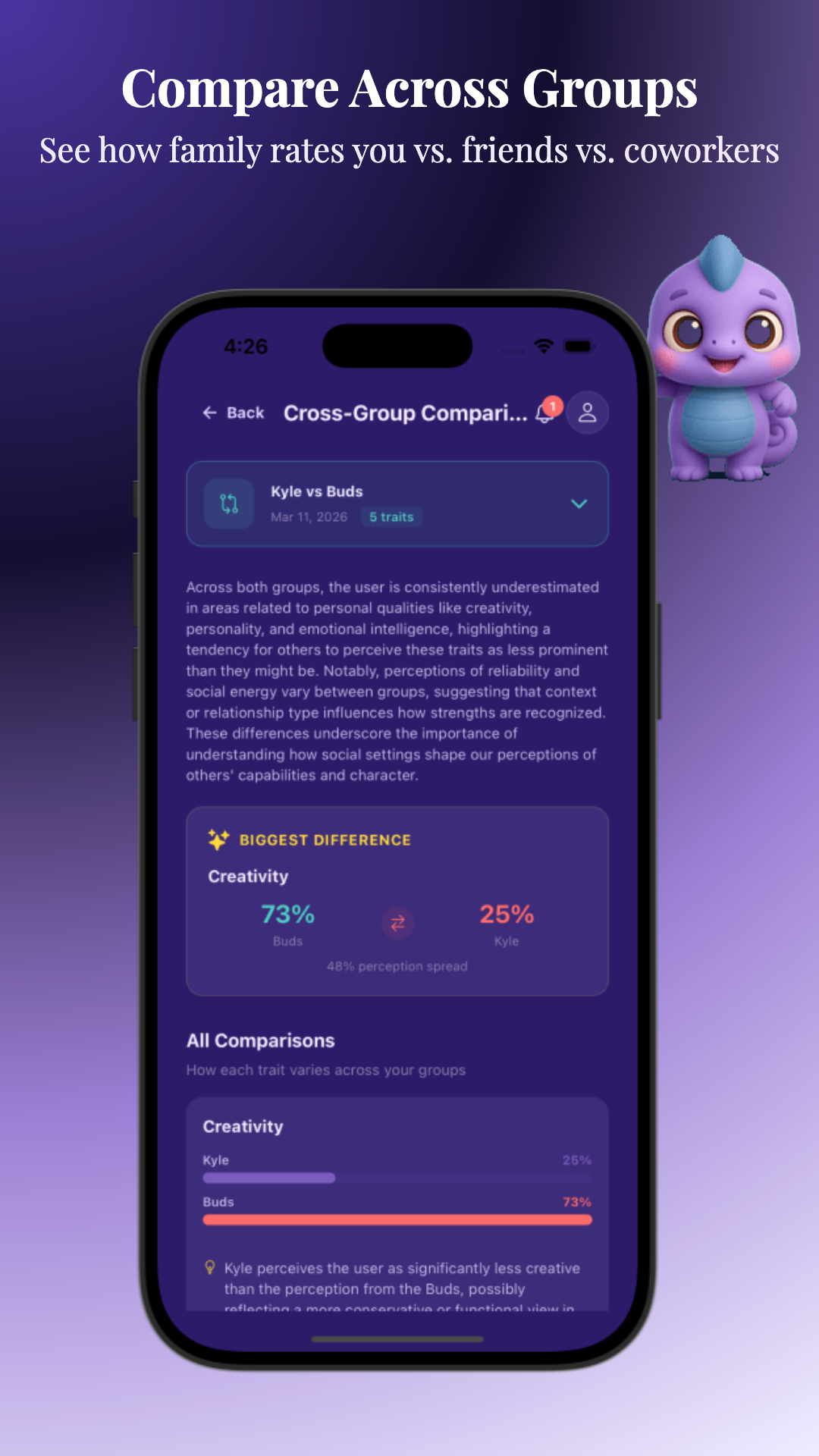
Seeing your self-image and friend ratings together can be eye-opening—sometimes validating, sometimes surprising, but always a step toward greater self-awareness. If you want to better understand the dynamics and deeper insights of your friendships, explore understanding your friendships.
Section 7: Social Media vs. Real-Life Impressions
The Social Media Effect
Online platforms add another layer to the "how friends see you vs. self-perception" puzzle. Social media lets you curate your image, often presenting an edited, filtered version of yourself to friends and followers.
- Highlight reels: Posts often showcase successes, adventures, and happy moments.
- Omitted realities: Struggles, insecurities, and day-to-day life are less likely to be shared.
How Social Media Shapes Perception
- Friends may form impressions based on your online persona, which can differ from who you are offline.
- Some people feel pressure to live up to their digital image, leading to an identity gap.
- Online feedback—likes, comments, DMs—can reinforce or challenge your self-view, but may not be fully honest.
This digital distortion can widen the gap between self-perception and how friends see you, especially if your real-life interactions are limited.
Balancing Your Online and Real Self
Be mindful of the differences between your digital and offline personas. Seek feedback from friends who know you in person, and don’t rely solely on social media responses to gauge your character. For more on why these gaps exist, visit Why We See Ourselves Differently Than Others See Us.
Section 8: Emotional Stability, Self-Esteem, and Insight Into Others’ Views
How Emotional Stability Shapes Perception
Emotionally stable individuals are less reactive to feedback, handling both praise and criticism with perspective. This trait helps you interpret friends’ comments accurately rather than defensively or dismissively.
- Resilience: You’re more likely to process constructive criticism without taking it personally.
- Flexibility: You can adjust your self-image based on consistent outside input, rather than clinging to old beliefs.
Self-Esteem and Openness to Feedback
Self-esteem plays a major role in how you interpret others’ perceptions. High self-esteem can buffer against negative feedback, but it can also cause you to reject valid criticism. Low self-esteem might make you overly sensitive to perceived slights or misunderstandings.
- Balanced self-esteem: Encourages honest reflection and growth.
- Extreme self-esteem: (either too high or too low) can lead to denial or defensiveness.
Building Insight Into Others’ Views
True self-awareness involves integrating feedback from multiple sources. The more you practice seeking and reflecting on friends’ honest input, the sharper your insight becomes. Over time, you’ll develop a more accurate, nuanced sense of how you’re perceived—and how to close the gap between your self-perception and your public image.
Ready to take the next step? Try Blindspot to see how your self-view stacks up against your friends’ insights.
Conclusion
The gap between how friends see you vs. self-perception is both fascinating and vital to personal growth. By understanding metaperception, recognizing biases, and actively seeking honest feedback, you can bridge that gap—leading to stronger relationships, greater self-awareness, and a more authentic life. Tools like Blindspot make this journey easier and more insightful than ever. Embrace the challenge, and let your friends’ perspectives become a powerful mirror for growth.
FAQ
Q: Do my friends see me the way I see myself?
A: Not always. Research shows that self-perception and friends’ perceptions often differ due to biases and blind spots. Friends may notice traits or behaviors you overlook, and vice versa. Comparing both views can give you a more balanced self-understanding.
Q: Who knows me better: me or my friends?
A: It depends on the trait. You know your inner feelings, motivations, and private experiences best. However, friends can be more accurate about how you come across in social situations, habits, and certain personality traits, especially those that are outwardly visible.
Q: Why do friends see me differently than I see myself?
A: Differences arise from biases, limited perspectives, and the fact that you interpret your own behavior through internal thoughts and feelings, while friends only see your actions. Social roles, expectations, and context also play a part.
Q: How can I find out how my friends really see me?
A: The most effective way is to ask for honest, preferably anonymous feedback. Tools like Blindspot, the Johari Window, or structured surveys help friends share their views candidly, letting you compare their perceptions to your own.
Q: Can social media make my friends' perception of me different from my self-image?
A: Yes. Social media often presents a curated version of yourself, which can differ from your true personality and offline behaviors. Friends’ perceptions based only on your online presence may not match how you see yourself or how you act in real life.