
How to Ask for Feedback: Closing the Gap Between Self-Image and How Others See You
Learn how to ask for feedback, get honest insights from friends, and bridge the gap between self-image and perception. Discover actionable steps and tips.


Estimated reading time: 9 min
Key Takeaways
- Understanding the gap between self-image and how others see you is key to personal growth.
- Honest, actionable feedback helps uncover your blind spots.
- Anonymous surveys and open-ended questions encourage genuine responses.
- Timing, context, and channel matter when requesting feedback.
- Using tools like Blindspot makes feedback gathering easier and more insightful.
Have you ever wondered, "How do others see me?" or questioned if your self-image matches what your friends or colleagues really think? Learning how to ask for feedback is essential for bridging the gap between self-image and how others see you. This guide unpacks why this gap exists, how to get honest feedback—including anonymous insights from friends—and how to use feedback to fuel personal growth. We'll walk you through actionable steps, common mistakes, and expert tips, all while highlighting how apps like Blindspot make this process simpler and more impactful.
Step 1: Define Your Feedback Goal
Before you ask for feedback, clarify what you want to learn. Are you seeking insights on your communication skills, leadership style, or how you come across in group settings? Defining your goal shapes your questions and ensures you get meaningful responses.
Ask yourself:
- What specific aspect of myself do I want feedback on?
- Am I interested in first impressions psychology, ongoing relationships, or a particular behavior?
- Do I want to reveal my blind spots or validate my self-perception?
Check out the personality blind spot guide to understand the gaps in self-perception and set clear feedback objectives.
Step 2: Choose the Right Timing and Context
Timing matters. People are more likely to provide thoughtful feedback when they're not rushed or distracted. Consider the relationship and context—asking for feedback during a busy workday or in a public setting might not yield honest answers.
- After a project or event is often a natural moment to ask.
- For personal growth, choose a relaxed, private setting.
- Let the person know why their perspective is valuable to you.
Remember: The right context makes it easier for others to open up, especially when asking "How do you see me?" compared to how you see yourself.
Step 3: Keep It Short, Specific, and Conversational
Long-winded or vague requests overwhelm people. When learning how to ask for feedback, brevity and clarity are your friends. Be specific about what you want insights on.
- "Could you share one thing you think I could improve about my communication?"
- "What’s your first impression of me in group settings?"
- "Is there something about my approach I might not notice myself?"
Keep the tone friendly and relaxed. If you’re using email, state your purpose in the subject and opening lines. For in-person requests, lead with genuine curiosity.
Step 4: Use Open-Ended Questions
To get honest feedback and uncover blind spots, ask open-ended questions. This encourages richer, more actionable responses—key for understanding self-image vs how others see you.
- "What’s something you think I could do differently to be a better friend/teammate?"
- "How would you describe my strengths and areas for growth?"
- "Is there a gap between how I see myself and how you see me?"
For more inspiration, browse 25 insightful questions to ask your friends about yourself.
Step 5: Pick the Right Channel or Format
Different situations call for different feedback channels—each has unique advantages:
- Email: Great for thoughtful responses; ideal for colleagues or acquaintances.
- Surveys/forms: Useful for structured, anonymous feedback.
- Text/chat: Good for quick, informal check-ins.
- In-person: Best for nuanced conversations and deep dives.
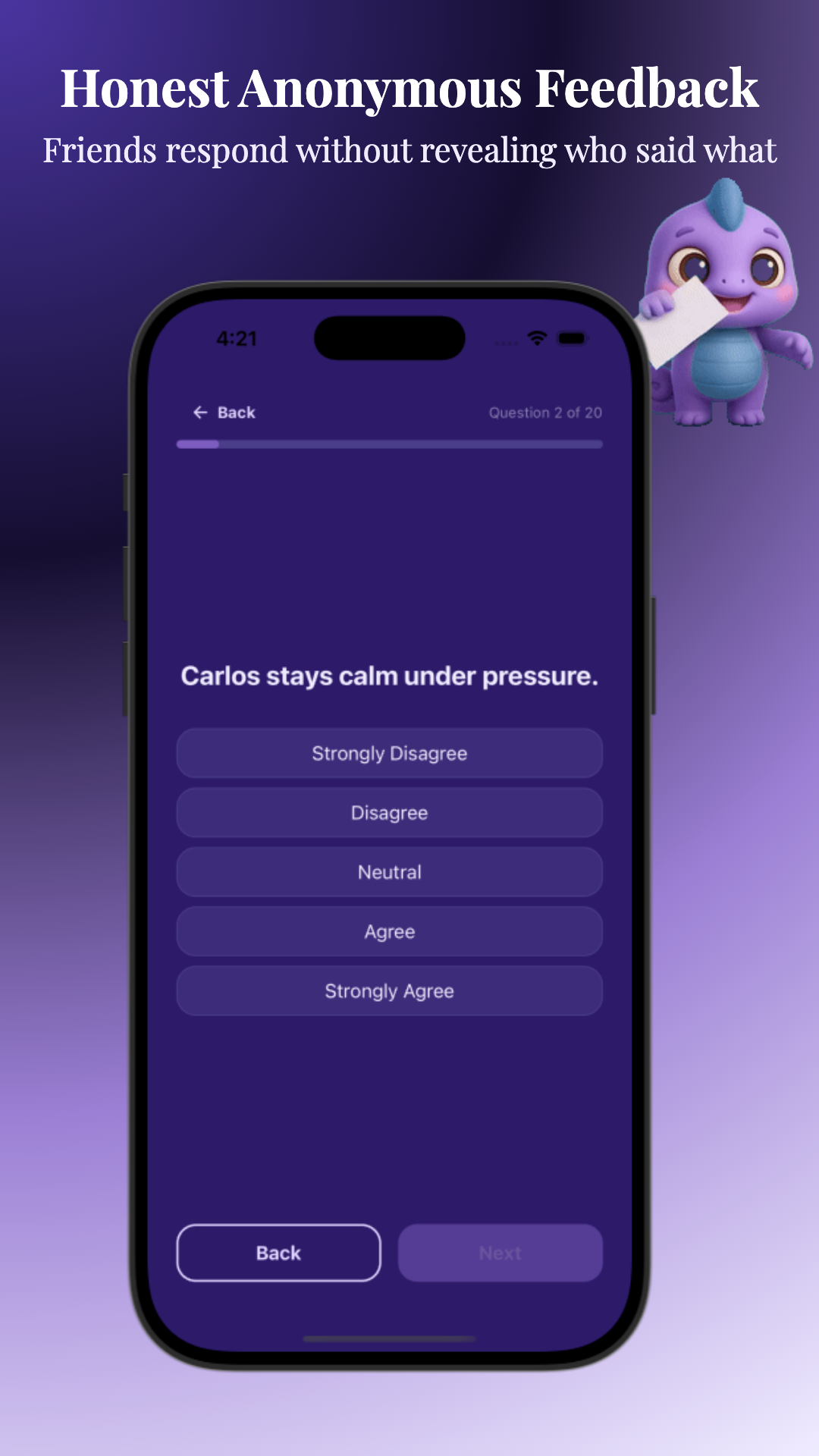
- Apps: Tools like Blindspot allow you to collect anonymous, honest feedback from friends and compare self-image with peer perceptions.
For truly candid responses, consider anonymous feedback. Blindspot excels here, letting your friends answer questions about you without fear of awkwardness.
Step 6: Target the Right People
Who you ask is just as important as how you ask. Target friends, teammates, or colleagues who know you well and can provide relevant, honest feedback.
- Mix close friends for personal insights and acquaintances for first impressions psychology.
- In professional settings, seek feedback from those who have observed your work closely.
- Use group features in apps like Blindspot to compare feedback from different circles.
If you want to discover how your friends shape your self-image, read How Friends Shape Our Self-Image: The Hidden Impact.
Step 7: Make It Easy to Respond
People are more likely to reply when the process is simple and low-effort. Provide clear instructions and minimize friction:
- Offer a single link or a short set of questions.
- Use tools like the Free Question Generator for ready-made prompts.
- Allow anonymous responses when possible to encourage honesty.
Make it clear that you value their input and that it won’t take much of their time.
Step 8: Use Feedback to Improve—and Show That You Did
Feedback is only valuable if you act on it. Reflect on the responses, identify patterns, and make concrete changes. This not only helps you grow but also encourages people to keep giving honest feedback in the future.
- Summarize and share what you learned (when appropriate).
- Thank your respondents and let them know how their feedback made a difference.
- Track your progress with tools or check-ins. Blindspot, for example, lets you monitor self-awareness growth over time.
For a step-by-step approach, see How to Uncover Your Social Blind Spots: Step-by-Step Guide.
Step 9: Follow Up and Express Gratitude
Always follow up after receiving feedback—thank people for their honesty and time. Showing gratitude not only strengthens relationships but also builds a culture of open communication.
- Send a quick thank-you note or message.
- Share any positive changes you’ve made as a result of their feedback.
- Invite them to offer feedback again in the future.
This simple step goes a long way in ensuring you continue to get honest, helpful responses when you ask, "How do others see me?"
Tips & Common Mistakes
- Don’t be defensive: Respond to feedback with curiosity, not argument.
- Avoid vague questions: General queries like "Any feedback?" rarely produce useful insights.
- Don’t ask too often: Be respectful of people’s time and emotional bandwidth.
- Don’t ignore patterns: If multiple people mention the same blind spot, pay attention.
- Use the right tools: Apps like Blindspot streamline the process and provide anonymity, boosting honesty.
Conclusion
Learning how to ask for feedback is a crucial skill for bridging the gap between how you see yourself and how others see you. By following these steps—defining your goal, choosing the right timing, being specific, and leveraging the right channels—you can uncover your blind spots and grow personally and professionally. Apps like Blindspot make it easy to get anonymous, honest feedback from friends, giving you the self-awareness edge. Remember: actionable feedback is the fastest path to becoming your best self. For a deeper dive into why this perception gap exists and how to bridge it, see How Others See You: Understanding and Bridging the Perception Gap.
FAQ
- How do you ask someone for feedback politely?
Be direct yet courteous. For example: "I value your perspective and would appreciate any feedback you have on how I can improve." - What is the best way to ask for feedback by email?
Keep your email short and specific. Use a clear subject line like "Quick feedback request" and mention what you’re looking for in the first sentence. - What should you say when asking for constructive feedback?
Ask open-endedly: "Can you share one thing I’m doing well and one area where I could improve?" Express your openness to honest input. - How do you ask customers for website feedback?
Use brief popups, surveys, or follow-up emails with specific questions. Make it easy to respond and show how you’ll use their feedback. - What are good questions to ask when requesting feedback?
Try: "What’s one thing you think I could do better?" or "How did my approach come across to you?" For more, see our list of insightful questions. - When is the best time to ask for feedback?
Right after a relevant event or project, or during a relaxed, open conversation. Avoid busy or stressful times.