First Impressions Psychology: Bridging the Gap Between Self-Image and How Others See You
Discover the psychology of first impressions, why perception gaps exist, and how to get honest feedback to improve your self-awareness.

Estimated reading time: 15 min
Key Takeaways
- First impressions form within milliseconds and shape how others see you—often differently from your self-image.
- Nonverbal signals, warmth, and competence are crucial in snap judgments according to first impressions psychology.
- Stereotypes, biases, and demographic cues can distort perceptions and create blind spots.
- Honest, anonymous feedback from friends is essential for closing the gap between how you see yourself and how others perceive you.
- Tools like Blindspot help reveal these gaps and guide your personal growth with actionable AI insights.
Table of Contents
- Section 1: First Impressions Psychology—Definition and Formation
- Section 2: The Science of Snap Judgments—Speed and Accuracy
- Section 3: Warmth, Competence, and Nonverbal Cues
- Section 4: Bias, Stereotypes, and Demographic Cues
- Section 5: The Real-World Impact of First Impressions
- Section 6: Self-Image vs. How Others See You—Bridging the Gap
- Section 7: How to Get Honest and Anonymous Feedback
- Section 8: Making Better First Impressions—Practical Strategies
- Conclusion
- FAQ
Section 1: First Impressions Psychology—Definition and Formation
What Are First Impressions?
First impressions psychology explores the lightning-fast judgments we make about others the moment we meet them. Whether you’re walking into a job interview, joining a new group, or just passing someone on the street, your brain is already forming an opinion—often before a single word is spoken.
- A first impression is the immediate perception formed about a person upon first encountering them.
- This process is largely subconscious, rooted in evolutionary psychology for quick threat assessment and social decision-making.
- These snap judgments are sticky—research shows that initial opinions guide how we process all future information about someone.
The Psychology Behind First Impressions
Psychologists have long studied first impressions to understand how they shape social interactions. Factors such as facial expressions, posture, and tone of voice play significant roles. This process is not just about others—it’s also about your own self-image and the gap between how you see yourself vs. how others see you.
- Studies reveal that first impressions are difficult to change, even when new contradictory evidence is presented.
- Your self-perception might not align with how you’re actually perceived in initial encounters.
Why Do We Care About First Impressions?
First impressions affect everything from friendships to career opportunities. Understanding the psychology behind them is the first step to bridging the gap between your self-image and external perceptions. Tools like Blindspot can help you see where your self-view and others’ opinions diverge, providing insight for growth and self-awareness. For a deeper understanding of this perception gap, see how others see you and how to bridge the perception gap.
Section 2: The Science of Snap Judgments—Speed and Accuracy
How Fast Do First Impressions Form?
First impressions are formed astoundingly fast. Research consistently shows that people form opinions in as little as 50 to 500 milliseconds. A Princeton study found that participants judged trustworthiness and competence from faces in under one-tenth of a second. This means your first impression is set before you even finish your introduction.
- Speed: Judgments occur in 0.05 to 2 seconds.
- Automaticity: The brain’s amygdala and prefrontal cortex process visual and emotional cues instantly.
- Persistence: These impressions are hard to reverse, even with contrary evidence.
Are Snap Judgments Accurate?
This is where first impressions psychology gets nuanced. While some snap judgments can be surprisingly accurate—such as deducing extraversion, mood, or even some personality traits—many are colored by bias and incomplete information.
- People often accurately infer traits like energy level, friendliness, and confidence.
- However, judgments about complex traits like intelligence or honesty are much less reliable.
Implications for Self-Image vs. How Others See You
Because snap judgments rely on limited cues, there’s often a disconnect between your self-image and the initial impression you make. Gaining honest feedback from friends about how you come across can help you close this gap. For more on uncovering these blind spots, see How to Uncover Your Social Blind Spots: Step-by-Step Guide.
Section 3: Warmth, Competence, and Nonverbal Cues
The Two Core Dimensions: Warmth and Competence
First impressions psychology identifies warmth (friendliness, trustworthiness) and competence (capability, intelligence) as the two most critical dimensions. People instantly judge whether you are likely to help or harm them (warmth), and if you’re capable of carrying out your intentions (competence).
- Warmth judgments answer: "Is this person friendly or threatening?"
- Competence judgments answer: "Is this person capable or ineffective?"
Nonverbal Signals: Your Silent Messengers
Nonverbal cues are powerful in shaping first impressions. Studies show that:
- Facial expressions: A genuine smile signals warmth and approachability.
- Posture: Open, upright posture conveys confidence and competence.
- Eye contact: Direct, but not staring, eye contact suggests honesty and engagement.
- Voice: Tone, pace, and inflection add emotional color to your words.
Quickly Inferred Traits
Research suggests people can quickly infer:
- Trustworthiness
- Extraversion
- Dominance
- Approachability
Yet, these perceptions may not reflect your true personality. For a deeper dive into how friends shape your self-image, visit How Friends Shape Our Self-Image: The Hidden Impact.
Section 4: Bias, Stereotypes, and Demographic Cues
The Role of Bias in First Impressions
First impressions aren’t formed in a vacuum. Our brains use mental shortcuts—called heuristics—to make quick judgments. Unfortunately, these shortcuts often involve stereotypes and unconscious biases related to age, gender, race, clothing, and more.
- Stereotypes: Preconceived notions about groups influence how individuals are seen.
- Confirmation bias: We notice behaviors that reinforce our initial judgment and ignore contradictory evidence.
- Halo effect: One positive trait (like attractiveness) colors the perception of other traits.
Demographic Cues
Snap judgments are deeply affected by visible demographic factors:
- Clothing and grooming
- Accent and speech patterns
- Apparent age and gender
Why It Matters
These factors can create blind spots between how you see yourself and how others see you. You might pride yourself on approachability, but if your demeanor triggers a negative stereotype, others may see you differently. Becoming aware of these biases is critical for personal growth. For more on identifying and addressing perception gaps, review What My Friends Think of Me Quiz: Reveal Your Blind Spots.
Section 5: The Real-World Impact of First Impressions
Interviews and Career Advancement
First impressions play out powerfully in professional settings. In job interviews, research confirms that interviewers make up their minds within the first few minutes. Even small cues—like a confident handshake or warm greeting—can tip the scales. If you’re wondering what makes a good first impression in an interview, focus on warmth, confidence, and nonverbal congruence.
- Dress appropriately for the context.
- Practice open posture and eye contact.
- Prepare an engaging personal introduction.
Networking and Social Opportunities
At networking events, people decide in seconds whether they want to engage further. The ability to make a positive first impression can mean the difference between building lasting connections and being forgotten. This extends to dating, friendships, and even brief encounters.
Workplace Dynamics
How colleagues perceive you after a first meeting can shape your reputation, influence, and opportunities. A single misstep—appearing distracted, aloof, or unfriendly—can have long-term consequences. That’s why seeking honest feedback from friends about how you come across in new situations is invaluable.
Section 6: Self-Image vs. How Others See You—Bridging the Gap
Why the Gap Exists
Most people have a self-image—their internal view of their personality, strengths, and weaknesses. But research shows that there’s often a gap between self-image and how others see you. This gap is known as a personality blind spot. For a comprehensive guide to understanding yourself, see Self-Awareness: The Definitive Guide to Understanding Yourself.
- You may see yourself as shy, but others find you confident.
- Or you think you’re approachable, but friends say you come off as reserved.
The Johari Window Model
Psychologists use the Johari Window to describe this gap. It divides self-knowledge into four quadrants—what you and others know about you, and what remains hidden or unknown. Tools like the Johari Window Test can help you identify your blind spots by comparing your self-perception with feedback from others.
Why Honest Feedback Matters
Getting honest feedback—especially anonymous feedback—lets you see yourself through the eyes of others. It’s the most direct way to uncover discrepancies in traits like friendliness, leadership, and trustworthiness. With apps like Blindspot, you can invite friends to answer questions about you anonymously, revealing where your self-image matches or diverges from reality.
Section 7: How to Get Honest and Anonymous Feedback
Challenges in Asking for Feedback
It’s not easy to get unfiltered feedback from friends or colleagues. People often withhold their true opinions to avoid conflict or hurting your feelings. Yet, anonymous feedback from friends can illuminate how others truly see you—something that direct questions rarely achieve. For practical advice on how to ask for feedback and close the gap between self-image and others' perceptions, check out how to ask for feedback.
Practical Methods
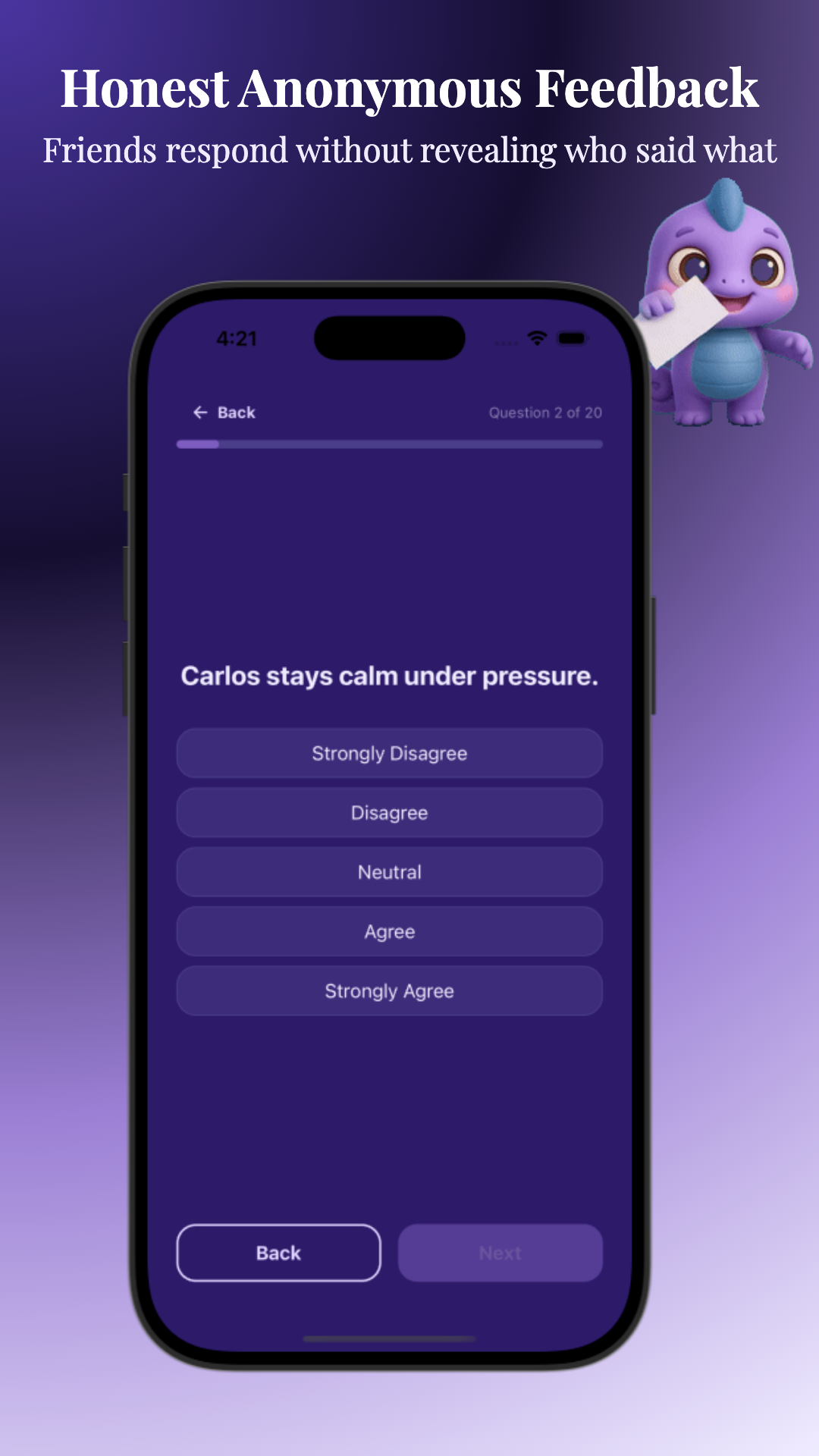
- Anonymous Surveys: Use tools or apps that collect feedback without revealing who said what. This encourages honesty and reduces social pressure.
- Questionnaires: Curate questions that tap into specific traits—try the Free Question Generator or 25 Insightful Questions to Ask Your Friends About Yourself to get started.
- Blindspot App: Invite friends to anonymously answer personality questions, then compare their responses with your own self-assessment. See an example of the anonymous feedback process below:
Turning Feedback Into Growth
The goal isn’t just to collect opinions but to identify patterns and actionable insights. AI-powered platforms like Blindspot can help you spot recurring themes—like being seen as reserved or decisive—and suggest growth strategies. For a detailed step-by-step process, read How to Get Honest Feedback from Friends: A Practical Guide.
Section 8: Making Better First Impressions—Practical Strategies
Appearance and Nonverbal Mastery
Improving first impressions starts with small, manageable changes:
- Dress intentionally: Choose attire that fits the context and signals professionalism or approachability.
- Grooming: Clean, well-kept appearance communicates self-respect.
- Body language: Maintain open posture, relaxed shoulders, and avoid closed gestures (like crossed arms).
Communication Skills
- Eye contact: Shows sincerity and attention, but avoid staring.
- Smile: A genuine smile significantly increases perceived warmth and likability.
- Listening: Active listening—nodding, paraphrasing, and asking questions—demonstrates respect and interest.
- Voice: Speak clearly, vary your tone, and avoid monotone delivery.
Confidence Without Arrogance
- Practice positive self-talk before new encounters.
- Project confidence through posture and speech, but stay humble and receptive.
Using Feedback for Continuous Improvement
Regularly seek feedback after important interactions. Use the insights to set growth goals—such as being more approachable or assertive—and track your progress. Blindspot’s AI-powered suggestions can help you develop targeted action plans. For more tools and quizzes that help explore how others see you, try How Do Others Perceive Me Quiz.
Conclusion
First impressions psychology reveals just how quickly and powerfully we are judged by others—and how often these judgments diverge from our own self-image. By understanding the science behind snap judgments, the role of warmth and competence, and the impact of nonverbal cues and biases, you can begin to bridge the gap between how you see yourself and how others see you. Honest feedback, especially when collected anonymously through tools like Blindspot, is the most effective way to identify your blind spots and foster meaningful personal growth. To deepen your self-awareness, explore resources like the Johari Test: Unlocking Self-Awareness Through Honest Feedback. Self-improvement starts when you see yourself through the eyes of others—and act on what you learn.
FAQ
Q: How long does it take to form a first impression?
A: Research shows first impressions form within 50 milliseconds to just a few seconds. Most people decide whether they trust or like someone in less than a second, making initial encounters critically important.
Q: How accurate are first impressions?
A: First impressions can be accurate for observable traits like energy and friendliness, but are often distorted by bias and stereotypes. They’re less reliable for complex traits like intelligence or honesty.
Q: What factors influence first impressions the most?
A: Nonverbal cues (like facial expressions, posture, eye contact), warmth, competence, and demographic factors (age, gender, clothing) shape first impressions most strongly, according to psychology research.
Q: Can you change a bad first impression?
A: Yes, but it’s challenging. Consistent, positive behavior over time is needed to override initial judgments. Seeking honest feedback and deliberately adjusting your approach can help shift perceptions.
Q: What makes a good first impression in an interview?
A: In interviews, projecting confidence, warmth, professionalism, and active listening are key. Dress appropriately, offer a firm handshake, and make eye contact to establish credibility and likability.
Q: Why are first impressions so powerful?
A: First impressions are powerful because our brains evolved to make quick judgments for survival. These snap judgments guide future interactions and are difficult to change, reinforcing their impact on relationships and opportunities.