AI Self Discovery: Uncover Your True Self with Mirror AI Insights
Explore AI self discovery methods, prompts, and mirror AI tools to reveal hidden strengths, core values, and your ideal life vision.

Estimated reading time: 15 min
Key Takeaways
- AI self discovery bridges the gap between self-perception and external feedback to enhance self-awareness by providing multi-dimensional insights.
- Core values, hidden strengths, and limiting beliefs can be uncovered through AI-powered prompts and mirror AI tools, enabling nuanced understanding beyond conscious awareness.
- Recurring behavioral patterns and childhood influences profoundly shape decisions; AI helps identify, contextualize, and reflect on these with data-driven clarity.
- Practical AI prompt frameworks facilitate emotional clarity, motivation discovery, and goal setting by guiding structured introspection and integrating external perspectives.
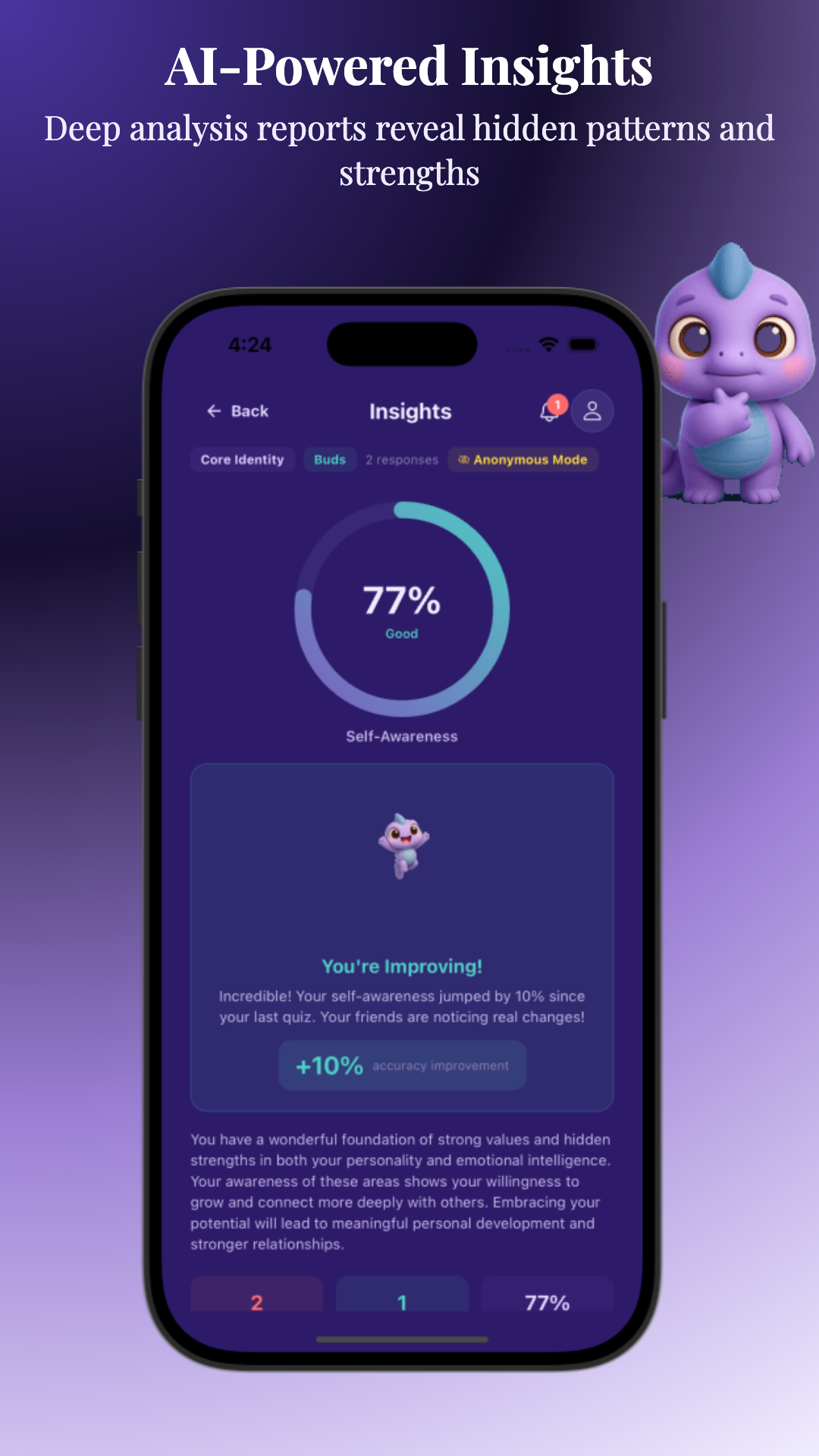
- Blindspot leverages anonymous friend feedback combined with AI insights for a holistic self-discovery experience that encourages continuous growth and real-world application.
Table of Contents
- Section 1: Core Values and Personal Principles
- Section 2: Hidden Strengths and Blind Spots Revealed by AI
- Section 3: Recurring Patterns in Behavior and Relationships
- Section 4: Fears, Insecurities, and Limiting Beliefs
- Section 5: Motivations, Desires, and What Drives Decisions
- Section 6: Emotional Clarity and Self-Awareness Prompts Powered by AI
- Section 7: Past Experiences, Childhood Influences, and Identity Formation
- Section 8: Future Goals, Purpose, and Ideal Life Vision
- Core values are the fundamental beliefs and guiding principles that shape how you perceive the world and make decisions. They serve as your internal compass, influencing behavior, goals, and relationships. Identifying these values is often the first step in authentic self discovery because they reflect what truly matters to you. For example, someone whose core value is integrity may prioritize honesty even in difficult situations, while another who values creativity might seek out novel solutions and innovative environments.
- Traditional self-assessment methods can be biased by blind spots—areas where your self-perception diverges from reality. AI self discovery tools, such as Blindspot, integrate anonymous feedback from friends and loved ones with AI analysis to reveal discrepancies between how you see yourself and how others see you. This dual perspective helps clarify your authentic core values by highlighting consistent traits and principles observed externally. For instance, if you consider yourself independent but multiple friends describe you as collaborative and team-oriented, this contrast invites deeper reflection on your true values and behaviors.
- Reflect on moments when you felt most fulfilled or proud—what values were you honoring? Try to write down specific situations and feelings to anchor these insights.
- Use AI self discovery prompts to uncover values you might overlook, such as "What qualities do my closest friends admire in me?" or "In what ways do I react when my values are challenged?".
- Compare your self-perceived values with feedback from trusted peers to spot alignments or conflicts; use AI-generated reports that aggregate and analyze this data for clearer patterns.
- Adjust your personal principles based on insights to better align with your authentic self. This might involve consciously prioritizing certain values, setting boundaries, or exploring new interests aligned with these principles.
- For a deeper dive into self-awareness and honest feedback, see our post on the Johari Test, which offers a structured framework for uncovering blind spots through interpersonal feedback.
- Blind spots are aspects of your personality or behavior that you fail to recognize but others can clearly observe. These can include both positive traits (hidden strengths) and challenges or limitations. Recognizing these areas is critical for personal growth and self-awareness because it enables you to leverage unseen potential and address unconscious behaviors that may hinder success or relationships.
- AI-powered platforms like Blindspot use anonymous friend feedback combined with advanced algorithms to analyze patterns, revealing hidden strengths you may underestimate. For example, you might not realize how empathetic or reliable you appear to others until AI aggregates diverse perspectives and highlights recurring themes. AI can quantify the frequency of positive descriptors and compare them against your self-assessment, bringing clarity to strengths that you may have dismissed or taken for granted.
- Overlooked Strengths: Patience, leadership potential, creativity, emotional intelligence, and conflict mediation skills frequently emerge as blind spot strengths when friends observe behaviors over time.
- Challenging Blind Spots: Communication gaps, unconscious biases, emotional triggers, or tendencies to avoid confrontation may be identified through discrepancies between self-reports and external feedback.
- Behavioral Blind Spots: Habits or attitudes that impact relationships negatively or positively such as interrupting others unknowingly, overcommitting, or displaying resilience in stressful situations.
- Discovering these blind spots with AI enables you to leverage strengths and address areas for improvement with clarity and actionable insight. For instance, if AI feedback reveals that you tend to dominate conversations unintentionally, you can consciously practice active listening. To learn more about psychological blind spots, visit What is a Blind Spot in Psychology?, which explores common types and strategies to overcome them.
- Recurring patterns in your behavior often reveal underlying beliefs and emotional triggers. AI self discovery tools analyze feedback across multiple interactions to detect these patterns, providing a mirror to your habitual responses in relationships and decision-making. For example, if friends consistently note that you withdraw during conflicts, AI can highlight this as a pattern worth exploring. Recognizing such habits helps you understand the root causes, such as fear of rejection or past trauma.
- How you relate to others—whether in friendships, family, or work—reflects subconscious scripts formed over time. Mirror AI self discovery helps by comparing your self-view with others' perceptions, surfacing consistent relationship themes such as trust issues, conflict avoidance, or leadership tendencies. For instance, if you consider yourself open but AI feedback indicates that others perceive you as guarded, this gap can guide targeted self-reflection and behavioral adjustment.
- Recognize unhelpful patterns like repeated conflicts or withdrawal by reviewing AI-aggregated feedback over weeks or months to identify triggers and contexts.
- Understand how your actions impact others differently than intended by analyzing discrepancies between your intentions and external observations.
- Develop new strategies for healthier communication and behavior, such as setting explicit boundaries, practicing active listening, or seeking professional coaching.
- For practical guidance on recognizing blind spots that affect behavior, check out How to Recognize Your Own Blind Spots, which offers actionable steps and exercises for sustained improvement.
- Fears and insecurities often lurk beneath the surface, influencing your decisions and limiting your potential. These internal barriers can manifest as avoidance of challenges, procrastination, or self-sabotaging behaviors. AI self discovery can help unearth these hidden barriers by analyzing patterns in feedback and prompting introspective reflection with targeted questions designed to reveal subconscious narratives.
- Through tailored AI self discovery prompts, you can explore subconscious beliefs that hold you back. Questions like "What do I fear most about failure?" or "How do I respond when criticized?" help reveal internal narratives. AI correlates these with external feedback to highlight discrepancies and growth areas. For example, if you express confidence but friends note hesitancy in decision-making, this may indicate underlying fear of judgment. AI can also analyze language patterns in your journal entries or conversations to detect negative self-talk or cognitive distortions.
- Use AI-generated insights to confront fears with rational analysis, such as reframing "I can't succeed" into evidence-based affirmations.
- Practice journaling with AI self discovery prompts to build emotional resilience, enabling you to track progress and identify shifts in thinking over time.
- Seek anonymous feedback via tools like Blindspot to gain perspective and encouragement, helping you realize that fears are often unfounded or shared by others.
- Complement AI insights with mindfulness or cognitive behavioral techniques to rewire limiting thought patterns.
- Understanding your fears and insecurities is a cornerstone of personal growth. To dive deeper into emotional clarity, explore our guide on How to Become More Self-Aware, which outlines practical exercises to increase emotional insight and resilience.
- Motivation fuels your actions and choices, but it’s often influenced by unconscious drivers. AI self discovery techniques analyze your responses and feedback to reveal core desires behind behaviors, such as seeking approval, autonomy, or security. For example, you might be motivated by a desire to feel valued, which influences how you engage at work or in social settings.
- AI tools can highlight discrepancies between your stated goals and underlying motivations. For instance, you might say you desire career advancement but your actions reflect a need for creative expression. This insight allows you to realign priorities to reduce internal conflict and increase satisfaction. AI can also classify motivations as intrinsic (driven by personal fulfillment) or extrinsic (driven by external rewards), helping you understand what truly energizes you.
- Use AI prompts to evaluate recent decisions and the emotions involved, such as asking "What motivated my choice in the last major decision?" and "Did it align with my core values?".
- Reflect on whether your motivations are intrinsic (personal growth) or extrinsic (external rewards), and consider how this balance affects your happiness.
- Adjust decision-making frameworks to honor your true desires, improving satisfaction and outcomes by setting intentional goals and eliminating distractions.
- For actionable insights on motivations and personality, the What My Friends Think of Me Quiz offers a unique AI-enhanced approach that integrates self and external perspectives.
- Emotional clarity—the ability to recognize and understand your feelings—is fundamental for self-awareness and mental well-being. It enables you to respond rather than react, improving relationships and decision-making. AI self disclosure tools provide prompts that guide you through exploring emotions with precision and non-judgment, helping to decode complex feelings and their origins.
- "What emotions did I experience today, and what triggered them?"—This prompt encourages daily emotional tracking, which research shows enhances emotional intelligence over time.
- "How do I typically respond under stress, and how does it affect my relationships?"—Identifies stress response patterns such as withdrawal or aggression for targeted management.
- "What recurring thoughts limit my emotional freedom?"—Helps uncover cognitive distortions or negative thought cycles that restrict wellbeing.
- Additional prompts might include "When do I feel most at peace?" or "What situations evoke strong emotional reactions and why?" to deepen self-exploration.
- Unbiased analysis of emotional patterns over time, leveraging natural language processing and sentiment analysis to detect shifts and trends.
- Personalized suggestions for emotional regulation and growth, such as mindfulness exercises or reframing techniques tailored to your emotional profile.
- Integration of external feedback to balance self-assessment, reducing blind spots and enhancing empathy.
- With AI as a mirror, you gain deeper insight into your emotional landscape, fostering resilience and empathy. Blindspot’s AI-driven feedback system is a prime example of this synergy between technology and self-discovery, offering actionable insights that evolve as you grow.
- Your childhood and formative experiences significantly shape your identity, beliefs, and behavior patterns. These early influences create subconscious scripts that govern how you interpret yourself and the world. AI self discovery tools incorporate reflective prompts that explore these influences, helping you understand how past events contribute to your present self and offering pathways for healing.
- By answering targeted questions like "What early experiences shaped my core beliefs?" or "How did my family dynamics influence my self-image?" AI can identify recurring themes and emotional residues. For example, if feedback and reflections highlight a childhood environment where achievement was highly valued, you may uncover perfectionist tendencies rooted in those experiences. AI tools can also analyze narrative consistency and emotional tone over multiple sessions to detect unresolved conflicts or limiting narratives.
- Recognize limiting beliefs rooted in childhood fears or trauma, such as "I must always please others to be accepted."
- Use AI feedback to validate your experiences and emotions, helping you separate past conditioning from current reality.
- Create new identity affirmations aligned with your values and goals, for example, "I am worthy independent of others' approval."
- Combine AI insights with therapeutic practices or coaching for deeper integration and sustained growth.
- To better understand the role of identity in self-awareness, explore the Why We See Ourselves Differently Than Others See Us article, which delves into cognitive biases and social influences on self-perception.
- AI self discovery goes beyond current self-awareness to help you envision your future. By combining introspective prompts with external feedback, AI supports you in articulating your purpose and defining concrete, motivating goals. For example, AI can help you prioritize goals based on alignment with your core values and emotional drivers, increasing the likelihood of sustained commitment.
- "What activities make me lose track of time?"—Identifies flow states and intrinsic interests.
- "What legacy do I want to create?"—Encourages reflection on long-term impact and meaning.
- "How do my strengths align with my ideal career or lifestyle?"—Helps connect abilities with aspirations for practical planning.
- Additional prompts could include "What would I pursue if fear or money were no object?" to uncover suppressed desires.
- With insights from AI mirror self-discovery, you can develop a personalized growth plan that prioritizes areas such as skill-building, emotional growth, or relationship improvement. Blindspot, for example, offers features for tracking progress and celebrating milestones, making self-discovery a continuous journey. Setting SMART (Specific, Measurable, Achievable, Relevant, Time-bound) goals with AI guidance increases clarity and motivation. Regular check-ins with AI can monitor your evolving priorities and suggest course corrections.
- For comprehensive strategies on self-awareness and goal setting, visit How to Become More Self-Aware, which provides frameworks for sustained personal development.
- AI self discovery represents a powerful evolution in personal growth, leveraging technology to reveal the nuances of who you are beneath your conscious awareness. By integrating anonymous friend feedback with intelligent prompts and mirror AI self-disclosure, platforms like Blindspot illuminate your core values, hidden strengths, fears, motivations, and future aspirations. This holistic approach empowers you to bridge the gap between self-perception and external reality, fostering emotional clarity and actionable insight.
- Whether you’re exploring recurring behavioral patterns, unpacking childhood influences, or envisioning your ideal life, AI tools provide a nonjudgmental, data-driven mirror to guide your journey. Embracing this technology enriches your self-awareness and accelerates growth in ways traditional methods cannot match. By continuously engaging with AI-driven feedback and reflection, you cultivate a dynamic self-understanding that adapts as you evolve, making personal growth both measurable and meaningful.
- Ready to uncover your blind spots and discover your authentic self with AI insights? Explore Blindspot to begin your transformative self-discovery journey today.
- Q: What are my core values and how do I identify them?
- A: Core values are your fundamental beliefs and principles that guide your decisions and behaviors. You can identify them through self-reflection on moments of fulfillment, using AI self discovery prompts, and comparing your self-view with anonymous external feedback to find consistent themes. Employing tools like Blindspot allows you to see differences between your perceived values and those observed by others, enabling refinement towards your authentic self.
- Q: What hidden strengths or blind spots does AI reveal about me?
- A: AI reveals blind spots by analyzing discrepancies between how you see yourself and how others perceive you, uncovering overlooked strengths like empathy or leadership, as well as behavioral challenges that may impact relationships or self-growth. This objective insight helps you better leverage your abilities and address areas of potential improvement with clarity.
- Q: What recurring patterns or beliefs are shaping my decisions?
- A: Recurring patterns often stem from subconscious beliefs and emotional triggers formed by past experiences. AI self discovery tools detect these by analyzing behavioral feedback and self-reported reflections, helping you understand and break unhelpful cycles. Recognizing these patterns empowers you to make conscious changes for healthier relationships and decision-making.
- Q: How can I use ChatGPT for self-reflection and personal growth?
- A: ChatGPT can assist by providing tailored self discovery prompts, facilitating journaling, analyzing emotional patterns, and helping you explore motivations and fears through interactive conversations that enhance self-awareness. By engaging in guided dialogue, you can clarify thoughts, identify blind spots, and generate actionable plans for growth.
- Q: What prompts help uncover my purpose, passions, and ideal life?
- A: Effective AI prompts include questions like "What activities make me lose track of time?", "What legacy do I want to leave?", and "How do my strengths align with my goals?" These guide deep reflection on your desires and vision, helping you articulate meaningful objectives and pathways.
- Q: Can AI help me understand my fears, insecurities, and limiting beliefs?
- A: Yes, AI tools use introspective prompts and analyze feedback to surface hidden fears and limiting beliefs, offering clarity and strategies for overcoming them through continuous reflection and support. Integrating AI insights with personal effort leads to greater emotional freedom and resilience.
FAQ
Conclusion
Creating an Actionable Growth Plan
AI Prompts to Uncover Your Purpose and Passions
Clarifying Your Life Vision
Section 8: Future Goals, Purpose, and Ideal Life Vision
Healing and Growth through Understanding Identity
AI-Powered Reflection on Childhood Influences
The Impact of Early Life on Self-Discovery
Section 7: Past Experiences, Childhood Influences, and Identity Formation