How to Recognize Your Own Blind Spots: A Complete Guide
Learn how to recognize your own blind spots, improve self-awareness, and grow with practical steps, feedback tools, and expert tips using Blindspot.

Estimated reading time: 12 min
Key Takeaways
- Understanding blind spots is crucial to true self-awareness and personal growth.
- Internal vs external self-awareness: Both are needed for accurate self-understanding.
- Honest feedback from others helps reveal what you can't see about yourself.
- The Johari Window is a proven framework for exploring blind spots.
- Apps like Blindspot make it easy to get anonymous, actionable feedback and track growth.
Want to know how to recognize your own blind spots? You're not alone. Even the most self-aware people have traits or behaviors they overlook. In psychology, these "blind spots" are parts of ourselves we can't see, but others can. This guide will help you understand what self-awareness really means, why it matters, and give you actionable steps to uncover your hidden blind spots. With the right tools—including the Blindspot app—you can bridge the gap between how you see yourself and how others see you, unlocking real growth.
Step 1: Understand What Self-Awareness and Blind Spots Are
Before diving into techniques, let's clarify the basics. What is self-awareness? It's the ability to see yourself clearly—your emotions, motives, strengths, weaknesses, and how your actions affect others. High self-awareness is linked to better relationships, stronger leadership, and greater well-being.
But there are two kinds of self-awareness:
- Internal self-awareness: How clearly you understand your own thoughts, feelings, and values.
- External self-awareness: How well you grasp how others perceive you.
Blind spots exist when there's a gap between these two. In psychology, a blind spot is any quality, habit, or bias you don't notice about yourself, but others do. The Johari Window model explains this as the 'blind area'—traits known to others but hidden from you. For a deep dive, explore the Johari Window Test.
Step 2: Ask for Honest Feedback from Trusted People
Since blind spots are invisible to you, you need outside perspectives. Feedback is the most direct way to uncover them. Start by choosing people you trust—friends, family, colleagues—who have seen you in different situations.
How to ask:
- Be specific: “What’s one thing I do that sometimes rubs people the wrong way?”
- Invite honesty: “I’m looking to grow—please be candid.”
- Use anonymous tools: If direct feedback feels awkward, use apps like Blindspot for anonymous, honest responses.
For more on getting genuine responses, see How to Get Honest Feedback from Friends: A Practical Guide.
Step 3: Look for Patterns Across Multiple Sources
One comment might be an opinion; repeated feedback is a clue. Collect input from several people and compare their observations. Are there certain behaviors or traits that come up again and again?
What to look for:
- Repeated mentions of a personality trait (e.g., "too blunt," "doesn’t listen well")
- Feedback about your communication, decision-making, or emotional reactions
- Patterns in group settings vs. one-on-one situations
Consider using Blindspot's Free Question Generator to ask targeted questions and gather more consistent feedback.
Step 4: Notice Emotional Triggers and Defensiveness
Sometimes, your strongest reactions are windows into your blind spots. If you feel defensive, embarrassed, or annoyed by feedback, pay attention. These emotions often signal areas where your self-perception clashes with reality.
To reflect:
- When did you last feel criticized? What was the feedback about?
- Did you quickly dismiss someone’s opinion, or did it linger in your mind?
- How do you react when your intentions are questioned?
Strong emotional responses can be signs of low self-awareness, especially if you notice a pattern. Try to pause and ask yourself what’s beneath the reaction.
Step 5: Use Reflection Questions to Uncover Hidden Behaviors
Self-reflection helps you connect the dots between your actions and their impact. Try journaling or recording your thoughts in response to questions like:
- What feedback have I ignored or dismissed in the past?
- Where do I notice repeated conflicts or misunderstandings?
- How do my actions differ from my intentions?
- What qualities do I admire (or dislike) in others—do I share them?
For more reflection tools, check the Johari Window Questionnaire for guided self-exploration.
Step 6: Compare Your Intent vs. Your Actual Impact
Often, there’s a disconnect between what you meant and how others experience you. To bridge this gap, ask people how your words or actions affected them—especially in moments of tension or miscommunication.
- Follow up after key interactions: “How did that come across to you?”
- Notice if others seem surprised, hurt, or confused by your behavior.
- Compare your personal narrative to the stories others tell about you.
Apps like Blindspot make it easy to collect this data anonymously, so people can be honest about your impact without worrying about awkwardness.
Step 7: Record Yourself or Review Your Behavior
Sometimes, seeing (or hearing) yourself objectively is eye-opening. Try recording yourself in meetings, conversations, or presentations—then review with fresh eyes. Notice:
- Your tone, body language, and nonverbal cues
- Whether you interrupt, dominate, or fade into the background
- How your words and actions match your intentions
Compare your self-assessment with external feedback to spot discrepancies.
Step 8: Use Structured Tools and 360-Degree Feedback
Formal tools offer a systematic approach to self-discovery. The Johari Window is a classic framework, and many apps and assessments are available to help you get started. Consider:
- Johari Window exercises (see Johari Test: Unlocking Self-Awareness Through Honest Feedback)
- Personality quizzes and 360-degree reviews
- Apps like Blindspot, which combine anonymous feedback, group comparisons, and growth tracking
Here's how Blindspot's insight dashboard can help you visualize feedback over time:
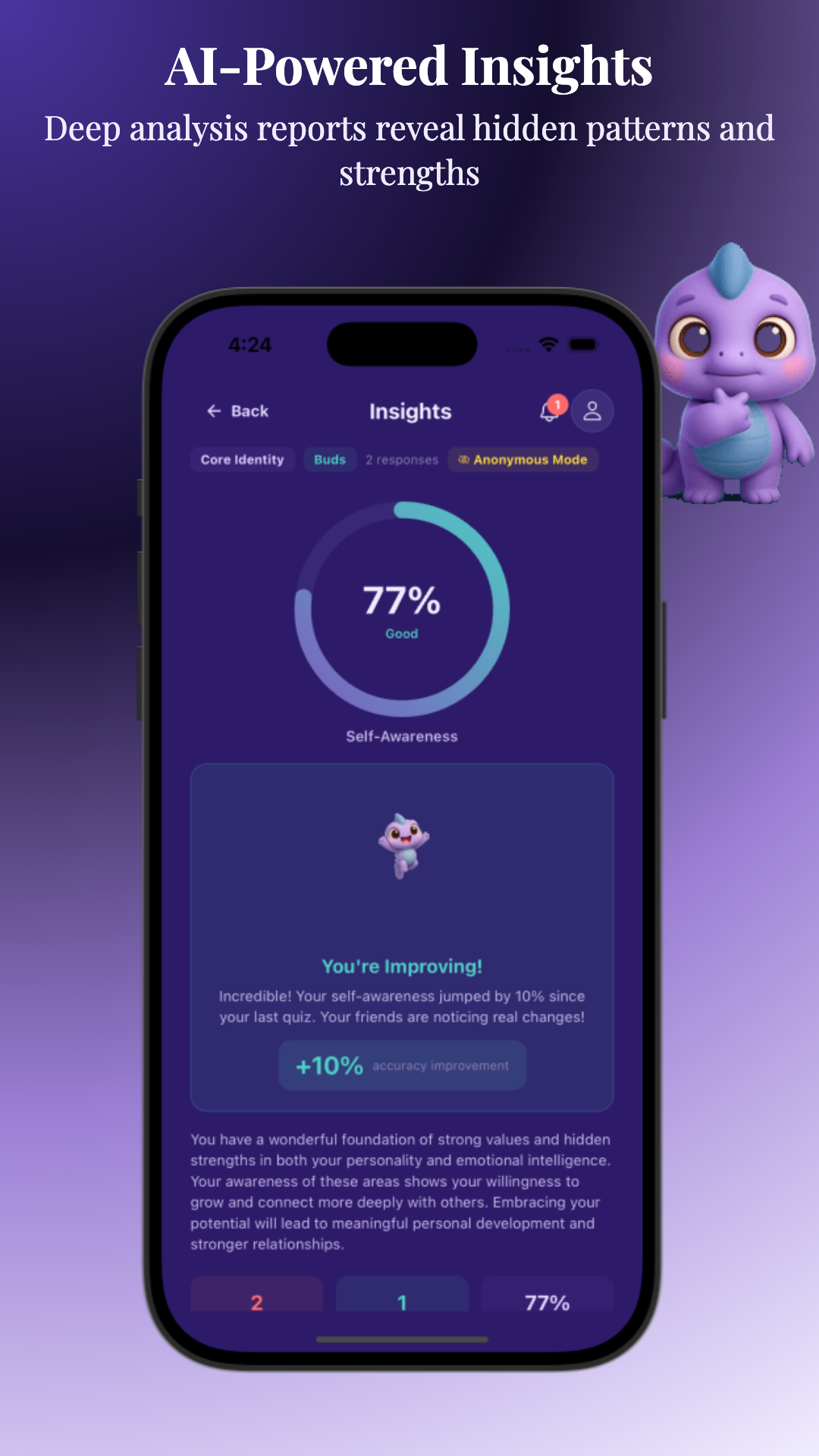
These tools make it easier to measure your progress and identify persistent blind spots.
Step 9: Challenge Your Biases & Rewrite Your Stories
We all have mental shortcuts (biases) and narratives that justify our actions. These stories can blind us to alternative explanations and keep us stuck. To break free:
- Ask yourself: “What if I’m wrong about this situation?”
- Seek evidence that challenges your usual beliefs.
- Discuss your assumptions with people who think differently from you.
For an in-depth look at how friends shape your self-image, read How Friends Shape Our Self-Image: The Hidden Impact.
Step 10: Turn Discoveries into Real Change
Recognizing your blind spots is only the beginning. To grow, you need to act. Create a simple plan:
- Pick one blind spot to focus on.
- Set a small, specific goal (e.g., “Pause and ask questions before responding in meetings”).
- Ask for follow-up feedback after a few weeks.
- Track your progress using a journal or an app like Blindspot, which lets you see your growth over time.
For more on building self-awareness and changing habits, see What Is a Personality Blind Spot? Understanding the Gaps in Self-Perception.
Tips & Common Mistakes
- Don’t take feedback personally. It’s about your behavior, not your worth.
- Avoid only asking like-minded people. Diversity of perspective is key.
- Don’t ignore emotional reactions. They’re often clues, not annoyances.
- Be patient. Uncovering and changing blind spots takes time and repetition.
- Use tools regularly. Apps like Blindspot make it easy to keep feedback flowing.
Conclusion
Learning how to recognize your own blind spots is a lifelong journey—but it’s one of the most valuable things you can do for your relationships, career, and happiness. By combining honest feedback, structured tools like the Johari Window, and self-reflection, you’ll gradually close the gap between how you see yourself and how others see you. If you want an easy, research-backed way to start, check out Blindspot—the app designed for self-discovery through anonymous, actionable feedback.
FAQ
- How do I identify my blind spots?
Combine self-reflection, honest feedback from others, and structured tools (like the Johari Window or apps such as Blindspot) to discover patterns you might miss on your own. - What are examples of personal blind spots?
Common blind spots include interrupting others, appearing unapproachable, overestimating listening skills, or not noticing how your mood affects a group. - How can I tell if feedback is pointing to a blind spot?
If feedback surprises you, repeats across sources, or triggers a strong emotional response, it’s likely highlighting a blind spot. - What questions should I ask people to uncover my blind spots?
Try: “What’s one thing I do that holds me back?” or “How do I come across when stressed?” For more, use a question generator like Blindspot’s Free Question Generator. - How do I recognize blind spots in relationships or at work?
Look for repeated misunderstandings, conflicts, or feedback that differs from your self-perception—especially from people in different roles or backgrounds. - What is the difference between a strength and a blind spot?
A strength is a positive trait you use effectively; a blind spot is a behavior or habit you’re unaware of, which may negatively impact others or limit your growth.