What Your Friends Say About You: The Ultimate Guide to Self-Discovery and Friendship Dynamics
Discover what your friends say about you, signs of good and bad friends, group dynamics, and self-awareness. The definitive guide to friendship and self-growth.

Estimated reading time: 13 min
Key Takeaways
- Understanding what your friends say about you reveals critical self-knowledge and social blind spots.
- Friend group dynamics and feedback can highlight the signs of a good friend—or a bad one.
- Articulating traits friends use to describe you is essential in interviews and self-development.
- Specific, example-backed answers stand out in interviews and encourage deeper self-awareness.
- Tools like Blindspot and honest feedback exercises can accelerate growth and help you become a better friend.
Table of Contents
- Section 1: The Meaning of 'What Your Friends Say About You'
- Section 2: Signs of a Good Friend and a Bad Friend
- Section 3: Friend Group Dynamics and Social Roles
- Section 4: How to Answer 'What Would Your Friends Say About You?'
- Section 5: Choosing and Backing Up Traits with Real-Life Examples
- Section 6: Tailoring Your Answer for Interviews and Self-Growth
- Conclusion
- FAQ
Section 1: The Meaning of 'What Your Friends Say About You'
Understanding the Phrase in Context
"What your friends say about you" is more than a casual reflection—it's a revealing lens into your character, social strengths, and even areas needing growth. In both personal self-discovery and professional interviews, this question aims to uncover how your behavior, personality, and values are perceived by those closest to you. It acts as a mirror, showing how your self-image aligns (or conflicts) with external perceptions.
Interview and Self-Description Settings
In interviews, hiring managers often ask, "What would your friends say about you?" or "What three words would your friends use to describe you?" They're looking for self-awareness, emotional intelligence, and authenticity. Your answer reveals whether you understand your impact on others—a vital trait in teamwork-heavy environments.
The Psychological Insight
This question also ties into the concept of the Johari Window, which explores the gap between self-perception and how others see us. If you're curious about structured self-discovery, check out the Johari Window Test: A Powerful Tool for Self-Discovery, which dives deeper into these psychological frameworks.
- Encourages honest reflection on your qualities
- Helps identify your personality blind spots
- Offers a starting point for self-improvement and stronger relationships
Beyond the Interview Room
Outside of formal settings, understanding what your friends say about you is crucial for personal growth. Apps like Blindspot facilitate this process by letting friends anonymously share their honest thoughts, revealing gaps you might not notice on your own.
Section 2: Signs of a Good Friend and a Bad Friend
Recognizing the Signs of a Good Friend
The feedback you receive from friends is only as valuable as the quality of those friendships. Knowing the signs of a good friend ensures you're interpreting the right messages and growing from authentic feedback. Here are key indicators:
- Trustworthiness: Good friends keep your confidences and act with integrity.
- Supportiveness: They celebrate your wins and stand by you during tough times.
- Honesty: They offer constructive criticism, not just flattery.
- Empathy: Good friends listen and understand your feelings—even when they disagree.
- Reliability: They show up when it matters, big or small.
Warning Signs of a Bad Friend
On the flip side, signs of a bad friend include:
- Self-centeredness: Conversations always revolve around them.
- Disloyalty: They gossip about you or betray trust.
- Negativity: Constant criticism without support.
- Manipulation: They use guilt or pressure to control you.
- Inconsistency: Their support vanishes when you need it most.
Evaluating Feedback Quality
When reflecting on what your friends say about you, filter feedback through these signs. Input from a supportive, honest friend is likely to be more constructive and balanced. If negative feedback consistently comes from friends displaying bad signs, take it with caution and seek additional perspectives.
Growing Through Friendship Feedback
Improving as a friend involves recognizing these traits in yourself as well. For more on how friends shape how we see ourselves, read How Friends Shape Our Self-Image: The Hidden Impact.
Section 3: Friend Group Dynamics and Social Roles
Understanding Group Dynamics
Friendship isn't just about one-on-one relationships. Friend group dynamics influence how you are perceived and what your friends say about you. Every group has its own set of roles, unspoken rules, and power structures that affect each member’s reputation.
- The Leader: Sets the tone, organizes activities, often seen as responsible and decisive.
- The Peacemaker: Mediates conflicts, values harmony, and is often described as empathetic.
- The Comic Relief: Lightens the mood, keeps things fun, and is perceived as approachable.
- The Supporter: Always there to listen, offers practical help, and is seen as loyal.
- The Challenger: Pushes others out of their comfort zones, provides tough love, and might be described as honest or blunt.
How Roles Shape Perception
Your role in a group often influences the adjectives friends use to describe you. For example, if you’re the organizer, words like "reliable" or "proactive" may come up. If you’re the listener, expect "caring" or "thoughtful." Recognizing your group role can help you predict—and shape—what your friends say about you.
Group Feedback vs. Individual Feedback
Feedback from the group can reveal patterns or reputational traits that individual friends might not mention. Using tools like Blindspot, you can compare ratings and traits across your group, as seen in the screenshot below.
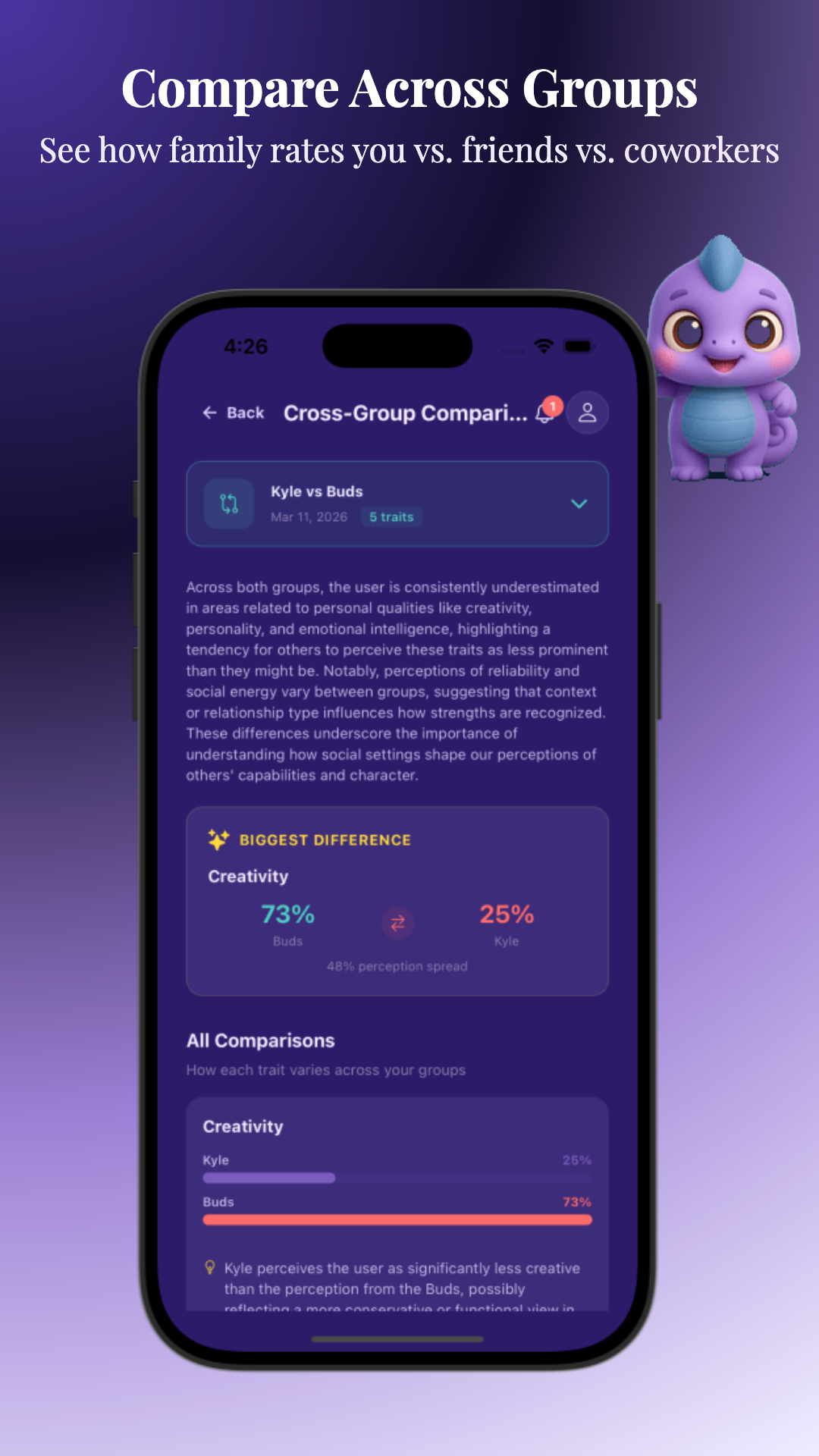
Friend Group Dynamics and Self-Discovery
Understanding these dynamics is essential, especially if you’re asking, "Why do I have few friends?" Sometimes, group roles or unspoken rules can unintentionally exclude or pigeonhole people. Becoming aware of these patterns is the first step to changing them and fostering better connections. For a deeper dive into these questions, see why you might have few friends and how friendship dynamics and self-awareness play a role.
Section 4: How to Answer 'What Would Your Friends Say About You?'
Why Interviewers Ask This Question
Interviewers use questions like "What would your friends say about you?" to assess your self-awareness, communication skills, and cultural fit. They want to see if you can reflect honestly, avoid arrogance or generic answers, and offer specific evidence of your qualities.
Avoiding Clichés and Arrogance
- Don't just say: "My friends would say I'm hardworking and nice."
- Do say: "My friends often describe me as dependable and thoughtful. For example, they know they can count on me to check in when someone’s having a tough week, or to take the lead when organizing group projects."
Keep Your Answer Focused
Mention 2–3 well-chosen traits. More than that sounds unfocused; fewer may seem underwhelming. Each trait should be job-relevant and backed by a concrete example.
Sample Variations of the Question
- "What three words would your friends use to describe you?"
- "How would your friends describe your role in the group?"
- "What do your friends value most about you?"
Practicing with anonymous feedback tools, such as the What My Friends Think of Me Quiz, can prepare you for these questions and reveal hidden strengths or areas for growth.
Section 5: Choosing and Backing Up Traits with Real-Life Examples
Selecting Strong, Authentic Adjectives
The most powerful answers are specific, authentic, and supported by real-life evidence. Common positive adjectives friends might use include:
- Reliable
- Empathetic
- Resourceful
- Optimistic
- Honest
- Organized
- Funny
- Driven
Backing Up Traits with Examples
For each adjective, think of a brief story or situation when you demonstrated that trait. This not only makes your answer memorable, but also believable.
- Reliable: "Last year, when our group’s project was at risk of missing the deadline, I created a detailed schedule and checked in with everyone until we finished ahead of time. My friends joked that I was our 'project manager.'"
- Empathetic: "When a friend’s pet passed away, I organized a small get-together to support them, and my friends later told me it made a real difference."
Using Feedback Tools for Insight
If you’re unsure which adjectives fit, gather input from your friend group using surveys, apps like Blindspot, or structured exercises such as the Johari Test: Unlocking Self-Awareness Through Honest Feedback. These tools can reveal surprising consensus or highlight traits you didn’t realize stood out. You can also explore how to gain deeper insight into your friendships and their dynamics for further clarity.
Common Mistakes to Avoid
- Using vague or generic adjectives with no supporting evidence
- Listing too many traits—focus on quality, not quantity
- Describing traits that don’t match your actions or reputation
Section 6: Tailoring Your Answer for Interviews and Self-Growth
Understanding the Employer’s Perspective
Employers want to know if your social reputation and personality traits align with their company culture and job requirements. For example, if teamwork and communication are valued, highlight how your friends see you as collaborative or supportive.
- For leadership roles: Focus on descriptors like "decisive," "motivational," or "fair."
- For customer-facing roles: Emphasize "empathetic," "patient," or "solution-oriented."
- For creative roles: Use "innovative," "open-minded," or "enthusiastic."
Sample Strong Answers
- "My friends would describe me as persistent and supportive. For instance, when a friend was struggling with a coding bootcamp, I offered weekly study sessions and helped keep them on track—something they’ve appreciated and mentioned often."
- "I’m often called the peacemaker in my group. When conflicts arise, I help everyone see each other’s perspectives, which has helped us stay close over the years."
- "My friends describe me as energetic and resourceful. I love planning our trips and finding creative solutions when plans change."
Self-Growth Through Honest Feedback
Beyond interviews, reflecting on what your friends say about you can pinpoint areas for personal growth. If multiple friends highlight a blind spot—like being too blunt, or struggling with follow-through—consider it a valuable opportunity for change. For practical steps, explore the How to Uncover Your Social Blind Spots: Step-by-Step Guide for actionable advice. You can also learn more about developing self-awareness and understanding yourself to support your growth journey.
Becoming a Better Friend
Use what you learn to strengthen your friendships. If friends value your listening skills, offer that support more intentionally. If they see you as the group motivator, look for new ways to inspire your circle. For more inspiration, see 25 Insightful Questions to Ask Your Friends About Yourself to deepen mutual understanding.
Conclusion
Understanding what your friends say about you is one of the most powerful gateways to self-discovery and social intelligence. Whether you’re preparing for an interview, seeking to improve your relationships, or simply curious about your blind spots, this feedback is essential. By learning the signs of a good (and bad) friend, recognizing your group role, and using tools like Blindspot for honest feedback, you can grow into the friend—and person—you aspire to be.
Ready to uncover your blind spots and see yourself through your friends’ eyes? Start your journey toward greater self-awareness today.
FAQ
Q: What would your friends say about you in an interview?
A: In an interview, your answer should reflect 2–3 positive, job-relevant traits supported by real-life examples. For instance, "My friends would say I’m reliable and empathetic—someone who always checks in and offers support during stressful times." Focus on qualities that align with the company culture and the role you’re applying for.
Q: How do you answer "What would your friends say about you?"
A: Choose 2–3 specific adjectives that genuinely describe you, and back each up with a short story or example. Avoid generic statements, and tailor your answer to fit the context—whether it’s an interview or personal reflection. Practice with tools like Blindspot or feedback exercises to gain clarity.
Q: What are good words to describe yourself through your friends?
A: Some strong adjectives include reliable, empathetic, resourceful, optimistic, honest, organized, funny, and driven. The best words are those that genuinely reflect your actions and reputation within your friend group.
Q: How many traits should I mention when asked what my friends say about me?
A: Aim for 2–3 traits. This keeps your answer focused and memorable. Each trait should be relevant, authentic, and accompanied by a real-life example to make your response credible.
Q: What are examples of a strong answer to "What would your friends say about you?"
A: "My friends often call me the peacemaker because I help resolve group conflicts by encouraging understanding. They also say I’m reliable—I never miss a commitment and am always ready to help when needed." Use brief, specific examples to illustrate each trait.
Q: Why do interviewers ask what your friends would say about you?
A: Interviewers ask this to gauge your self-awareness, honesty, and how well you understand your social impact. It reveals if you can reflect objectively on your strengths and weaknesses, and whether your personality fits the team and company culture.