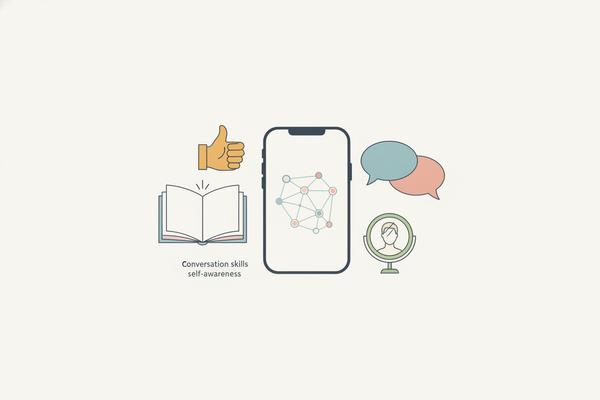
Mastering Conversation Skills: Confidence, Charisma & Likeability
Discover expert conversation skills, tips for confidence, charisma, and making a good impression. Learn to be more likeable, socially aware, and avoid awkward silences.


Estimated reading time: 15 min
Key Takeaways
- Strong conversation skills are foundational for building confidence, likeability, and charisma.
- Practical strategies exist for small talk, deep conversations, and avoiding awkward silences.
- Self-awareness and honest feedback can dramatically improve your social impact and impression.
- Nonverbal cues, active listening, and good questions are as important as what you say.
- Consistent practice—alone and with others—is essential to mastery.
Table of Contents
- Section 1: The Foundations of Great Conversation Skills
- Section 2: Everyday Conversation Starters and Icebreakers
- Section 3: Going Deeper—Active Listening and Asking Good Questions
- Section 4: Building Confidence, Charisma, and Likeability
- Section 5: Avoiding Awkward Silences and Keeping Conversations Flowing
- Section 6: Nonverbal Conversation Skills—Body Language, Eye Contact, and Beyond
- Section 7: Conversation Skills for English Learners
- Section 8: Practicing and Improving Your Conversation Skills
- Conclusion
- FAQ
Section 1: The Foundations of Great Conversation Skills
What Are Conversation Skills?
Conversation skills are the set of abilities that enable you to engage, connect, and communicate effectively with others. They include both verbal and nonverbal techniques, such as choosing topics, asking questions, listening actively, and responding appropriately. Good conversation skills are at the heart of how to make a good impression and are essential for being more likeable and charismatic.
These skills are not limited to spoken words; they encompass the entire experience of interaction. For example, the timing of your responses, the tone of your voice, your willingness to show vulnerability, and your ability to read the room all play crucial roles. Mastering conversation means being able to adjust your approach in real-time based on the feedback—verbal or nonverbal—you receive. A truly effective conversationalist knows when to speak, when to pause, and how to gracefully change topics or steer a discussion.
Why Do Conversation Skills Matter?
Whether you’re making new friends, networking at work, or going on a date, strong conversation skills determine:
- Your first impression (are you seen as warm, interesting, confident?)
- Your ability to build relationships and trust
- How well you navigate social situations and avoid awkwardness
- Your perceived charisma and likeability
They’re also tightly connected to self-awareness. Understanding how you come across can highlight blind spots—areas where your self-perception differs from how others see you.
For instance, in a professional setting, effective conversation skills can help you advocate for yourself, collaborate more smoothly with colleagues, and even negotiate raises or promotions. In your personal life, these skills help deepen relationships, resolve conflicts, and make you a more enjoyable presence at any gathering. According to communication experts, the average person spends nearly 70-80% of their waking hours engaged in some form of communication—making conversation skills one of the most valuable assets you can develop.
The Role of Self-Awareness
Many people wonder, "Why am I not confident in conversation?" or "How can I be more socially aware?" These questions often point back to self-awareness. Using tools like the Johari Window or self-discovery apps like Blindspot can reveal these gaps. When you know your strengths and the traits others notice, you can consciously build on them, becoming more charismatic and confident in every interaction.
For example, a common blind spot is interrupting others without noticing. Self-awareness tools help you discover if you frequently do this, allowing you to adjust and improve. Similarly, you might believe you’re approachable, but feedback could reveal that your body language appears closed off. By seeking out honest input—whether through digital tools, peer feedback, or reflection—you can pinpoint subtle habits that either boost or hinder your social presence.
Section 2: Everyday Conversation Starters and Icebreakers
Why Starters Matter
Every conversation begins with a first step. Conversation starters and icebreakers lower barriers and set a friendly tone. Even confident people sometimes freeze, so having go-to openers helps you enter any interaction with ease.
Starting well reduces anxiety for everyone involved. A good opener demonstrates initiative and shows that you’re approachable. It also gives the other person an easy way to engage, even if they’re nervous themselves. Whether you’re at a party, networking event, or waiting in line at a coffee shop, knowing what to say first can spark connections that last well beyond the initial interaction.
Great Small-Talk Topics
- Current surroundings: “This place has such a great vibe. Have you been here before?”
- Shared experiences: “How did you get into this field/event?”
- Weather (classic, but works): “It’s finally warming up! Any plans to enjoy the sun?”
- Compliments: “I love your taste in books. Any recommendations?”
For more inspiration, try the Free Question Generator to find creative, honest questions that break the ice.
Small talk doesn’t have to be superficial. With thoughtful phrasing, you can transition from surface-level topics to more meaningful discussions. For instance, after a comment about the weather, you could ask, “Do you prefer summer or winter? Why?” Or, if you notice someone’s unique accessory, a genuine compliment followed by curiosity (“That’s a cool pin—does it have a story?”) often leads to richer exchanges.
Icebreakers for Different Settings
- At work: “What project has been keeping you busy lately?”
- With new friends: “What’s something most people don’t know about you?”
- On a date: “What’s your go-to comfort food?”
- Meeting strangers: “What’s the highlight of your week so far?”
Choosing relatable, open-ended topics is key to being more likeable and making a memorable first impression. The more you practice, the more natural and charismatic you’ll appear.
Context matters. At networking events, you might focus on professional interests (“How did you get started in your field?”), while at social gatherings, lighter questions work best (“Seen any good movies lately?”). The goal is to invite conversation, not interrogate. Over time, having a mental list of 8–10 go-to openers for different environments can make you far more adaptable and reduce the pressure to ‘think on your feet’ in real time.
Section 3: Going Deeper—Active Listening and Asking Good Questions
Why Listening Is Powerful
Many believe being a good conversationalist is about being witty or talkative. In reality, active listening is the secret. It signals respect, builds rapport, and encourages others to open up. If you want to know how to be more socially aware, start by listening more than you speak.
Active listening means being fully present—putting away distractions, making eye contact, and showing you value the speaker’s contribution. Studies consistently show that people rate those who listen attentively as more trustworthy and likeable. By truly focusing on the other person, you make them feel valued, which is the foundation of any strong relationship, whether professional or personal.
How to Ask Meaningful Questions
- Open-ended: “What was the best part of your weekend?” (Not just yes/no!)
- Follow up: “You mentioned you travel a lot—what’s your favorite place so far?”
- Empathetic: “That sounds challenging. How did you handle it?”
When you ask thoughtful questions, you encourage depth and connection. This is essential for deep conversation topics—the kinds that foster trust and lasting friendships.
Avoid rapid-fire questioning, which can feel like an interrogation. Instead, let the conversation breathe. After someone answers, reflect on their response before moving on. For example, if someone shares a challenge, express understanding (“That must have been tough for you”) before asking a follow-up question. This creates a natural flow and shows genuine interest.
Practicing Active Listening
- Use verbal cues: “That’s interesting,” “Tell me more,” “Really?”
- Reflect: Summarize what you heard (“So you felt…”) to show understanding.
- Pause before responding, giving space for the other person’s thoughts.
To further improve, consider exploring how others shape your self-image and the impact of feedback on your social skills.
Active listening isn’t just about the words. Pay attention to nonverbal signals—does the speaker look excited, anxious, or hesitant? Mirroring their emotional tone demonstrates empathy and makes interactions feel more personal. If you struggle to stay present, try repeating key points in your head as the other person speaks, or jot down notes (when appropriate) to reinforce your memory and focus.
Section 4: Building Confidence, Charisma, and Likeability
What Makes Someone Charismatic?
Charisma isn’t magic—it’s a blend of body language, confidence, warmth, and presence. If you’re wondering how to be more charismatic or how to be more likeable, focus on these fundamentals:
- Genuine interest: Make others feel seen and valued.
- Positive energy: Smile, use humor, and express enthusiasm.
- Confident posture: Stand tall, maintain relaxed shoulders, and use open gestures.
- Consistent eye contact: Shows you’re engaged and trustworthy.
Charisma is often described as “making the other person feel like the most important person in the room.” This can be achieved by giving your full attention, asking thoughtful follow-up questions, and sharing a bit of your own vulnerability. For example, leaders and public figures who are considered charismatic often strike a balance between assertiveness and approachability. Even if you’re naturally introverted, you can cultivate these traits by practicing them in low-pressure situations and gradually expanding your comfort zone.
How to Build Confidence in Conversations
Confidence is built, not born. Here are actionable ways to overcome the "why am I not confident?" dilemma:
- Preparation: Have a few conversation starters ready.
- Practice: Rehearse with friends or in front of a mirror.
- Self-reflection: Use feedback from tools like What My Friends Think of Me Quiz to identify strengths and areas for growth.
- Small wins: Set achievable social goals, like introducing yourself to one new person each week.
Visualization is another effective technique. Before entering a social setting, visualize yourself succeeding—smiling, shaking hands, and enjoying the interaction. This mental rehearsal primes your mind and reduces anxiety. Over time, as you collect positive experiences, your self-assurance will grow. Remember, everyone feels nervous sometimes; the difference is that confident people act in spite of their nerves.
Making a Good Impression
Your first impression lasts. To master how to make a good impression:
- Dress appropriately for the setting
- Arrive on time
- Show genuine curiosity about others
- Remember names and details
These habits make you instantly more likeable and memorable.
Personalization helps: use the other person’s name early in conversation and reference shared interests or previous topics when possible. Small gestures—like holding the door, offering a seat, or making a timely compliment—demonstrate attentiveness. Research suggests it takes only a few seconds for others to form a lasting impression, so focus on warmth and authenticity from the outset. For a comprehensive approach to developing these traits, see our complete guide to charisma and confidence.
Section 5: Avoiding Awkward Silences and Keeping Conversations Flowing
Why Awkward Silences Happen
Even skilled conversationalists encounter lulls. But awkward silences don’t have to derail the interaction. They often occur due to:
- Nervousness or overthinking what to say next
- Lack of shared interests or context
- Fatigue or distractions
Sometimes, silences are simply a natural pause as people reflect or consider their responses. However, if left unaddressed, they can create discomfort or signal disengagement. Recognizing when a pause is comfortable versus awkward is itself a valuable social skill.
Strategies to Keep Conversations Going
- Loop back: Reference something earlier (“You mentioned you love hiking—any favorite trails?”)
- Share a personal story: Vulnerability encourages others to open up.
- Switch topics gracefully: “By the way, have you tried…”
- Ask for advice or opinion: “I’m looking for a good book—any suggestions?”
Practicing these techniques will help you avoid awkward silences and demonstrate both confidence and social awareness.
Other useful tactics include using environmental cues ("I just noticed that painting—do you like art?") or bringing up shared experiences ("I think we both attended the last seminar—what did you think of it?"). If you sense momentum slowing, gently steer the conversation toward common interests or light, universally relatable topics (food, travel, music, etc.).
Handling Group Conversations
- Include quieter members by asking their opinion
- Avoid dominating the discussion—balance speaking and listening
- Use humor to diffuse tension or awkwardness
Being attentive to group dynamics is a sign of strong social awareness.
In groups, it’s especially important to read the room—notice who hasn’t spoken, who looks disengaged, and who’s leading the conversation. If you're unsure how to include someone, try a simple “What do you think about this?” or “How was your week?” Rotating your eye contact and body orientation can also invite participation from everyone. Humor and light anecdotes help keep energy up and make the atmosphere more relaxed.
Section 6: Nonverbal Conversation Skills—Body Language, Eye Contact, and Beyond
The Power of Nonverbal Cues
Nonverbal communication shapes how your words are received. It’s essential for conveying confidence, interest, and authenticity. Mastering nonverbal skills is a core part of answering how to be more charismatic and how to make a good impression.
In fact, research suggests that over half of communication is nonverbal. How you stand, your gestures, your facial expressions, and even your tone can dramatically change the meaning of your words. For example, a friendly “hello” delivered with a smile and open posture will be received very differently from the same word spoken with arms crossed and minimal eye contact.
Key Nonverbal Skills
- Eye contact: Aim for steady, relaxed eye contact (but don’t stare).
- Smile: A genuine smile builds warmth instantly.
- Open posture: Avoid crossing arms or turning away.
- Gestures: Use purposeful hand movements to emphasize points.
- Personal space: Respect boundaries—stand at a comfortable distance.
Additional nonverbal cues include nodding to show agreement or understanding, mirroring the other person’s expressions, and leaning slightly forward to signal engagement. Be mindful of cultural differences—what’s appropriate in one culture may be intrusive in another. Practicing in front of a mirror or recording yourself can help you become more aware of your default body language and make intentional improvements.
Mirroring and Social Awareness
Mirroring—subtly reflecting another’s body language—signals rapport and trust. However, overdoing it feels unnatural. The key is authentic, relaxed engagement. If you’re unsure how you’re perceived, tools like Blindspot can help you understand your nonverbal impact and adjust accordingly.
Mirroring works best when it’s subtle and responsive, not forced. For example, if your conversation partner leans in, you might do the same a few moments later. If they gesture with their hands, let your own gestures flow naturally. This unconscious synchronization increases comfort and connection. Being socially aware means noticing these cues not only in yourself, but also observing group body language—who’s open, who’s closed off, and where you fit into the dynamic.
Section 7: Conversation Skills for English Learners
Challenges for Non-Native Speakers
Speaking in a new language adds unique hurdles—nerves, vocabulary gaps, or the fear of making mistakes. If you’re learning English, improving your conversation skills is crucial for building confidence and integrating socially.
Non-native speakers may struggle with slang, idioms, or understanding humor. Listening comprehension—especially in group settings or noisy environments—can be challenging. It’s also common to worry about pronunciation or grammar, leading to hesitation or avoidance of conversation altogether. Remember that these feelings are normal, and that most native speakers appreciate your efforts to communicate and will be supportive if you make a mistake.
Tips for English Conversation Practice
- Learn common phrases: Memorize useful openers (“What do you do for fun?”)
- Practice with native speakers: Join language exchanges or conversation clubs.
- Listen actively: Focus on understanding main ideas, not every word.
- Don’t fear mistakes: Most people appreciate your effort and will help you.
Try to expose yourself to English in a variety of accents and contexts—watch movies, listen to podcasts, or follow English-speaking influencers online. Reading aloud, shadowing (repeating after audio), and recording your own voice can help improve both pronunciation and confidence. Don’t hesitate to ask for clarification if you don’t understand something (“Could you explain what that means?”)—it’s a natural part of learning.
Conversation Drills and Prompts
- Role-play common scenarios (ordering food, making small talk at work)
- Record yourself and listen for areas to improve
- Use resources like the 25 Insightful Questions to Ask Your Friends About Yourself for engaging prompts
Consistent practice helps you build confidence and become more fluent and charismatic.
Find a conversation partner or join online platforms where you can practice in real-time. Set small goals such as “I will introduce myself to two new people today” or “I will ask a follow-up question in every conversation this week.” Celebrate your progress—confidence grows with each successful exchange. Over time, you’ll find yourself participating more naturally and even enjoying the challenge of learning through real conversation.
Section 8: Practicing and Improving Your Conversation Skills
Deliberate Practice Techniques
Like any skill, conversation mastery requires repetition and feedback. Here’s how to accelerate your growth:
- Self-reflection: After conversations, jot down what went well and what could improve.
- Seek feedback: Ask trusted friends for honest input. Apps and quizzes—like those featured in this step-by-step guide to social blind spots—can offer structured insights.
- Set micro-goals: E.g., “Today, I’ll ask three people about their weekend.”
- Practice in low-stakes settings: Chat with cashiers, baristas, or fellow commuters.
Regular practice is the fastest way to grow. Try keeping a journal to note your progress and recurring challenges. Over time, patterns will emerge, allowing you to focus on specific areas—such as interrupting less, asking more open questions, or using more expressive body language. If possible, record or video your conversations (with permission) to review your tone, pacing, and nonverbal cues. This objective feedback is invaluable for growth.
Building Social Awareness
Improving how to be more socially aware means tuning into both what you say and how you’re received. Notice body language, tone, and facial cues in others. Adjust your approach based on the feedback you observe.
For example, if you notice your conversation partner seems distracted or uncomfortable, consider changing the topic or asking if they’d like to talk about something else. Social awareness also means recognizing when to wrap up a conversation gracefully, rather than dragging it out. The more attuned you are to others’ reactions, the more adept you become at navigating complex social situations. To understand the nuances of how your personality and communication style are perceived, explore our guide to understanding and bridging the perception gap.
Leveraging Technology for Growth
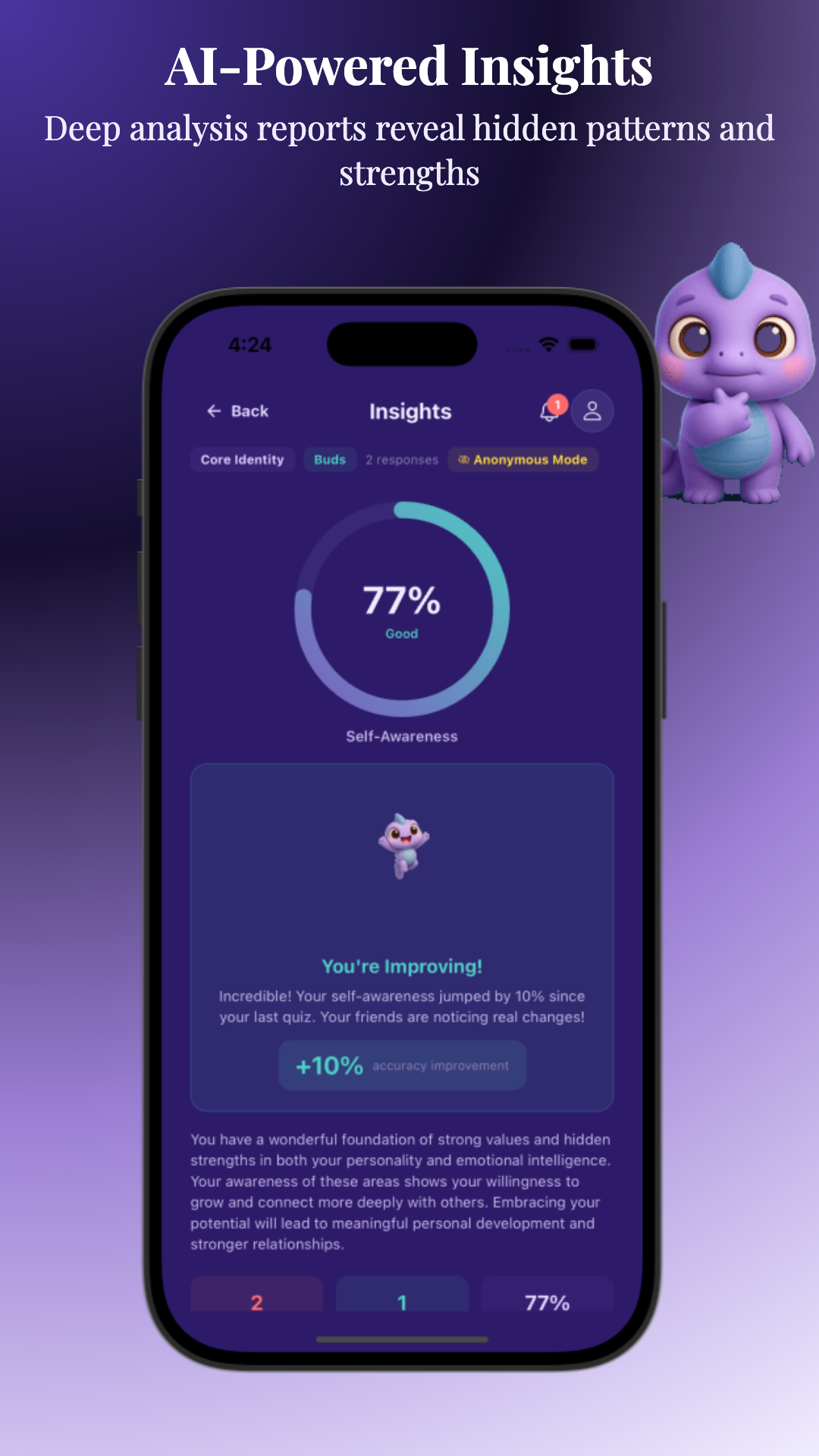
Apps like Blindspot offer AI-powered feedback and track your progress on self-awareness and social skills. Pair this with regular reflection, and you’ll evolve into a more confident, likeable, and charismatic conversationalist.
Technology can supplement your practice, offering quizzes, feedback, and even simulated conversations for low-pressure rehearsal. Use these resources to identify your strengths (“You often make others feel comfortable”) and areas for improvement (“You may interrupt without noticing”). Scheduling regular check-ins, either through an app or with a trusted friend, keeps your progress on track and ensures you’re continuously refining your abilities.
Conclusion
Mastering conversation skills is a lifelong journey that unlocks professional and personal success. By focusing on self-awareness, asking thoughtful questions, listening actively, and practicing both verbal and nonverbal skills, you’ll naturally become more likeable and charismatic. If you want to uncover your blind spots and grow with tailored insights, try Blindspot for a deeper look at how you’re perceived. For more on self-awareness, see our guides on the Johari Test and Johari Window Questionnaire. You can also deepen your understanding with our comprehensive guide to self-awareness and explore how friendships shape your social skills and self-perception.
FAQ
Q: What are good conversation topics for small talk?
A: Good small talk topics include recent events, shared surroundings, travel, food, hobbies, or asking about someone’s weekend. Open-ended questions like “What do you enjoy doing in your free time?” invite longer answers and help keep the conversation flowing.
Q: How do I keep a conversation going without awkward silence?
A: Use follow-up questions, refer back to earlier points, share a personal anecdote, or ask for opinions. Prepare a few go-to topics and practice active listening to pick up on cues for new directions.
Q: What are the best questions to ask someone to get to know them?
A: Ask open-ended questions such as “What inspires you?”, “What’s a goal you’re working on?”, or “What’s your favorite way to spend a weekend?” These invite meaningful, engaging responses and help build rapport.
Q: How can I improve my conversation skills in English?
A: Practice regularly with native speakers, memorize common phrases, use conversation prompts, and don’t worry about making mistakes. Join conversation clubs or language exchanges to build fluency and confidence.
Q: What are some good icebreaker questions for meeting new people?
A: Try “What’s something most people don’t know about you?”, “What’s your favorite local spot?”, or “If you could travel anywhere, where would you go?” These questions are light, fun, and easy to answer.
Q: How do I become more confident in conversations?
A: Confidence comes from preparation and practice. Start with small, low-pressure interactions, seek honest feedback, reflect on your strengths, and set small goals. Over time, your comfort and charisma will grow. For a deeper dive into the roots of confidence and actionable strategies to boost your social skills, check out our pillar guide to confidence, likeability, and social skills.