Best Self Discovery Apps: 2024 Reviews, Features & Comparisons
Explore the best self discovery apps, including free options, AI tools, and honest reviews. Compare features: journaling, feedback, mood tracking, astrology, and more.


Estimated reading time: 16 min
Key Takeaways
- The best self discovery apps combine journaling, habit tracking, and AI-guided reflection for holistic growth.
- Top apps like Blindspot uniquely use anonymous friend feedback to uncover social blind spots.
- Effective self exploration apps offer mood tracking, mindfulness, and personality insights.
- Science-backed frameworks (CBT, ACT) and privacy protections are essential for meaningful, safe self-discovery.
- Free self discovery apps provide robust features, but paid tiers unlock advanced analytics, coaching, and customization.
Table of Contents
- Section 1: What Makes the Best Self Discovery Apps?
- Section 2: Journaling, Reflection, and Guided Prompts
- Section 3: Mindfulness, Meditation, and Stress Relief Features
- Section 4: Habit, Mood, and Emotional Tracking
- Section 5: Personality Insights, Astrology, and AI Guidance
- Section 6: Honest Feedback, Blindspots, and Social Reflection
- Section 7: Pricing, Privacy, and Evidence-Based Design
- Section 8: App Reviews – Blindspot, Headspace, Reflectly, Habitica, Finch, Daylio, Liven
- Conclusion
- FAQ
Section 1: What Makes the Best Self Discovery Apps?
Core Features for Growth
The best self discovery apps go beyond basic journaling. They empower users to explore their beliefs, emotions, and social perceptions. Key features include:
- Guided journaling and reflection prompts that foster daily self-inquiry.
- Mood and habit tracking to visualize patterns over time.
- Feedback tools, such as anonymous peer reviews, for social self-awareness.
- Personality tests and birth chart insights for deeper understanding.
- AI-powered analytics that reveal blind spots and suggest actionable steps.
Why App Design Matters
A well-designed self exploration app is intuitive, customizable, and non-addictive. The best apps support:
- Privacy-first data handling
- Clear visualizations (charts, graphs, timelines)
- Personalized journeys based on user goals
- Evidence-based prompts rooted in psychology
This focus ensures meaningful, sustainable self-development rather than fleeting motivation or app fatigue.
What Sets Top Apps Apart?
What differentiates the best self discovery apps from standard wellness or productivity tools is their holistic approach. They combine introspection, social insight, habit-building, and emotional regulation. Apps like Blindspot stand out by using anonymous peer input to help users see themselves from multiple perspectives, closing the gap between self-perception and external feedback.
Section 2: Journaling, Reflection, and Guided Prompts
The Power of Digital Journaling
Journaling is the foundation of self-discovery. Digital apps make it easier, more consistent, and often more insightful than pen and paper. Top self discovery apps free you from blank-page anxiety by offering:
- Daily or weekly reflection prompts
- Emotion check-ins and gratitude logs
- Structured templates for goal tracking
Apps like Reflectly use AI to analyze your entries, surfacing themes and suggesting new questions for deeper exploration. This guided approach is ideal for beginners and advanced users alike.
AI-Guided Reflection
The best AI for self discovery doesn't just transcribe your thoughts. It evaluates sentiment, detects recurring patterns, and offers tailored feedback or follow-up questions. This helps you break through surface-level journaling and spot underlying beliefs or emotional triggers.
Prompt Libraries and Customization
The most effective self exploration app will offer:
- Large libraries of prompts (e.g., about relationships, purpose, identity)
- Ability to add your own custom questions
- Progress tracking to see how your answers evolve
For those seeking honest outside perspectives, Blindspot's Free Question Generator provides thought-provoking, feedback-oriented prompts.
Section 3: Mindfulness, Meditation, and Stress Relief Features
Integrated Mindfulness Tools
Self-discovery isn't just about analysis—it's about presence. Many of the best self discovery apps include guided meditations, breathwork exercises, and mindfulness reminders. These help users:
- Reduce anxiety before reflection sessions
- Build daily rituals around self-care
- Develop emotional resilience
Apps like Headspace excel here, offering hundreds of meditation tracks tailored to stress, sleep, and focus.
Stress and Mood Check-Ins
Regular mood tracking—sometimes paired with short mindfulness practices—can reveal emotional patterns. Some apps nudge users to take a mindful pause before responding to stressful events or social feedback, enhancing self-regulation.
Holistic Wellbeing Tracking
The best self exploration app will show the interplay between thoughts, emotions, and behaviors. Users can chart how mindfulness practice correlates with mood improvements or habit success, supporting a feedback loop of positive change.
Section 4: Habit, Mood, and Emotional Tracking
Tracking What Matters
Understanding the link between habits and emotional wellbeing is crucial for self-growth. Leading self discovery apps free or paid let you:
- Log daily habits (e.g., sleep, exercise, gratitude, screen time)
- Record mood shifts and emotional triggers
- Visualize streaks, lapses, and improvement areas
Apps like Daylio and Finch specialize in mood and activity journaling, providing intuitive dashboards to spot trends over weeks or months.
Gamification and Motivation
Gamified elements—points, badges, or challenges—can boost consistency without feeling punitive. Habitica, for example, turns self-improvement into a role-playing game, complete with avatars and quests tied to your real-life goals.
Emotional Pattern Visualization
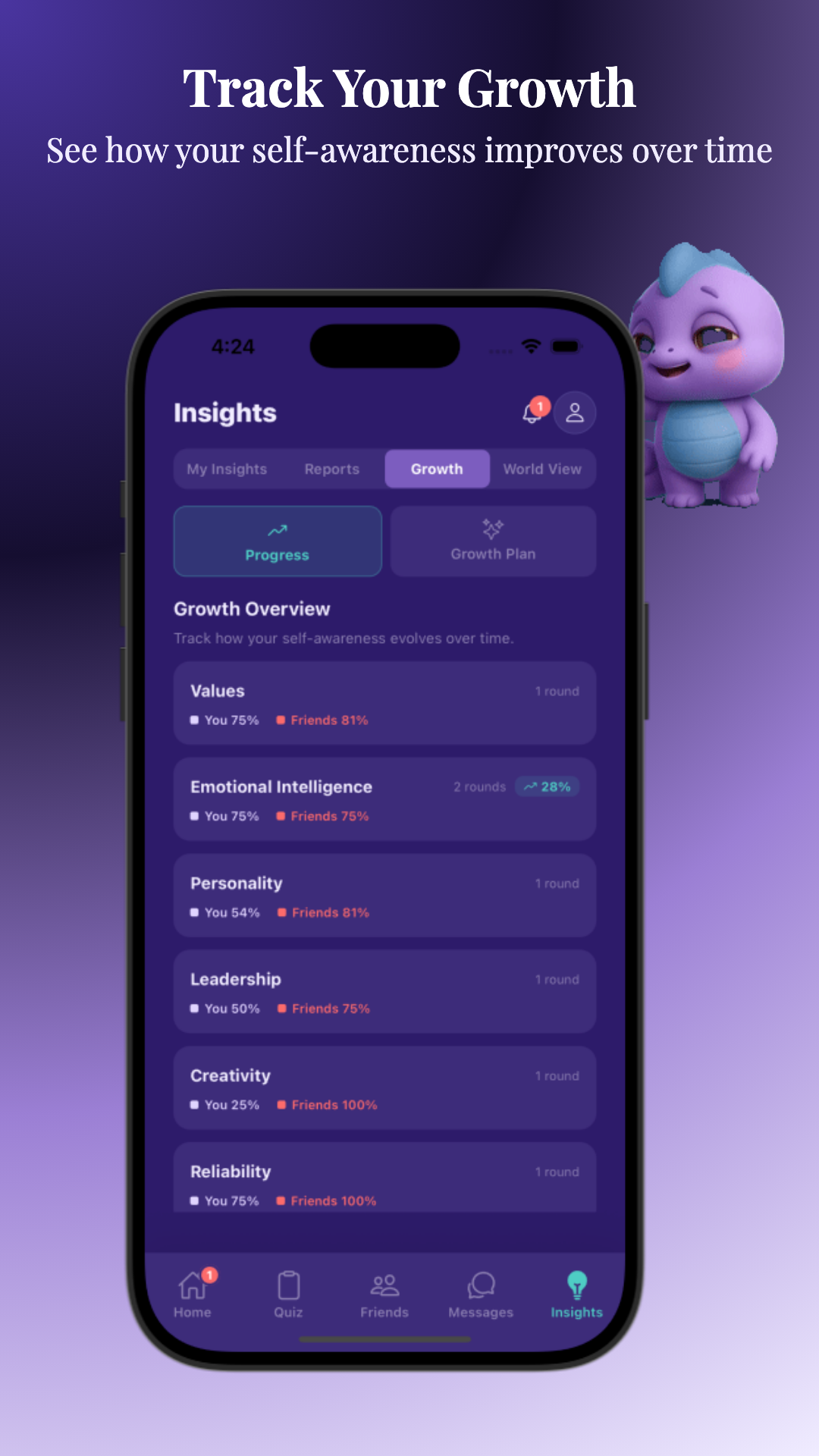
The best self discovery apps use data visualization (charts, timelines, heatmaps) to help users understand which habits fuel positive moods or which situations trigger stress. Blindspot's progress screens, for instance, highlight growth in self-awareness over time.
Section 5: Personality Insights, Astrology, and AI Guidance
Personality Tests and Self-Knowledge
Many self discovery apps feature popular assessments—Myers-Briggs, Big Five, or Enneagram—to give users a vocabulary for their traits and tendencies. Some go further, offering:
- Personalized reports with strengths and growth areas
- Peer comparison features to see how you align with others
- Actionable suggestions based on your unique profile
Blindspot builds on these by letting friends anonymously answer questions about your personality, offering a rare look at your social blind spots (see how this works).
Astrology, Birth Charts, and the Skeptic's View
Apps like Co-Star and Chani have brought astrology into the self-discovery mainstream, providing users with daily horoscopes, birth chart breakdowns, and compatibility reports. While astrology isn't science-based, many users find the archetypes and prompts thought-provoking for self-reflection. However, for those prioritizing evidence-based growth, psychological frameworks like CBT and ACT may be preferable.
AI and Machine Learning for Self-Discovery
The best AI for self discovery analyzes your input—journals, quizzes, feedback—to highlight inconsistencies or areas for growth. AI-driven apps can detect patterns humans miss, offer tailored reflection prompts, and even suggest habits or meditations based on your mood data.
Section 6: Honest Feedback, Blindspots, and Social Reflection
Why Social Perception Matters
Self-discovery is incomplete without understanding how others see us. Many people have 'blind spots'—traits or habits visible to friends but hidden from themselves. Research shows that honest feedback can dramatically accelerate self-awareness and personal growth (learn more).
Anonymous Feedback and Group Reflection
Blindspot uniquely enables users to invite friends to answer questions about them—anonymously and honestly. This peer insight reveals discrepancies between self-perception and external perception, a process inspired by the Johari Window model (see this in action).
- Users create private groups and choose which traits or behaviors to explore
- Friends respond anonymously, reducing bias or flattery
- AI summarizes the feedback and suggests growth areas
This method is especially valuable for those seeking to improve relationships or leadership skills.
Actionable Insights and Growth Tracking
Top self exploration apps don't just surface feedback—they help users turn it into action. Blindspot, for example, offers personalized improvement plans and progress dashboards. Users can revisit their results, set goals, and track change over time. This cycle of feedback, reflection, and adaptation is the hallmark of effective self-discovery.
Section 7: Pricing, Privacy, and Evidence-Based Design
Free vs. Paid Self Discovery Apps
Many self discovery apps free users from the cost barrier, offering basic journaling, mood tracking, and reflection tools at no charge. However, premium tiers often provide:
- Advanced analytics and personalized feedback
- Expanded prompt libraries and guided courses
- Integration with wearables or health data
- 1:1 coaching or therapist support
It's important to compare features and ensure that the core tools you need are accessible without payment—or that the upgrade is worth it.
Privacy and Non-Addictive Design
Privacy is critical. The best self discovery apps employ encryption, allow data export/deletion, and minimize unnecessary notifications to avoid creating digital dependence. Blindspot, for example, provides robust privacy controls and does not monetize user data.
Evidence-Based Features: CBT, ACT, and Beyond
Apps grounded in psychological science—such as Cognitive Behavioral Therapy (CBT) or Acceptance and Commitment Therapy (ACT)—are more likely to produce real, lasting change. Look for apps that cite these frameworks, use validated reflection techniques, and avoid pseudo-scientific claims. For a deeper dive into evidence-based reflection, see this discussion of the Johari Test.
Section 8: App Reviews – Blindspot, Headspace, Reflectly, Habitica, Finch, Daylio, Liven
Blindspot: Anonymous Social Feedback for Real Growth
Blindspot stands out in the self-discovery space by letting friends anonymously answer questions about you, highlighting the gap between how you see yourself and how others see you. Its AI insights turn group feedback into personalized growth plans, making it especially useful for those who want to uncover blind spots in their social or professional lives. Privacy controls and a science-backed interface make it a top choice for honest, actionable self-awareness. Try Blindspot here.
Headspace: Mindfulness and Meditation Mastery
Headspace is one of the most popular meditation and mindfulness apps. It offers a vast library of guided meditations, sleep tracks, and stress-relief exercises. While not strictly a self discovery app, its mood check-ins and goal-setting features support ongoing self-awareness and emotional regulation.
Reflectly: AI Journaling for Daily Reflection
Reflectly uses AI to guide users through daily reflection prompts and gratitude exercises. Its sleek interface and mood tracking help users spot patterns over time. Reflectly is a good fit for those who want to build a consistent journaling habit and value positive reinforcement.
Habitica: Gamified Habit Tracking
Habitica turns habit formation into a game, complete with quests, avatars, and rewards. Its social features allow users to join parties or challenges with friends. While it emphasizes productivity, its mood tracking and customizable tasks support broader self-discovery goals.
Finch: Wellbeing Pet and Emotional Check-Ins
Finch pairs self-care with a virtual pet that grows as you reflect, set goals, and complete daily check-ins. Short, guided prompts and mood logging make it approachable for all ages, though its insights are less deep than apps focused on feedback or personality.
Daylio: Micro-Journaling and Mood Visualization
Daylio is a minimalist mood tracker that lets users record emotions and activities with a few taps. Its visual charts help identify trends and triggers, making it ideal for those who want quick, data-driven insights into their emotional lives.
Liven: AI-Powered CBT and ACT Exercises
Liven is a newer entry focused on evidence-based self-discovery. It offers AI-curated lessons and exercises grounded in CBT and ACT, plus journaling and mindfulness tools. Its emphasis on science makes it a strong choice for users skeptical of astrology or non-validated personality tests.
Conclusion
The best self discovery apps in 2024 blend journaling, mood and habit tracking, guided meditation, and social feedback into a holistic experience. Whether you’re looking for a self exploration app with AI insights, craving honest feedback (like Blindspot offers), or seeking science-backed frameworks for personal growth, there’s a tool suited to your journey. Prioritize apps that respect your privacy, use evidence-based techniques, and empower you to turn reflection into real-world change. For more on uncovering your blind spots and growing with honest feedback, explore the Blindspot app or check out the step-by-step guide to uncovering your social blind spots.
FAQ
Q: What is the best free self-discovery app for beginners?
A: For beginners, Finch and Daylio offer robust free versions focused on mood tracking and daily reflection. Blindspot also provides valuable free features for social feedback and self-awareness, with paid options for deeper analytics.
Q: How do journaling apps help with self-discovery compared to traditional methods?
A: Digital journaling apps offer structured prompts, automatic mood tracking, and AI-guided insights, making it easier to spot patterns and stay consistent. They often include privacy controls and visualization tools that traditional journaling lacks.
Q: Are self-discovery apps based on psychological science like CBT or ACT?
A: Many leading apps, such as Liven and Blindspot, incorporate evidence-based frameworks like CBT or ACT. These apps use validated reflection techniques and habit tracking to foster real, measurable personal growth.
Q: Which app is best for tracking mood patterns and emotional triggers?
A: Daylio is popular for its intuitive mood tracking and data visualization. Reflectly and Finch also excel in this area. For those seeking social feedback on emotional triggers, Blindspot is uniquely effective.
Q: Do astrology apps like Co-Star or Chani actually help with self-discovery?
A: Astrology apps can provide useful prompts for introspection and pattern recognition, though their insights are not science-based. For evidence-backed self-discovery, apps using psychological frameworks may be preferable.
Q: What features should I look for in a self-discovery app to avoid addiction?
A: Choose apps with non-addictive designs: minimal notifications, no infinite scrolling, strong privacy, and clear boundaries between reflection and social features. Evidence-based tools like Blindspot prioritize healthy engagement over screen time.