Why Self-Discovery Needs Honest Friends: The Key to Real Growth
Discover why self-discovery needs honest friends. Learn how true friendships reveal blind spots, boost self-awareness, and foster authentic personal growth.

Estimated reading time: 13 min
Key Takeaways
- Honest friends act as mirrors, revealing blind spots and hidden traits.
- Authentic friendships foster vulnerability, trust, and deeper self-knowledge.
- Supportive feedback from friends is essential for personal growth and confidence.
- Choosing the right friends leads to greater emotional maturity and empathy.
- Self-discovery tools like Blindspot help bridge the gap between self-perception and how others see us.
Table of Contents
- Section 1: Honest Friendships as the Mirror for Self-Discovery
- Section 2: Authenticity and Dropping the Mask
- Section 3: Vulnerability, Trust, and Intimacy in Friendship
- Section 4: Constructive Feedback and Personal Growth
- Section 5: Seeing Yourself from the Outside—The Power of Perspective
- Section 6: Friendship, Self-Knowledge, and Character Development
- Conclusion
- FAQ
Section 1: Honest Friendships as the Mirror for Self-Discovery
The Role of Friends as Reflective Mirrors
When exploring why self-discovery needs honest friends, the mirror metaphor is powerful. True friends reflect back to us not just what we want to see, but often what we need to see. Their honest observations—whether about our strengths, habits, or blind spots—offer an outside-in perspective that’s impossible to achieve alone.
- Blind spots are aspects of ourselves we cannot see, but others can. Friends often notice patterns, quirks, or inconsistencies we overlook. For example, you might not realize you interrupt people often, but a friend could gently point this out, helping you become more mindful in conversation.
- Honest feedback from friends can reveal hidden strengths or areas for growth that formal assessments or self-reflection miss. For instance, a friend might observe your natural leadership during group projects, even if you don’t consider yourself a leader.
Why Self-Reflection Alone Isn't Enough
Self-reflection is a crucial part of personal growth, but it has limits. We all have internal biases that cloud our self-perception. Honest friends act as a reality check, offering constructive feedback that complements—and sometimes contradicts—our own view.
- Feedback from friends can confirm or challenge our self-assessment. Sometimes, we’re our own harshest critics, underestimating our strengths, while friends can offer a more balanced and encouraging perspective.
- Open, honest conversations allow us to see ourselves from multiple angles, deepening our self-awareness. For example, while you might focus on a recent mistake, friends may remind you of your track record of reliability and kindness, broadening your view of yourself.
Tools for Mirroring: Harnessing Technology
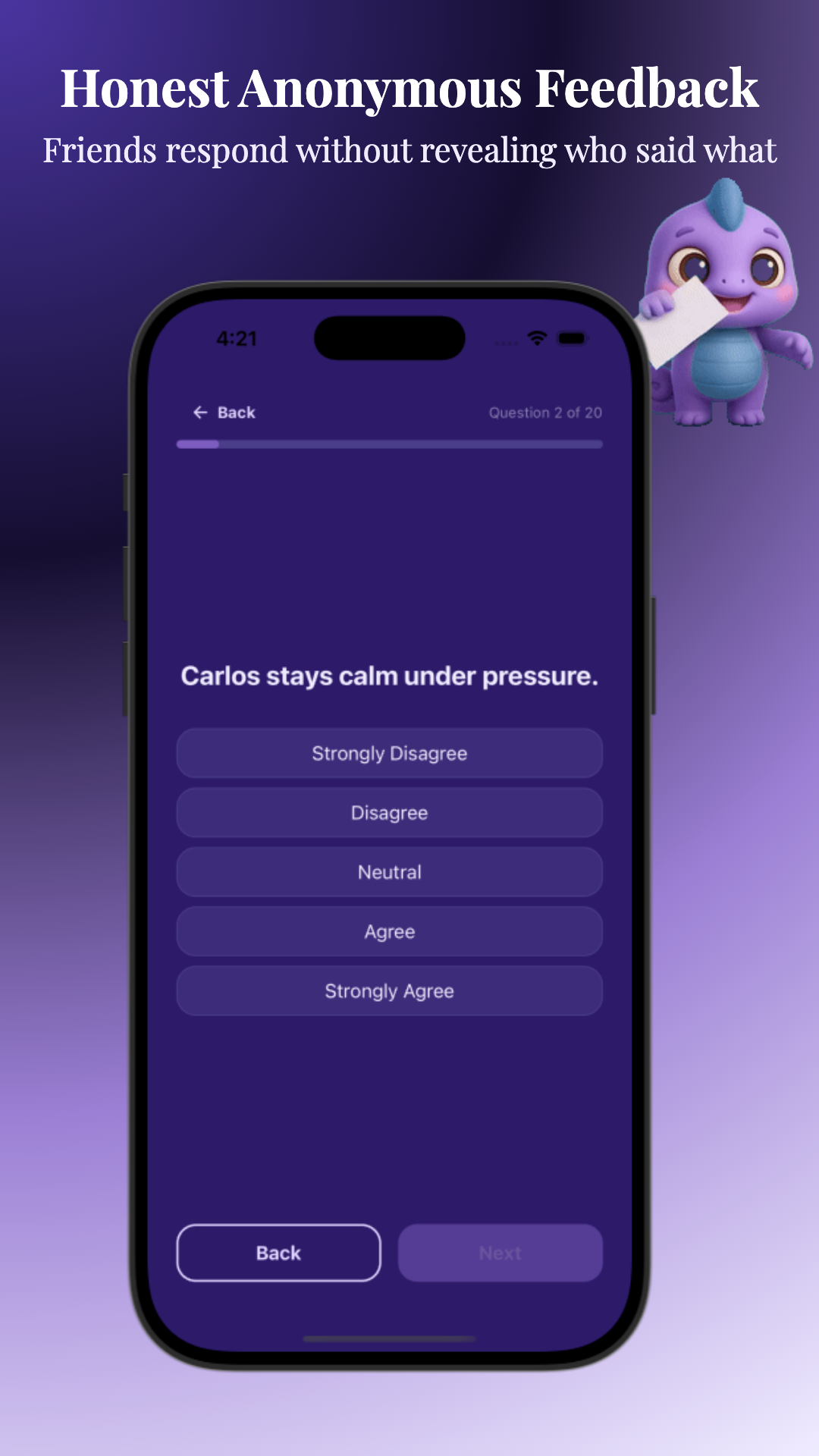
Apps like Blindspot use anonymous feedback mechanisms to let friends share their honest perspectives. By collecting candid input in a safe environment, users can uncover blind spots and gain a more accurate self-image. Unlike traditional face-to-face feedback, anonymity can encourage even shy friends to be direct, increasing the breadth and depth of insights you receive. Blindspot, for example, allows users to send out surveys or questions to friends, who then respond anonymously, providing constructive criticism or affirmations they might hesitate to share otherwise.
For a deeper dive into how the mirror effect works in friendship, check out How Friends Shape Our Self-Image: The Hidden Impact.
Section 2: Authenticity and Dropping the Mask
Authenticity: The Foundation of Honest Friendships
Authenticity means showing up as your true self—without pretense or masks. In the context of friendship, authenticity is the soil from which honest feedback grows. When you and your friends are genuine, it fosters an environment where honesty is valued and reciprocated. Authentic friendships are those in which both parties feel comfortable sharing their true opinions, even if they differ. For example, an authentic friend will tell you when they disagree with your choices, while still supporting you as a person.
- Authentic friendships allow for open discussions about flaws, dreams, and insecurities. In these relationships, friends can admit their fears about career changes, relationship struggles, or failures without fear of judgment.
- Dropping the mask means letting go of the urge to always appear perfect or agreeable. This opens the door to genuine connection, as friends are able to support one another through challenges instead of maintaining a façade of perfection.
The Mask and Its Consequences
Many people wear social masks to fit in or protect themselves from judgment. While this can be adaptive in certain contexts, it creates barriers to genuine connection and self-discovery. For instance, someone who always tries to appear tough might suppress their need for support, pushing friends away and missing out on meaningful help.
- Masks limit the depth of conversations and prevent others from seeing the real you. Over time, this can lead to feelings of isolation or being misunderstood, even when surrounded by people.
- When everyone wears a mask, honest feedback—and, by extension, self-discovery—becomes impossible. You can’t grow if your friends don’t feel comfortable being real with you, and vice versa.
How to Cultivate Authenticity in Friendships
To benefit from the self-awareness that honest friends provide, authenticity must be mutual. Here are a few strategies:
- Model openness by sharing your true thoughts and feelings. For example, if you’re struggling with a decision, admit your uncertainty rather than pretending to have it all figured out.
- Encourage friends to do the same by creating a judgment-free zone. Let them know their honesty is valued, even if it’s uncomfortable. For example, respond to their confessions with empathy rather than criticism.
- Seek out relationships where authenticity is valued over surface-level harmony. Prioritize friends who are willing to have difficult conversations and who value growth over convenience.
For more on the process of revealing your authentic self through feedback, the What My Friends Think of Me Quiz offers practical tools for honest self-exploration.
Section 3: Vulnerability, Trust, and Intimacy in Friendship
The Courage to Be Vulnerable
Vulnerability is the willingness to be seen, flaws and all. It’s a cornerstone of deep, meaningful friendships. When you’re vulnerable with friends, you invite them to do the same, strengthening the trust between you. For instance, admitting that you’re anxious about a new job or struggling with self-doubt can prompt your friend to share their own experiences, deepening your connection.
- Vulnerability allows for honest self-disclosure, which leads to richer, more supportive relationships. When you share your worries or failures, friends can offer empathy and practical advice based on real knowledge of your situation.
- It’s not about oversharing, but about being real in moments that matter. Choosing appropriate times and people to share with is key; vulnerability with the right friend at the right moment can be transformative.
Trust: The Bedrock of Honest Feedback
Trust makes vulnerability possible. You have to believe that your friends will handle your truths with care—and that their feedback comes from a place of support, not judgment. Without trust, feedback can feel like criticism or even betrayal.
- Trust is built over time through consistency, empathy, and mutual respect. For example, a friend who consistently keeps your confidences and shows up for you during hard times earns your trust for deeper, more honest exchanges.
- A trustworthy friend gives feedback that is both honest and compassionate. If you’re late to meetings, a trustworthy friend will bring it up gently, perhaps saying, “I’ve noticed you’re often running behind—anything I can do to help?”
Intimacy Through Shared Truths
Intimate friendships are those where both parties can share honestly and be received with understanding. This depth of connection is where the most valuable self-discoveries are made. Intimacy isn’t just about shared experiences—it’s about shared truths and mutual acceptance.
- Deep conversations about values, fears, and dreams reveal hidden parts of ourselves. For example, discussing your ambitions with a friend can clarify your own motivations and fears, while hearing their perspective can inspire new insights.
- Such intimacy makes it easier to accept constructive criticism without defensiveness. When you know feedback is rooted in care, you’re less likely to feel attacked and more open to growth.
For practical advice on inviting honest conversations, explore 25 Insightful Questions to Ask Your Friends About Yourself.
Section 4: Constructive Feedback and Personal Growth
The Value of Constructive Feedback
Constructive feedback is the lifeblood of personal growth. While praise feels good, it’s honest, actionable feedback from friends that drives real change. This is why self-discovery needs honest friends: they give you the data you need to improve. Unlike criticism from strangers, feedback from friends is grounded in genuine care and context, making it both more relevant and easier to accept.
- Honest friends point out blind spots and patterns you may be unaware of. For example, a friend may notice that you tend to avoid conflict, which could be holding you back at work or in relationships.
- Effective feedback is specific, timely, and delivered with empathy. Instead of vague comments like "You can be difficult," a good friend might say, "In yesterday’s meeting, you interrupted several times—maybe you didn’t notice?"
Supportive vs. Brutal Honesty
There’s a crucial difference between supportive honesty and "brutal" honesty. Supportive honesty is about helping you grow, not tearing you down. Honest friends tell the truth, but with tact and kindness. This distinction is essential—research shows that people are more likely to act on feedback when it’s delivered compassionately.
- Brutal honesty can damage trust and self-esteem. For instance, bluntly stating "You’re bad at public speaking" may be true, but it’s not helpful or motivating.
- Supportive honesty strengthens relationships and encourages growth. A supportive friend might instead say, "You seemed nervous during your presentation, but your ideas were strong. Want to practice together next time?"
Learning to Receive—and Give—Feedback
Receiving feedback gracefully is a skill. It means listening without defensiveness and asking clarifying questions. Likewise, giving feedback that is both honest and kind is an art. For example, if a friend tells you that you come off as dismissive in group settings, instead of arguing, you could ask for specific examples or suggestions for improvement. This approach not only helps you understand the feedback but also shows your willingness to grow.
- Ask for examples to clarify vague feedback. For instance, "Can you tell me when you noticed this pattern?" can turn general feedback into actionable insights.
- Express gratitude for honest input, even when it’s hard to hear. A simple "Thank you for telling me" can encourage your friend to keep being honest in the future.
If you want a step-by-step approach to seeking and using feedback, read How to Get Honest Feedback from Friends: A Practical Guide.
Section 5: Seeing Yourself from the Outside—The Power of Perspective
The Outside Perspective Effect
One of the biggest benefits of honest friendships is the outside perspective they provide. We’re often too close to our own lives to see them objectively. Friends can spot patterns, behaviors, or talents that blend into our background. For example, you might see your punctuality as just normal, but to your friends, it’s a sign of reliability and respect—they might highlight this as one of your greatest assets.
- Friends may recognize leadership skills, creativity, or empathy you take for granted. Perhaps you always organize group outings; friends may see you as a natural leader, even if you don’t claim that label for yourself.
- They can also point out negative habits or blind spots that hinder your growth. For instance, a friend might notice your tendency to withdraw during stressful times and suggest healthier coping mechanisms.
Bridging the Gap Between Self-Image and Reality
The gap between how we see ourselves and how others see us is known as a "blind spot." Bridging this gap is crucial for self-awareness and personal development. Honest friends help close this gap by providing real-world feedback. Over time, this feedback can help you align your self-image with reality, boosting your confidence and effectiveness in relationships, work, and life in general.
- Tools like Blindspot offer structured, anonymous feedback to highlight these discrepancies. By collecting input from multiple friends, you can identify recurring themes that might otherwise go unnoticed.
- Understanding your blind spots can lead to more informed decisions and better relationships. For example, knowing that you sometimes dominate conversations could prompt you to listen more, improving your friendships and collaborations.
Real-Life Example: Anonymous Feedback in Action
Consider using a tool like Blindspot to gather feedback from a group of friends. You might discover that while you see yourself as reserved, your friends view you as approachable and a good listener. This kind of insight can drive meaningful self-reflection and change. Alternatively, you may think of yourself as unorganized, but friends might note your creativity and ability to think on your feet, shifting your focus from weakness to strength.
Some users of Blindspot have reported that after receiving anonymous feedback, they were motivated to work on social skills, confidence, or assertiveness. Others found reassurance in learning that their self-critical perceptions were exaggerated compared to how friends truly saw them. These revelations create opportunities for targeted personal development and improved relationships.
If you're curious about methodologies for uncovering blind spots, the What Is a Personality Blind Spot? guide explains the concept in depth.
Section 6: Friendship, Self-Knowledge, and Character Development
The Link Between Friendship and Self-Knowledge
Friendships are essential for building self-knowledge. Honest friends help you see yourself more clearly, which is the foundation of genuine self-improvement. Their insights challenge your assumptions and open you up to new ways of thinking. For instance, a friend might point out that you always light up when discussing a particular topic, helping you realize a passion you hadn’t fully acknowledged. This can influence choices around career, hobbies, or personal goals.
- Feedback from friends often reveals both strengths and weaknesses. For example, you may discover that what you thought was a weakness—such as sensitivity—is actually a source of empathy and understanding in your relationships.
- Self-knowledge gained through friendship supports your goals, values, and sense of purpose. When you understand how others perceive your actions and character, you can make more intentional choices about who you want to become.
Empathy, Perspective-Taking, and Emotional Maturity
Empathy and perspective-taking are key qualities of emotionally mature individuals. Honest friendships foster these qualities by requiring you to step outside yourself and see things from another’s point of view. When friends share how your behavior impacts them, it creates a feedback loop that enhances your sensitivity to others’ needs and perspectives. For example, learning that your sarcasm sometimes comes across as hurtful can prompt you to adjust your communication style, deepening your emotional intelligence.
- Learning to accept and integrate feedback develops humility and resilience. Recognizing that you have room to grow—without feeling defeated—is a sign of emotional maturity.
- Supporting friends in their own self-discovery journeys builds compassion and emotional intelligence. By helping others understand themselves, you reinforce your own empathy and ability to form healthy, supportive relationships.
Choosing the Right Friends for Growth
Not all friendships offer the same opportunities for growth. Seek out relationships where honesty, empathy, and support are mutual. These are the friendships that will challenge you, celebrate your wins, and help you become your best self. For example, friends who avoid difficult conversations or always agree with you may be pleasant to be around, but they’re unlikely to help you grow. In contrast, friends who are willing to call you out—kindly—are invaluable allies in your journey of self-discovery.
- Look for friends who are willing to have the hard conversations. These are the people who will tell you when you’re making a mistake, but also cheer you on when you succeed.
- Prioritize relationships that nurture your growth and well-being. Over time, these friendships become a source of strength, inspiration, and self-knowledge.
If you want to understand how friends shape your self-image, this post on how friends shape our self-image offers further insight. For a broader look at the dynamics and deeper insight into your social connections, see Understanding Your Friendships: Signs, Dynamics, and Deeper Insight.
Conclusion
Self-discovery is a lifelong journey, but it’s not meant to be taken alone. Honest friends are the mirrors and guides that reveal your true self—blind spots, strengths, and growth opportunities alike. Authenticity, vulnerability, and supportive feedback form the bedrock of friendships that foster real self-awareness. By embracing honest conversations, seeking feedback, and building relationships rooted in trust, you unlock deeper confidence, emotional maturity, and a more accurate self-image.
Apps like Blindspot make it easier than ever to gather anonymous, honest feedback from those who know you best. If you’re ready to uncover your blind spots and grow with AI-driven insights, give it a try. And remember: the journey to self-knowledge always starts with a single, honest conversation.
FAQ
Q: Why is honesty important in a friendship?
A: Honesty is the foundation of trust and authentic connection in any friendship. It allows friends to provide genuine support, offer helpful feedback, and build a relationship where both people can grow. Without honesty, self-discovery and personal development are limited by misunderstandings and unspoken truths.
Q: How do friends help you discover yourself?
A: Friends help you discover yourself by serving as mirrors who reflect your actions, attitudes, and hidden qualities. Through honest conversations and feedback, they reveal blind spots, confirm strengths, and challenge you to grow in ways you might not see alone.
Q: Can honest friends improve self-awareness?
A: Absolutely. Honest friends provide outside perspectives that highlight discrepancies between how you see yourself and how you are perceived. This feedback is crucial for increasing self-awareness and making meaningful changes.
Q: What is the role of vulnerability in friendships?
A: Vulnerability allows for honest self-disclosure and deeper connections. When you’re vulnerable with friends, you create space for mutual honesty, trust, and growth. This openness is essential for authentic self-discovery and strong relationships.
Q: Why do you need friends to know yourself better?
A: While self-reflection is important, friends offer perspectives and feedback you can’t access on your own. Their honest input helps you see both strengths and blind spots, leading to a more accurate and complete self-understanding. For more on bridging the perception gap between how you see yourself and how others see you, read How Others See You: Understanding and Bridging the Perception Gap.
Q: What makes a friendship supportive and honest?
A: Supportive, honest friendships are built on trust, empathy, and open communication. These relationships provide constructive feedback in a kind way, encourage authenticity, and help both people grow into their best selves.