
MBTI Explained: The Framework, Types, and Self-Discovery
MBTI explained: Learn what MBTI is, how it works, its 16 types, differences from Big Five, and how personality tests reveal self-perception and blind spots.

Estimated reading time: 8 min
The Myers-Briggs Type Indicator (MBTI) is a popular personality framework that categorizes individuals into 16 distinct types based on four key dichotomies, helping people understand their preferences, communication styles, and potential blind spots. MBTI explained means understanding what these four letters represent, how the types are formed, and how this tool compares to other models like the Big Five. It also means knowing the limits of personality tests and how cognitive biases can shape your self-view.
Key Takeaways
- MBTI uses four dichotomies (E/I, S/N, T/F, J/P) to create 16 personality types.
- Each MBTI type offers insight into strengths, weaknesses, and interpersonal patterns.
- The Big Five is a scientific alternative to MBTI, focusing on traits rather than types.
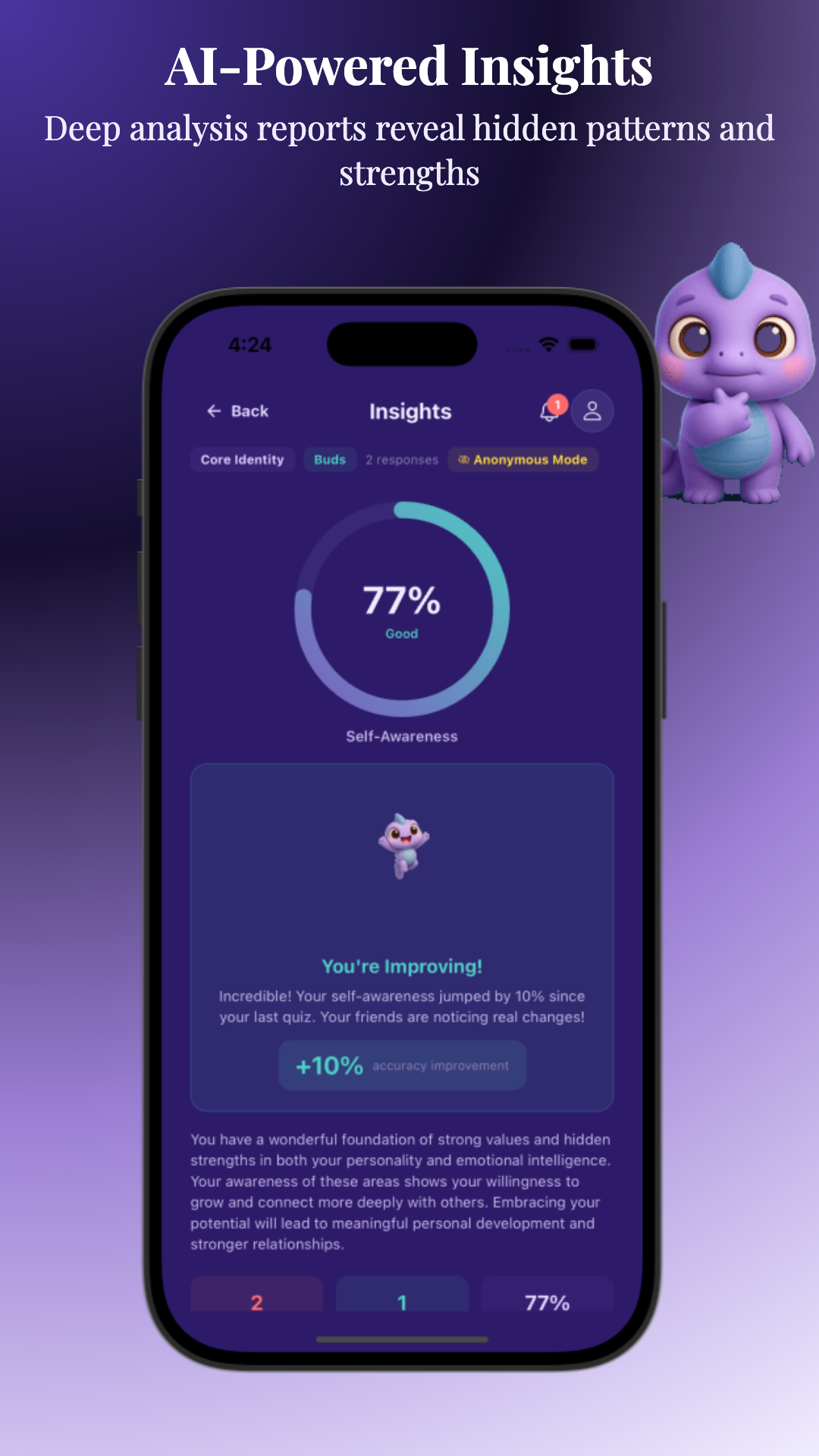
- Self-perception is shaped by cognitive biases and feedback from others, which tools like Blindspot help uncover.
What Is MBTI? MBTI Explained in Simple Terms
The Myers-Briggs Type Indicator (MBTI) is a self-report personality assessment developed by Isabel Briggs Myers and Katharine Cook Briggs, based on Carl Jung's theories. It sorts people along four dimensions, resulting in a four-letter code such as INFP or ESTJ. Each letter reflects a preference in how you focus attention, process information, make decisions, and organize your life.
MBTI is designed for self-discovery, team building, and improving communication. While it's widely used in workplaces and personal growth, it's important to know that MBTI is considered a typology—a way of categorizing people into types—rather than a scientifically validated measurement like the Big Five personality traits. If you want to explore how MBTI compares to other frameworks and deepen your understanding, see our complete guide to MBTI, Big Five, and self-discovery.
The Four MBTI Dichotomies: E/I, S/N, T/F, J/P
MBTI types are built from four pairs of opposites:
- Extraversion (E) vs. Introversion (I): Do you recharge with others or alone?
- Sensing (S) vs. Intuition (N): Do you focus on facts and details, or patterns and possibilities?
- Thinking (T) vs. Feeling (F): Do you decide with logic or values?
- Judging (J) vs. Perceiving (P): Do you prefer structure and plans, or flexibility and spontaneity?
Your MBTI result combines one preference from each dichotomy, forming a four-letter type.
The 16 MBTI Types and What They Mean
Each MBTI type is a unique blend, summarized by a four-letter code. Here are the 16 types, each with a common nickname and a one-line description:
- ISTJ: The Inspector – Responsible, organized, detail-oriented.
- ISFJ: The Protector – Loyal, nurturing, supportive.
- INFJ: The Advocate – Insightful, idealistic, empathetic.
- INTJ: The Architect – Strategic, independent, analytical.
- ISTP: The Virtuoso – Practical, resourceful, adaptable.
- ISFP: The Composer – Gentle, creative, spontaneous.
- INFP: The Mediator – Imaginative, compassionate, values-driven.
- INTP: The Thinker – Curious, logical, innovative.
- ESTP: The Dynamo – Energetic, action-oriented, perceptive.
- ESFP: The Performer – Outgoing, playful, enthusiastic.
- ENFP: The Campaigner – Warm, creative, free-spirited.
- ENTP: The Debater – Inventive, quick-witted, outspoken.
- ESTJ: The Executive – Efficient, decisive, organized.
- ESFJ: The Consul – Caring, sociable, cooperative.
- ENFJ: The Protagonist – Charismatic, inspiring, empathetic.
- ENTJ: The Commander – Assertive, strategic, driven.
After taking a personality test, you'll receive one of these codes—your MBTI type. For deeper insight into how your friends see you versus how you see yourself, try the personality blind spot approach or the What My Friends Think of Me Quiz.
MBTI vs. The Big Five: Two Ways to Understand Personality
While MBTI focuses on four dichotomies to define personality "types," the Big Five personality traits (also called OCEAN) describe people along five continuous dimensions:
- Openness (creativity, curiosity)
- Conscientiousness (organization, dependability)
- Extraversion (sociability, assertiveness)
- Agreeableness (cooperation, compassion)
- Neuroticism (emotional stability, anxiety)
The Big Five is more widely accepted in psychology due to stronger scientific validity and test reliability. MBTI, while popular in self-help and career contexts, is best used as a self-reflection tool rather than a definitive assessment.
Understanding Your MBTI Results and Blind Spots
Getting your MBTI type is just the starting point. Interpreting what your four letters mean can reveal your natural strengths, potential blind spots, and communication patterns. For example, a type high in Judging may prefer structure, but may struggle with flexibility. Recognizing these patterns is the first step toward self-improvement. If you're interested in going deeper, our definitive guide to self-awareness explores how to use personality insights for growth.
However, self-assessments are prone to cognitive biases about yourself. People often overestimate strengths or overlook weaknesses. Tools like Blindspot and the Johari Window Test can help you compare how you see yourself to how others see you, revealing blind spots and opportunities for growth.
Nature vs. Nurture: What Shapes Your Personality?
Personality is shaped by both genetics (nature) and environment (nurture). MBTI and the Big Five help you understand patterns, but remember that personality can change over time due to experiences, social feedback, and conscious effort. Exploring feedback from friends, as with Blindspot, helps you spot discrepancies and evolve your self-perception.
FAQ
Q: What do the four letters in MBTI mean?
A: Each letter represents a preference: Extraversion (E) or Introversion (I), Sensing (S) or Intuition (N), Thinking (T) or Feeling (F), Judging (J) or Perceiving (P). Together, they form your MBTI type and reflect how you process the world and make decisions.
Q: How many MBTI types are there?
A: There are 16 MBTI types, each a unique combination of the four dichotomies, such as ENFP, ISTJ, or INTP.
Q: What is the difference between MBTI and cognitive functions?
A: MBTI uses four dichotomies to assign types, while cognitive functions (based on Jung's theory) describe the mental processes driving each type's behavior. Some advanced MBTI interpretations delve into these cognitive functions for deeper insight.
Q: How do I know my MBTI type?
A: Take a reputable MBTI questionnaire or personality test. For richer insights, combine self-assessment with honest feedback from friends using apps like Blindspot or the How Do Others Perceive Me Quiz.
Q: What is the rarest MBTI type?
A: INFJ is considered the rarest MBTI type, making up roughly 1-2% of the population.
Q: Is MBTI accurate or scientifically valid?
A: MBTI is widely used for self-reflection and communication, but most psychologists agree it lacks the scientific rigor and predictive power of trait-based models like the Big Five. Use MBTI as a starting point for self-awareness, not a definitive label.