How Do Others Perceive Me Quiz: Uncover Your True Social Reflection
Discover how others perceive you with quizzes that reveal the gap between self-view and outside perception. Improve self-awareness with honest feedback.

Estimated reading time: 13 min
Key Takeaways
- The "how do others perceive me quiz" helps reveal the gap between self-perception and how people actually see you.
- Understanding the perception gap can boost self-awareness and improve personal growth.
- Anonymous feedback tools like Blindspot make it easier to get honest, actionable insights from friends.
- Regularly comparing how others see you vs how you see yourself leads to better relationships and communication.
- There are practical steps and digital tools to help you bridge the gap between your self-image and others' views.
Table of Contents
- Section 1: The Power of How Do Others Perceive Me Quizzes
- Section 2: Exploring the Perception Gap
- Section 3: Types of How Do People See Me Quizzes
- Section 4: Digital Tools & Apps for Honest Feedback
- Section 5: How to Use Quiz Insights for Growth
- Section 6: Overcoming Challenges and Biases
- Conclusion
- FAQ
Section 1: The Power of How Do Others Perceive Me Quizzes
Why Self-Perception Matters
At the heart of personal development lies a simple but powerful question: How do others perceive me? We all have an internal narrative about who we are, but this self-view is often incomplete or biased. This is where the "how do others perceive me quiz" comes in. These quizzes are designed to help you measure the gap between how you see yourself and how others actually see you. The results can be eye-opening, revealing strengths you didn’t recognize and blind spots you never expected.
Self-perception is shaped by our upbringing, culture, social groups, and experiences. For instance, someone who grew up in a family that values humility might downplay their achievements, while their peers might see them as highly impressive and competent. Conversely, someone who prides themselves on their sense of humor may be surprised to learn their jokes come across as insensitive or poorly timed. These differences between self-image and others’ impressions can have a profound impact on our personal growth and relationships.
The Role of Feedback in Self-Discovery
Feedback is critical for self-awareness. Yet, honest, constructive feedback from friends or colleagues is hard to get. People often hesitate to share their true opinions out of fear of offending. This is why the structure of quizzes and anonymous surveys is so effective—they provide a safe way for others to share candidly, leading to more accurate perceptions.
- Anonymous quizzes reduce social pressure and encourage honesty.
- They help uncover social blind spots that are otherwise hidden.
- They can reveal both positive and negative aspects of your personality.
In fact, research in organizational psychology has shown that people are more likely to give candid feedback when anonymity is guaranteed. This is particularly important in cultures or environments where direct criticism is discouraged. The ability to receive and reflect on truly honest input accelerates personal development by exposing gaps and confirming strengths that might not otherwise be visible.
Examples of Impactful Insights
Consider someone who rates themselves as reserved but finds that peers see them as approachable and friendly. This knowledge can boost confidence and reshape interactions. Conversely, learning that you're perceived as blunt when you thought you were just honest can prompt you to adjust your communication style.
For instance, Sarah always believed she was an introvert, often feeling anxious in social settings. After taking a perception quiz and inviting feedback from her close friends, she discovered that most people described her as warm and easy to talk to. This changed her self-narrative, motivating her to engage more in group activities. On the flip side, Mark considered himself a "straight shooter" and valued his honesty. However, his colleagues anonymously described him as curt and sometimes insensitive in meetings. This feedback prompted him to soften his tone and clarify his intentions, leading to better team cohesion and fewer misunderstandings.
For a deeper exploration of this process, see What My Friends Think of Me Quiz: Reveal Your Blind Spots, which dives into how quizzes can uncover hidden strengths and weaknesses.
Section 2: Exploring the Perception Gap
What Is the Perception Gap?
The perception gap refers to the difference between how others see you vs how you see yourself. This gap can be small or significant, depending on factors like self-awareness, social context, and the quality of feedback you receive. For many, the perception gap is a source of surprise—sometimes pleasant, sometimes uncomfortable.
For example, a teacher might see themselves as strict but fair, while students may perceive them as intimidating. Someone might view themselves as a great listener, but friends might feel that they dominate conversations. Recognizing these discrepancies is the first step toward aligning your intentions with your impact.
Common Sources of Discrepancy
Why do these gaps exist? Several factors influence the perception gap, including:
- Self-serving bias: We tend to rate ourselves more positively than others might.
- Lack of honest feedback: Social norms discourage open critique.
- Different contexts: You may behave differently at work, among friends, or with family.
- Communication styles: The way you express yourself can be interpreted differently by others.
Our brains are wired to protect our self-esteem. Cognitive biases, such as the Dunning-Kruger effect, can lead us to overestimate or underestimate our abilities. For example, someone who is new to a hobby may think they are more skilled than they actually are, simply because they lack the expertise to recognize their own shortcomings. Similarly, the context in which others interact with us—whether it’s professional, social, or familial—can lead to different versions of how we are perceived.
Why the Gap Matters
Understanding the perception gap is crucial for growth. It can:
- Highlight areas for self-improvement.
- Help you build stronger, more authentic relationships.
- Improve your emotional intelligence and adaptability.
People who regularly assess their perception gap are more likely to be successful in both personal and professional arenas. For example, leaders who seek 360-degree feedback and act on it are often rated higher by their teams and achieve better outcomes. On a personal level, addressing the gap can lead to healthier, more empathetic communication and stronger bonds with friends and family.
If you’re interested in structured ways to explore this gap, the Johari Window Test: A Powerful Tool for Self-Discovery is an excellent resource for understanding shared and hidden traits.
Section 3: Types of How Do People See Me Quizzes
Traditional vs Digital Quizzes
There are many forms of "how do people see me quiz" tools, ranging from paper-based questionnaires to sophisticated digital platforms. Traditional formats often rely on face-to-face interactions or written surveys, which can be limited by social pressures. Digital quizzes, especially those that are anonymous, provide a much safer, more honest environment for feedback.
Traditional quizzes might include printed forms handed out during workshops or team-building sessions. These formats, while useful, often lack the anonymity that encourages total honesty. Participants may worry about their answers being traced back to them, especially in close-knit groups or professional settings. In contrast, digital quizzes—especially those designed with privacy in mind—allow respondents to answer freely, resulting in more candid and actionable feedback. Apps and online platforms often come with additional features such as automated analysis, data visualization, and the ability to track changes over time.
Popular Quiz Formats
- Self and Peer Assessment: Users rate themselves on traits, then have friends do the same for comparison.
- 360-Degree Feedback: Widely used in professional environments, this method gathers feedback from multiple sources (peers, subordinates, managers).
- Anonymous Personality Quizzes: Digital quizzes where friends or colleagues answer questions about you without revealing their identity.
Self and peer assessments are effective for highlighting discrepancies in areas such as communication, leadership, empathy, and reliability. 360-degree feedback is commonly used in organizational settings for performance reviews, leadership development, and team-building. Anonymous personality quizzes are particularly popular among younger users and social media communities, where privacy and authenticity are highly valued.
Sample Quiz Questions
Effective "how do people actually see you quiz" items focus on observable behaviors. Examples include:
- "How would you describe my communication style?"
- "What’s one strength you think I underestimate in myself?"
- "Do I come across as approachable or distant?"
- "How well do I handle criticism?"
Other insightful questions might ask respondents to rate your ability to listen without interrupting, your reliability in keeping promises, or your openness to new ideas. Some quizzes use rating scales (e.g., 1 to 5) while others encourage narrative responses for richer insights. By comparing self-assessment to how others answer, you get a nuanced picture of your public persona. For more on crafting and using these questionnaires, see Johari Window Questionnaire: Unlock Self-Awareness Today.
Section 4: Digital Tools & Apps for Honest Feedback
The Rise of Self-Discovery Apps
Modern technology has made it easier than ever to close the perception gap. Apps like Blindspot are designed specifically for self-discovery, letting you create anonymous quizzes for friends to answer about you. The results are then aggregated and analyzed, revealing where your self-view aligns—or misaligns—with others’ perceptions.
Digital self-discovery tools have exploded in popularity, particularly among Gen Z and millennials. These platforms combine psychological theory, user-friendly interfaces, and advanced analytics to make feedback accessible to everyone. With the ability to invite friends, family, or colleagues to participate, users can gather input from multiple social circles, gaining a 360-degree view of their public persona. Many apps also integrate with messaging platforms or social media, making it easy to distribute quizzes and collect responses quickly.
Key Features to Look For
- Anonymous Feedback: Encourages real honesty.
- AI Insights: Some apps provide automated analysis to help interpret results and suggest areas for improvement.
- Group Comparisons: See how different social circles perceive you (friends vs family vs coworkers).
- Progress Tracking: Monitor changes in perception over time as you grow and adapt.
For example, Blindspot offers customizable quizzes that allow you to focus on specific attributes (like empathy, leadership, or humor). AI-driven insights can highlight recurring themes or flag areas where your self-perception differs most from others’ responses. Group comparison features are particularly valuable for identifying context-based perception gaps—for instance, if coworkers see you as organized but friends see you as spontaneous. Progress tracking helps users stay accountable, setting measurable goals and checking in on their progress over weeks or months.
Screenshot: Real Example from Blindspot
Below is a screenshot of Blindspot’s self-awareness insights and improvement feedback feature, illustrating how digital tools turn raw data into actionable growth advice:
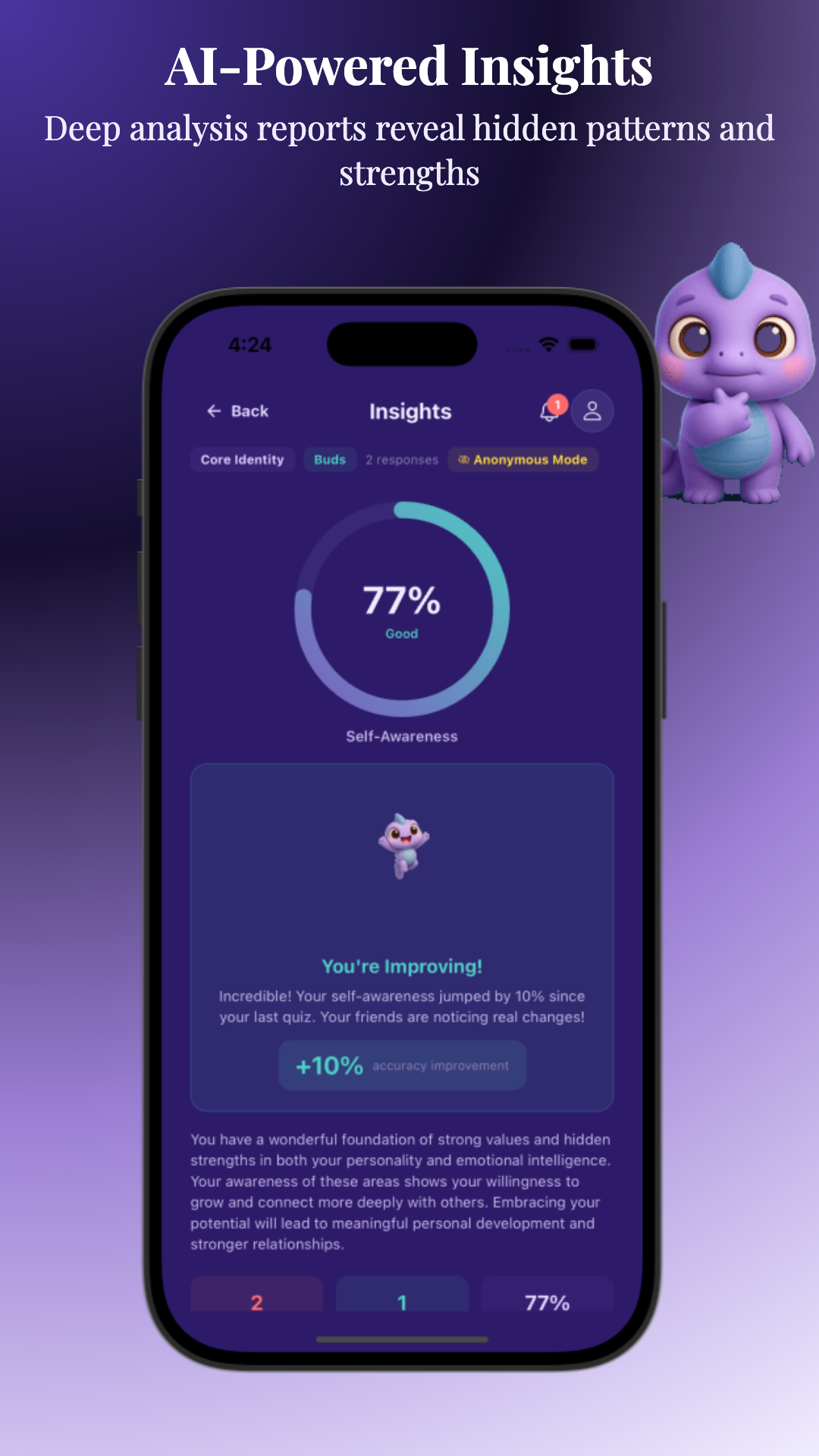
These features help you see patterns in how you're perceived, making it easier to target specific areas for development. Imagine receiving a report showing that 80% of your friends find you supportive, but only 30% feel you are open to feedback; this kind of data can guide your personal growth strategy with clarity and precision.
Additionally, many digital tools allow you to set reminders for periodic check-ins, compare results across multiple feedback rounds, and even anonymously thank your respondents for their input. This fosters a culture of continuous feedback and self-improvement.
Section 5: How to Use Quiz Insights for Growth
Step 1: Reflect on Results
Once you complete a "how do others perceive me quiz," spend time reflecting on the feedback. Don’t dismiss surprising results immediately. Instead, consider:
- Are there themes or repeated comments from multiple people?
- Which results align with your self-view, and which do not?
- What emotions do these insights trigger for you?
Reflection is most effective when you approach it with curiosity rather than defensiveness. Try to detach your ego from the results and view feedback as objective data. If several people mention the same trait—whether positive or negative—take it seriously. Document your initial reactions in a journal, noting any resistance, discomfort, or validation you feel. This process can be enlightening and therapeutic, helping you process both praise and criticism in a balanced way.
Step 2: Identify Growth Areas
Focus on discrepancies between your self-assessment and others’ feedback. For example, if you see yourself as confident but friends often describe you as shy, this is a good area to explore. Set clear, actionable goals to address these differences.
- Choose one or two traits to work on at a time.
- Use journaling or coaching to dig deeper into why the gap exists.
- Revisit quiz results periodically to track improvement.
Start by prioritizing traits that matter most to you or those that have the greatest impact on your relationships and success. For instance, if feedback indicates you struggle with active listening, set a goal to practice reflective listening techniques in conversations. If you’re perceived as indecisive, work on making quicker decisions in low-risk situations. Document your progress and setbacks, and don’t hesitate to seek guidance from mentors, coaches, or trusted friends who can provide perspective and accountability.
Step 3: Communicate and Calibrate
Open a dialogue with trusted friends about your insights. Ask for specific examples and suggestions. This deepens relationships and helps you understand the context behind certain perceptions.
For example, if feedback suggests you are sometimes perceived as distracted, ask your friends when they noticed this and what behaviors stood out. You might learn that checking your phone during conversations creates distance. By clarifying the circumstances and seeking advice, you can take concrete steps—such as silencing your phone in social settings or using active listening cues—to improve your presence and attentiveness.
If you want a step-by-step action plan, the post How to Uncover Your Social Blind Spots: Step-by-Step Guide offers a practical framework for applying feedback and measuring progress.
Remember, feedback is a tool for self-discovery, not self-criticism. The willingness to calibrate your behavior based on others’ input is a sign of emotional intelligence and maturity. Over time, this process leads to stronger, more empathetic relationships and a more authentic self-image.
Section 6: Overcoming Challenges and Biases
Dealing with Negative Feedback
Not all quiz results will be flattering. It’s natural to feel defensive or hurt by unexpected criticism. However, embracing constructive feedback is essential for real growth. Here’s how to manage difficult responses:
- Pause before reacting: Give yourself time to process.
- Seek clarification: If possible, ask for examples to understand the context.
- Focus on growth: Treat feedback as information, not judgment.
Let’s say you learn that several friends perceive you as unreliable. Instead of immediately denying or rationalizing this, ask for specific situations where you might have let someone down. Approach these conversations with an open mind and a willingness to listen. Remember that perception is shaped by repeated experiences, so even a few incidents can color someone’s overall impression. Use this as motivation to demonstrate reliability in future interactions, such as following through on commitments, being on time, or proactively communicating when plans change.
Recognizing Feedback Biases
Remember that not all perceptions are accurate or fair. Friends may have their own biases or limited interactions. To counteract this:
- Gather feedback from diverse sources—friends, family, colleagues.
- Look for patterns rather than fixating on outliers.
- Use digital tools that aggregate and anonymize responses, reducing individual bias.
Biases can arise from misunderstandings, cultural differences, or personal grievances. For example, a colleague who feels threatened by your success might describe you as arrogant, while others see you as confident. By seeking a broad range of perspectives and focusing on consistent themes, you can filter out unhelpful or skewed feedback. Digital platforms like Blindspot are designed to collect data from multiple respondents and present aggregated results, reducing the influence of any single outlier. This leads to a more balanced and accurate picture of how you are generally perceived.
Privacy and Trust Considerations
Some people worry about privacy when asking for honest feedback. Apps like Blindspot allow for anonymous participation and strict privacy controls, so you can be sure feedback is both safe and authentic.
When choosing a feedback tool, always review the platform’s privacy policies and data protection measures. Look for apps that do not require respondents to create accounts or share personal information to participate. Blindspot, for example, encrypts all responses and only shares aggregated data with the quiz creator. This builds trust and encourages higher participation rates, as respondents know their feedback cannot be traced back to them. Maintaining privacy not only protects you and your friends but also ensures the integrity of the feedback process.
If you’re interested in more strategies for getting candid feedback, check out How to Get Honest Feedback from Friends: A Practical Guide.
Conclusion
Taking a "how do others perceive me quiz" is a powerful first step toward genuine self-awareness. By confronting the perception gap and seeking honest, anonymous input, you gain a fuller understanding of how you’re seen in the world. Apps like Blindspot make this process simple and insightful, offering AI-driven feedback and practical growth plans. With regular reflection and a willingness to embrace feedback—both positive and critical—you’ll unlock new levels of personal and social growth. Remember, self-discovery isn’t a one-time event but a continuous journey of learning and adaptation.
In summary, bridging the perception gap requires courage, openness, and the right tools. By leveraging digital platforms, engaging in honest self-reflection, and seeking diverse perspectives, you can make meaningful progress in understanding and improving how you are perceived. Whether your goal is to enhance your leadership skills, build deeper friendships, or simply become more self-aware, regular feedback is a powerful ally on your personal growth journey.
FAQ
Q: How accurate are "how do others perceive me" quizzes?
A:
Accuracy depends on the honesty of respondents and the diversity of your feedback group. Anonymous, well-designed quizzes tend to yield the most truthful insights, especially when using digital tools that reduce social pressure.
Q: What’s the difference between self-perception and how others see me?
A:
Self-perception is how you view your own traits, abilities, and behaviors. Others’ perceptions are shaped by their observations and interactions with you. The gap between the two is called the perception gap.
Q: Can quizzes really help me improve my relationships?
A:
Yes! Understanding how others see you can help you communicate more effectively, address misunderstandings, and build stronger, more empathetic connections.
Q: What if I disagree with the feedback I receive?
A:
It’s normal to feel some resistance. Look for recurring themes and consider the source. Use feedback as a prompt for reflection rather than an absolute truth.
Q: Are there risks to sharing quizzes with friends?
A:
As long as you use trusted, privacy-focused platforms like Blindspot, risks are minimal. Always respect others’ time and willingness to participate, and keep the focus on growth.