Active Listening Self Quiz: Techniques for Mindful Communication and Deeper Connections
Discover techniques for mindful communication with the active listening self quiz, enhancing empathy and building deeper connections in personal and professional spheres.

Estimated reading time: 7 minutes
Key Takeaways
- Active listening: Practice mindful attention to build trust and empathy.
- Mindfulness: Supports presence and non-judgmental observation in conversations.
- Self-quiz: Evaluates listening habits and identifies growth areas.
- Action plan: Interpret scores, set SMART goals, and track progress.
- Techniques & exercises: Apply strategies in real-life scenarios for improvement.
Table of Contents
- Section 1: Understanding Active Listening and the Active Listening Self Quiz
- Section 2: The Role of Mindfulness in Communication
- Section 3: Introducing the Active Listening Self Quiz
- Section 4: How to Interpret Your Quiz Results
- Section 5: Techniques and Tips for Enhancing Active Listening
- Section 6: Practical Exercises and Real-Life Applications
- Conclusion
Section 1: Understanding Active Listening and the Active Listening Self Quiz
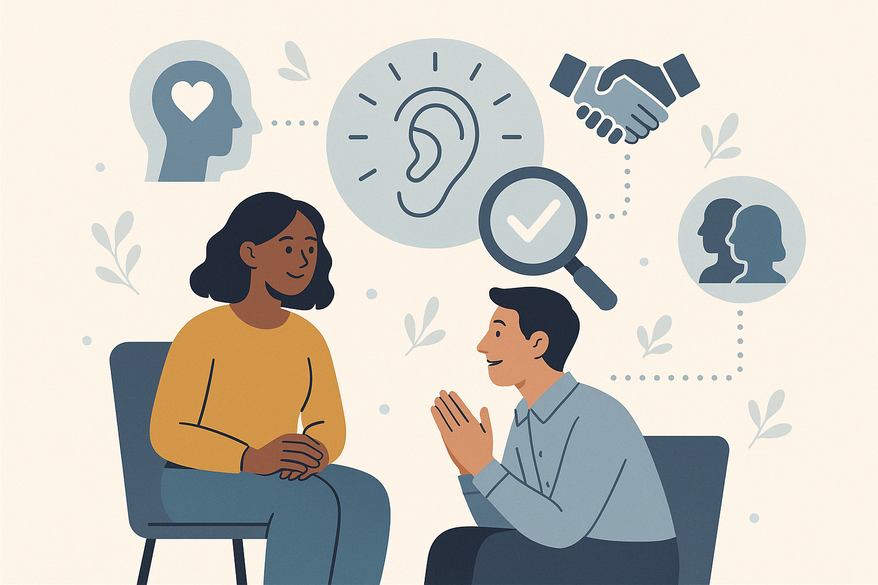
Active listening goes beyond quiet silence. It’s an intentional effort to fully engage with the speaker’s message and emotions.
- Full attention: Focus completely on words, tone, and body language while minimizing distractions.
- Empathy: Listen for both content and emotion to truly understand the speaker’s perspective.
- Non-verbal awareness: Notice facial expressions, gestures, and posture that signal unspoken feelings.
- Reflection/paraphrasing: Restate what you heard—“It sounds like…”—to confirm accuracy.
- Clarifying questions: Use open-ended prompts—“Can you tell me more?”—to deepen understanding.
- Withholding judgment & interruptions: Allow speakers to finish before evaluating or responding.
Impact on relationships
- Personal: Builds trust and eases conflict by showing genuine understanding.
- Professional: Enhances teamwork, improves leadership coaching, and fosters psychological safety.
Section 2: The Role of Mindfulness in Communication
Mindfulness in conversation means being fully present, aware, and non-judgmental. For daily practices that support mindful listening, see our guide to Daily Mindfulness for Growth.
- Breath awareness: Pause, inhale/exhale slowly before responding.
- Single-tasking: Eliminate phones and laptops during conversations.
- Non-judgmental observation: Notice judgments silently, then refocus on the speaker.
Real-world benefits
- Fewer misunderstandings through clearer comprehension.
- Stronger emotional bonds as people feel truly heard.
- More meaningful daily conversations.
Section 3: Introducing the Active Listening Self Quiz
The active listening self quiz is a simple tool to evaluate your listening habits and identify where mindfulness can enhance your communication.
Quiz focus areas & sample questions:
- Attention & presence: “How often do you think ahead instead of listening?”
- Interruptions & judgment: “Do you interrupt before someone finishes?”
- Non-verbal awareness: “Do you notice facial expressions and tone changes?”
- Reflection/paraphrasing: “How effectively do you summarize others’ points?”
- Clarifying questions: “Do you ask open-ended questions to explore meaning?”
- Emotional attunement: “Do you listen for both facts and feelings?”
Quiz mechanics:
- Honest self-rating on a 1–5 scale.
- Calculate total and category scores.
- Identify top strengths and key areas for growth.
Section 4: How to Interpret Your Quiz Results
After completing the active listening self quiz, use your scores to chart a clear improvement plan. To integrate these insights into a sustainable practice, learn how to Build a Self-Awareness Routine.
Score tiers & interpretations:
- High (80–100%): Strong listener—rarely interrupts, frequently paraphrases.
- Moderate (50–79%): Aware but inconsistent—good habits when calm, needs stress-proofing.
- Low (<50%): Developing listener—distracted often, needs foundational focus.
Action steps per tier:
- High: Mentor others, tackle challenging conversations.
- Moderate: Pick 1–2 areas (e.g., paraphrasing, breath pauses) and practice daily.
- Low: Start with eye contact, no-interrupt rule, basic reflection prompts.
Goal setting & tracking:
- SMART goals: “No phone for 5 mins in each meeting.”
- Daily/weekly reflection prompts.
- Monthly quiz re-take.
- Solicit external feedback from peers.
Section 5: Techniques and Tips for Enhancing Active Listening
Use these actionable strategies to strengthen your mindful listening skills. For a deeper dive into mindfulness-based self-discovery techniques, see Mindfulness Self Discovery for Personal Growth.
- Be fully present: Eliminate distractions; focus eyes and mind.
- Supportive non-verbal cues: Nod, lean in, maintain relaxed posture.
- Avoid interrupting: Count to two after the speaker stops before replying.
- Reflect & paraphrase: Use “So what I’m hearing is…” regularly.
- Ask open-ended questions: “What happened next?” “How did that feel?”
- Emotional mirroring: Label emotions—“You sound frustrated.”
Section 6: Practical Exercises and Real-Life Applications
Apply your new skills in everyday scenarios to solidify your learning.
Real-life scenarios:
- Daily check-in: 5-minute mindful listening with a partner or friend.
- Team meeting summaries: Reflect one speaker’s point each session.
- Difficult topics: Six-step process—full attention, suspend judgment, pause, reflect, clarify, then respond.
Mini-exercises:
- Distraction audit: Track mind-wandering over a day.
- Paraphrase challenge: Paraphrase a key point in three conversations.
- Empathy thought experiment: Ask “How would I feel in their shoes?” before responding.
Conclusion
Active listening, the self quiz, and targeted techniques form a powerful trio for deeper connections. Use the quiz to assess habits, set SMART goals, and track progress. Start today: take the quiz, practice a technique, and share your journey. By making mindful listening a daily habit, you’ll transform conversations into opportunities for trust, empathy, and genuine connection.
FAQ
What is active listening?
Active listening is the practice of giving full, mindful attention to a speaker—hearing words, emotions, and intent to build trust and understanding.
How does mindfulness improve listening?
Mindfulness keeps you present and non-judgmental, reducing distractions and helping you fully engage with the speaker’s message and emotions.
What does the self quiz assess?
The self quiz evaluates habits like attention, interruptions, non-verbal awareness, paraphrasing, clarifying questions, and emotional attunement on a 1–5 scale.
How can I use quiz results to improve?
Interpret your score tier, set SMART goals, practice targeted techniques daily, and retake the quiz monthly to measure progress and solicit peer feedback.