
Unlock Your Inner Nature with the Eco Self Discovery Quiz
Explore your personality through nature with the Eco Self Discovery Quiz. Embrace sustainable living and connect with your ecological self today.

Estimated reading time: 7 minutes
Key Takeaways
- Discover your ecological self—how you connect with nature and ecosystems.
- Learn your core values, motivations, and habits through nature-based metaphors.
- Follow a clear, step-by-step quiz process from preparation to personalized feedback.
- Receive tailored insights and sustainable habit suggestions to align lifestyle with environmental values.
- Develop a deeper bond with nature and build resilience modeled on natural cycles.
Table of Contents
- What Is an Eco Self Discovery Quiz?
- The Ecological Perspective in Self Discovery
- The Role of Natural Settings
- How the Eco Self Discovery Quiz Works
- Benefits of Taking an Eco Self Discovery Quiz
- Tips for Using Your Quiz Results
- Conclusion
What Is an Eco Self Discovery Quiz?
An eco self discovery quiz offers a structured way to see how your inner life connects with the world around you. It’s a guided self-assessment that helps you explore personality, values, and life choices through the lens of nature and ecology, inviting you to see yourself as part of a larger living system rather than separate from the environment (Source).
- Purpose
- Identify your core values, motivations, strengths, and habits as they relate to natural systems.
- Reveal how daily choices echo in ecosystems, much like ecological footprint tools show human impact.
- Bridge your inner world and outer actions to align lifestyle with environmental values.
- Integration of Nature and Ecology
- Uses metaphors—forest, river, mountain—as stress-response archetypes.
- Encourages recognition of how your well-being links to ecosystems and future generations.
- Draws on ecological terms: balance, resilience, diversity.
The Ecological Perspective in Self Discovery
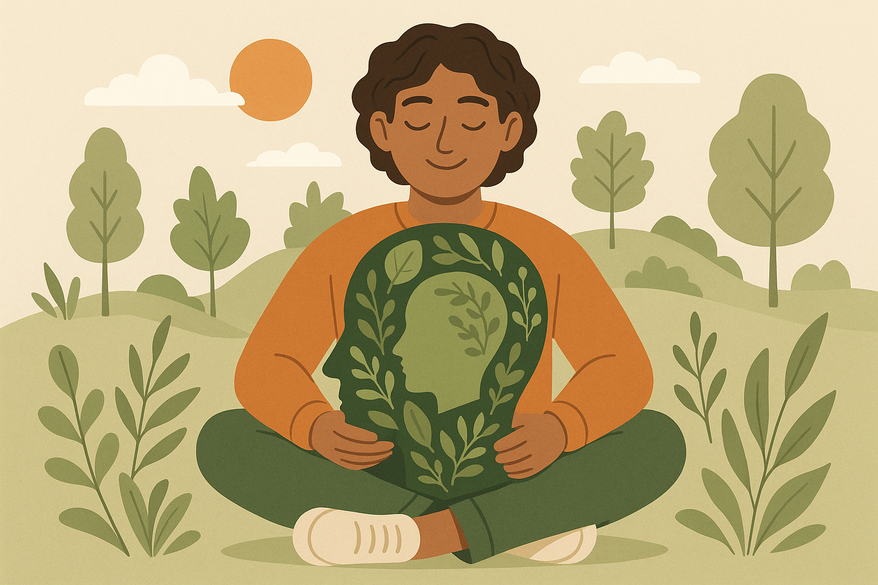
An eco self discovery quiz invites you to embrace an ecological self—an understanding that we are integral parts of the larger ecological web. The benefits include enhanced mental and emotional health, a stronger sense of purpose, and increased motivation for sustainable behavior.
The Role of Natural Settings
For more on reflecting outdoors, see our guide to Outdoor Self Reflection.
Natural settings serve as mirrors and mentors in your self-discovery journey:
- Forests: Offer quiet support and a sense of being held; tree diversity symbolizes internal variety.
- Parks/Gardens: Show growth cycles; caring for plants mirrors personal development.
- Mountains: Evoke perspective, long-term vision, and resilience.
- Rivers/Lakes/Coasts: Represent flow, change, and emotional release.
How the Eco Self Discovery Quiz Works
- Preparation
- Choose a quiet, nature-inspired spot or fill your room with plants and natural light.
- Set an intention: “I want to align my lifestyle with my environmental values.”
- Core Questionnaire
- Identity & Connection: “When I imagine my ideal day, how much of it is spent outdoors?”
- Values & Attitudes: “I feel a responsibility to protect the environment.”
- Behaviors & Habits: Frequency of eco-friendly purchases, preferred transport for short trips.
- Emotional Responses: “Spending time outdoors improves my mood.”
- Nature-Based Activities (Optional)
- Mindful nature walk: Notice three natural elements that reflect your mood.
- Ecosystem visualization: Imagine yourself as a forest, desert, or wetland; journal insights.
- Scoring & Profiling
- Identify themes: connection, responsibility, resilience, mindfulness.
- Receive a profile—e.g., “Steward of Simplicity”—with a descriptive metaphor.
- Feedback & Guidance
- Get tailored suggestions: daily nature breaks, sustainable habit tweaks, resilience exercises.
Benefits of Taking an Eco Self Discovery Quiz
- Increased self-awareness: Clarity on values and behavior patterns in relation to nature.
- Deeper connection with nature: Fosters empathy for ecosystems and living systems.
- Personalized growth strategies: Habit-change targets, resilience-building modeled on natural cycles.
- More sustainable lifestyle choices: Heightened sensitivity to environmental impact and reduced footprint.
Similar to our Nature Self Awareness Test, this quiz helps ground your growth in real-world ecosystems. If you want to go deeper into understanding yourself, our definitive guide to self-awareness offers comprehensive strategies for personal insight. If you’re interested in exploring how established frameworks like MBTI and the Big Five can further your journey, check out our complete guide to personality types and self-discovery.
Tips for Using Your Quiz Results
- Interpret results as hypotheses, not fixed labels. Revisit after practicing new habits.
- Translate insights into small actions:
- Daily 10–15 minute nature breaks.
- One eco-friendly change in food, transport, or energy.
- Integrate nature-based practices:
- Mindful nature walks: focus on breath, sounds, textures; reflect on a quiz question.
- Sit-spot practice: regular visits to one outdoor spot; observe seasonal and inner changes.
- Nature journaling: Pair ecosystem observations with inner states. You might also enjoy our expressive journaling quiz to further unlock self-discovery and personal expression.
- Re-take the quiz every 3–6 months to track the evolution of your ecological self.
Conclusion
Blending ecological awareness with self-discovery shifts growth toward understanding yourself as part of a living system. An eco self discovery quiz provides a clear path to deepen your connection with nature, clarify your values, and align daily choices with the planet’s needs.
For a different angle on self-discovery and to uncover perception gaps with friends, check out Blindspot App. Take the eco self discovery quiz today and begin your nature-reinforced journey of personal growth and sustainable living!
FAQ
- What will I learn from this quiz?
You’ll uncover your core environmental values, typical habits, and emotional responses related to nature.
- How long does it take?
The quiz takes about 15–20 minutes, plus extra time for optional nature-based activities.
- Is it science-based?
Yes, it draws on ecopsychology principles and ecological metaphors to provide meaningful insights.
- Do I need to be outdoors?
While optional activities benefit from real nature, you can complete the core questionnaire indoors with nature-inspired prompts.
- How often should I retake it?
Every 3–6 months is ideal to track changes in your ecological self and growth.