Dunning Kruger Effect: Understanding Overconfidence and Self-Assessment Accuracy
Explore the Dunning Kruger Effect, real-world examples, its origins, and how to improve self-assessment accuracy to avoid overestimating your skills.

Estimated reading time: 17 min
Key Takeaways
- The Dunning Kruger Effect is a cognitive bias where people with low skill levels overestimate their competence, while high performers may underestimate theirs.
- It originates from a 1999 study by David Dunning and Justin Kruger, highlighting the gap between perceived and actual skill.
- Understanding this effect can help improve self-assessment accuracy and reduce overconfidence in personal and professional life.
- Real-world Dunning Kruger examples span driving, humor, grammar, politics, workplace, and education.
- Awareness and feedback, including tools like Blindspot, are essential in overcoming the Dunning Kruger Effect and enhancing self-awareness.
Table of Contents
- Section 1: Defining the Dunning Kruger Effect
- Section 2: The 1999 Study—Origins and Key Findings
- Section 3: How the Dunning Kruger Effect Manifests—Illusory Superiority
- Section 4: Dunning Kruger Effect Examples in Real Life
- Section 5: Critiques, Controversies, and Misconceptions
- Section 6: Recognizing and Avoiding the Dunning Kruger Effect
- Conclusion
- FAQ
Section 1: Defining the Dunning Kruger Effect
What Is the Dunning Kruger Effect?
The Dunning Kruger Effect is a well-documented cognitive bias where individuals with low ability in a specific domain tend to overestimate their own skills. Conversely, those who are highly skilled often underestimate their competence. This effect reveals a critical gap in self-assessment accuracy, leading to distorted self-perception and decision-making. The effect is not limited to any one area of life — it can influence how people judge their abilities as students, employees, drivers, parents, or even friends. Its pervasiveness is what makes it so relevant in both everyday scenarios and high-stakes environments.
Core Mechanism: Metacognition and Self-Assessment
At its heart, the Dunning Kruger Effect is about metacognitive deficits—the inability to accurately evaluate one's own knowledge or performance. People who lack knowledge in a domain also lack the insight needed to recognize their shortcomings. This means they are not just poor performers; they are often unaware of what competence actually looks like, so their self-assessment is flawed. Their ignorance of their own ignorance means they may confidently make decisions, offer opinions, or take actions based on a false sense of security. This can be dangerous in professional settings, where faulty self-evaluation can lead to costly errors, or in social contexts, where it might result in embarrassing misjudgments. This is why the Dunning Kruger Effect is sometimes called a "double burden": individuals are doubly cursed by both incompetence and an inability to recognize it.
Why Does This Matter?
- It leads many to ask, "Am I overconfident?" or "Do I overestimate myself?". These are crucial self-reflective questions, especially when facing setbacks or unexpected criticism.
- It impacts decisions in areas like academics, business, driving, and social interactions. For example, overconfident students may skip studying for an exam, thinking they already understand the material, while new managers might take on complex projects without seeking sufficient training.
- It can create blind spots in personal growth—areas where you think you excel but actually need improvement. These blind spots can persist for years, preventing meaningful progress until honest feedback or a significant failure prompts reassessment.
Understanding this bias is the first step toward more accurate self-assessment and better decision-making. Apps like Blindspot help users uncover these blind spots by contrasting self-perception with honest feedback from friends. This process can illuminate specific areas for development, making it easier to set realistic goals and track improvement over time.
Section 2: The 1999 Study—Origins and Key Findings
The Groundbreaking Dunning and Kruger Study
The term "Dunning Kruger Effect" comes from a pivotal 1999 study by David Dunning and Justin Kruger, psychologists at Cornell University. In their research, they set out to understand why people with limited knowledge or skills in a domain often rate their abilities much higher than objective tests would suggest. Their curiosity was sparked by newspaper accounts of a bank robber who thought rubbing lemon juice on his face would make him invisible to security cameras—a spectacular misjudgment born from ignorance of basic chemistry and technology. This real-life example highlighted the dangers of misplaced confidence, inspiring the researchers to investigate how widespread such miscalibration might be.
How the Study Was Conducted
- Participants took tests in areas such as humor, grammar, and logical reasoning. These diverse domains were chosen to see if the effect was consistent across different types of skills.
- Afterward, they estimated their performance and compared it to their actual results. This dual approach allowed researchers to measure both objective ability and subjective self-assessment.
- The lowest performers consistently rated themselves far above average, while the highest scorers tended to underestimate their relative standing. For instance, participants in the bottom quartile often believed they had scored in the top half, while those in the top quartile sometimes thought their performance was merely average.
By using domains like humor (where people had to identify what made a joke funny), grammar (editing sentences for correctness), and logic (solving reasoning problems), the researchers demonstrated that the effect was not limited to a single skill but showed up in both creative and analytical tasks. The experiment also included follow-up sessions where participants received training in the skill area and then re-evaluated their performance. Interestingly, as their actual skills improved, their self-assessments became more accurate, showing that self-awareness can be learned.
Key Findings
- Low performers lacked the skills necessary to recognize their own deficiencies (metacognitive gap). This lack of self-awareness is what makes the effect so persistent, as people are not only unaware of what they don’t know—they’re unaware of the very existence of their own gaps in knowledge.
- High performers often assumed tasks were easier for others too, leading to underestimation of their own abilities. This is sometimes called "the curse of knowledge," where experts have difficulty imagining what it’s like not to possess their level of understanding.
- The effect is domain-specific: it doesn't mean someone is universally overconfident or lacking intelligence—just that their self-assessment accuracy is poor in that particular area. For instance, someone might accurately judge their cooking skills but wildly overestimate their financial literacy.
This study provided a scientific explanation for why so many struggle with the question, "Do I overestimate myself?" and set the stage for decades of further research into self-awareness and cognitive biases. Follow-up research has expanded the effect to domains like emotional intelligence, leadership, and technical skills, confirming its broad relevance.
Section 3: How the Dunning Kruger Effect Manifests—Illusory Superiority
Illusory Superiority in Everyday Life
One of the most common forms of the Dunning Kruger Effect is illusory superiority—the tendency for people to view themselves as above average in various domains. Studies show that a majority of people rate themselves as better-than-average drivers, leaders, or communicators, which is statistically impossible. This phenomenon is not limited to self-report surveys; it also appears in workplace performance reviews, peer assessments, and even in informal social settings. For instance, in a survey among university faculty, more than 90% rated their teaching as above average—a numerical impossibility that illustrates just how widespread illusory superiority can be.
Metacognitive Deficits in Action
When individuals lack the necessary skills, they not only perform poorly but also fail to recognize their own mistakes. This leads to overconfidence in their abilities and a resistance to feedback or learning opportunities. Here’s how it typically plays out:
- Poor performers don’t know enough to realize what they don’t know. For example, a novice chess player might not see the strategic depth required to avoid blunders and may be surprised when they lose repeatedly to more experienced opponents.
- They may reject constructive criticism or blame external factors for failures. In the workplace, this can look like an employee dismissing negative feedback as favoritism or misunderstanding, rather than a reflection of their actual performance.
- This can result in stagnation, as they’re less likely to seek improvement. Without awareness of their limitations, there's little motivation to learn or change—leading to a self-perpetuating cycle of mediocrity.
This lack of insight can be especially harmful in areas where mistakes have serious consequences. For instance, overconfident leaders may ignore warning signs, resulting in business failures, or inexperienced investors may take excessive risks, leading to financial losses.
Underestimation Among High Performers
Conversely, highly skilled individuals may assume that tasks are just as easy for everyone else, leading them to undervalue their unique expertise. This can cause them to hold back from sharing insights or pursuing leadership roles, because their self-assessment is unduly modest. For example, a software developer who picks up new programming languages quickly may think their peers find it just as easy, overlooking their own talent. This underestimation can also hinder mentorship and knowledge sharing, as experts may not realize how much they have to offer others, and may be reluctant to step into teaching or leadership positions.
For a deeper dive into how feedback can help close these gaps, see Johari Test: Unlocking Self-Awareness Through Honest Feedback.
Section 4: Dunning Kruger Effect Examples in Real Life
Driving: The Classic Overconfidence Trap
Research consistently finds that over 80% of drivers believe they are above average, a mathematical impossibility. This leads to riskier behaviors and a lack of learning from past mistakes—classic Dunning Kruger examples. Those with the fewest hours behind the wheel often rate themselves as the most skilled. In a study of new drivers, those who had recently passed their driving test frequently reported high confidence in their abilities, despite making significant errors during driving assessments. This overconfidence can contribute to higher accident rates among inexperienced drivers, who may not recognize dangerous situations or their own limitations.
Humor and Grammar: Everyday Blind Spots
- Humor: In the 1999 study, participants who scored lowest in identifying jokes and punchlines believed they were among the funniest. They often failed to recognize why a joke was—or wasn’t—effective, leading to misplaced confidence in their comedic timing.
- Grammar: Poor grammar skills were paired with high self-ratings in English proficiency. In academic settings, students who made the most grammatical errors on tests were often the same ones who ranked their writing skills highly, demonstrating the disconnect between skill and self-perception.
These domains highlight how the effect isn’t about intelligence, but about self-assessment accuracy in specific areas. People may be highly competent in other fields, but blind to their shortcomings in something as basic as communication.
Medicine, Politics, and Beyond
- Medicine: Medical students or junior doctors may confidently make diagnoses they are not yet qualified to assess. For example, a first-year medical student may be convinced they fully understand a disease after a single lecture, missing the nuance and complexity that comes with experience and more advanced training. This can result in overprescribing, misdiagnosis, or failing to seek a second opinion.
- Politics: Voters with limited policy knowledge may express strong, uninformed opinions, convinced of their own expertise. During elections, research shows that people with the least knowledge about candidates or issues often have the most extreme opinions, confidently sharing misinformation or making decisions based on incomplete understanding.
In business, employees might overrate their leadership or technical skills, impacting team dynamics and project outcomes. For example, a project manager who lacks experience might ignore team input, leading to missed deadlines or cost overruns. In education, students who overestimate their understanding may skip assignments or ignore study opportunities, resulting in lower grades. For more on how friends’ perspectives can help uncover social blind spots, see How Friends Shape Our Self-Image: The Hidden Impact.
Other areas where the Dunning Kruger Effect is evident include:
- Technology: Users who believe they are "tech-savvy" may ignore security practices, leading to cybersecurity risks.
- Sports: Amateur athletes may overestimate their abilities, risking injury by attempting advanced techniques without proper training.
- Parenting: New parents may assume they understand child development fully, overlooking advice from professionals or more experienced parents.
These examples show how the Dunning Kruger Effect can subtly undermine decision-making, learning, and relationships across virtually every sphere of life.
Section 5: Critiques, Controversies, and Misconceptions
Debate Over Statistical Validity
The Dunning Kruger Effect is widely accepted, but not without criticism. Some psychologists argue that the observed pattern may partly result from statistical artifacts—for instance, regression to the mean and measurement errors can exaggerate the differences between low and high performers. Critics point out that when measuring any ability, extreme scores tend to move closer to the average when measured again, which can create the illusion of over- or underestimation. Some researchers have suggested that the magnitude of the Dunning Kruger Effect might be overstated in certain studies due to these mathematical quirks. However, further research with more sophisticated statistical controls still finds evidence for the basic effect: self-assessment is often flawed, especially among those with the least expertise.
Domain-Specific, Not Global
A common misconception is that the Dunning Kruger Effect labels people as generally "dumb" or universally overconfident. In reality, it’s domain-specific: a talented musician could still overestimate their public speaking skills. The effect is not about overall intelligence, but about self-assessment accuracy in particular areas. Even highly intelligent individuals can display the effect when venturing into unfamiliar territory. This domain specificity underscores the importance of humility and curiosity when facing new challenges or learning opportunities. Recognizing that everyone has areas of weakness makes it easier to seek out feedback and growth, rather than falling into the trap of global self-doubt or unchecked confidence.
Recent Research and Neural Correlates
- Brain imaging studies suggest that metacognitive awareness (the ability to judge one's own performance) relies on specific neural networks. The prefrontal cortex, for example, is heavily involved in self-reflection and error detection.
- These networks can be underdeveloped in certain domains, but trained over time with feedback and reflection. This means that regular practice—such as reviewing performance, asking for input, or undergoing formal training—can help strengthen the brain’s ability to accurately self-assess.
Despite ongoing debate, the basic insight remains: people often don't know what they don't know, and feedback is crucial to improvement. The field continues to evolve, with researchers examining how cultural, educational, and organizational factors can mitigate or exacerbate the effect. For instance, feedback-rich environments such as athletic teams or music conservatories often produce more accurate self-assessment, while isolated or hierarchical cultures may reinforce blind spots.
Section 6: Recognizing and Avoiding the Dunning Kruger Effect
How to Spot Overconfidence in Yourself
- Do you often believe you’re above average in many areas? If you routinely rate yourself as highly competent without objective evidence or external validation, it might be time to reflect more deeply.
- Are you surprised by negative feedback or dismissive of criticism? A strong emotional reaction to constructive criticism can indicate a misalignment between perceived and actual skill.
- Do you rarely seek others’ opinions or avoid double-checking your work? Lack of curiosity about how others view your performance is a classic sign of potential blind spots.
These are signs you might be falling into the Dunning Kruger trap. Honest self-reflection and a willingness to question your assumptions are key first steps. Keeping a journal of feedback received, or periodically reviewing past mistakes and what was learned from them, can help build more accurate self-awareness. Another useful strategy is to intentionally seek out situations where your performance can be objectively measured or compared to others, such as competitions, standardized tests, or peer-reviewed projects.
Strategies to Improve Self-Assessment Accuracy
- Seek Specific Feedback: Use anonymous surveys or apps like Blindspot to gather honest input from friends and colleagues. Anonymous platforms often reduce the fear of offending or being judged, resulting in more candid, actionable insights.
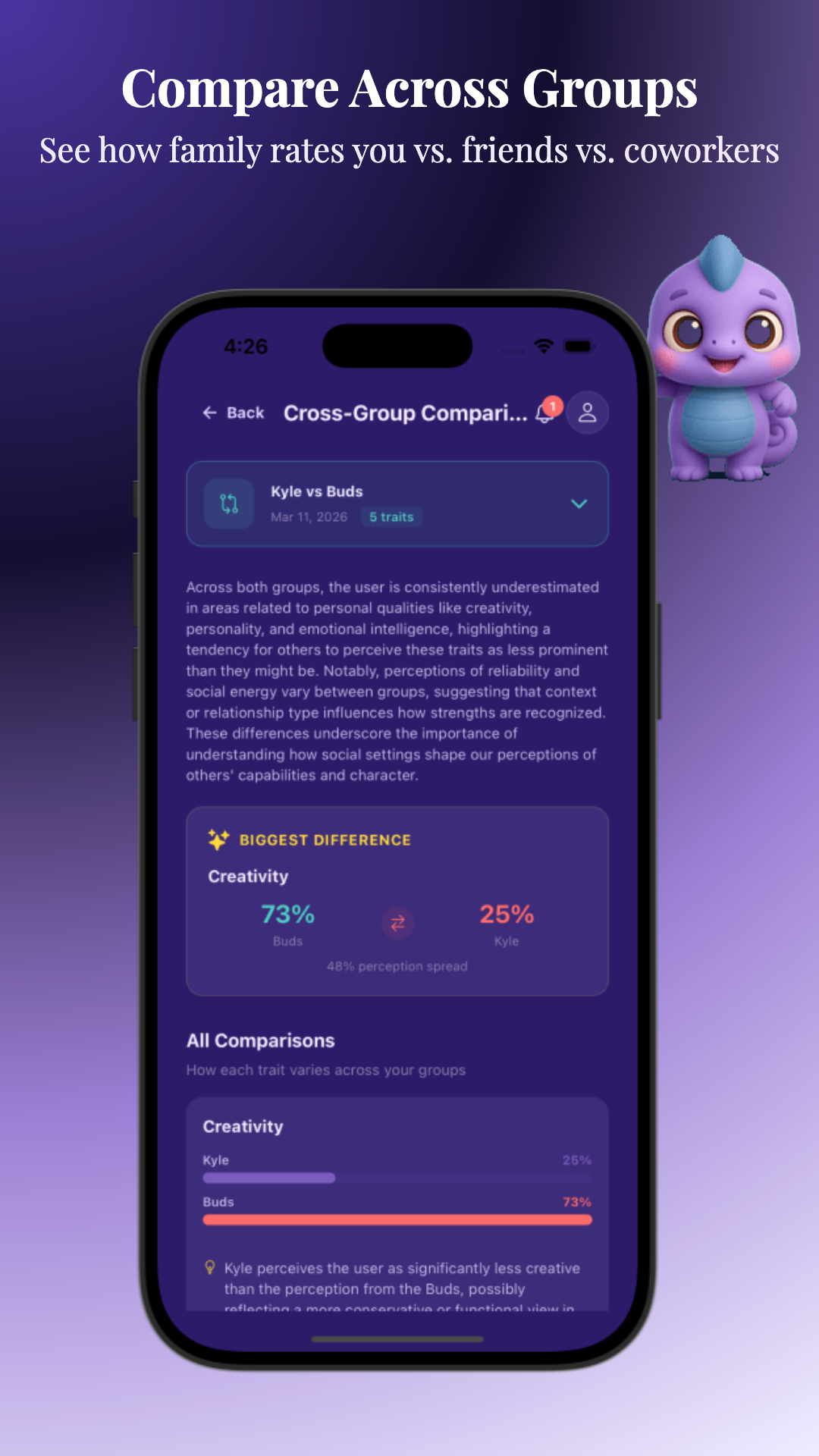
- Compare Self and Peer Ratings: Track how your self-perceptions align (or don’t) with others’ views. For example, Blindspot allows users to see aggregated feedback on traits like empathy, reliability, and humor, helping to highlight areas of mismatch.
- Embrace Lifelong Learning: Take courses, read widely, and pursue new challenges to continuously update your skills. Attending workshops, participating in online forums, or joining study groups can expose you to new perspectives and reveal hidden gaps.
For guided steps on using feedback to uncover blind spots, check out How to Uncover Your Social Blind Spots: Step-by-Step Guide.
The Role of Technology in Overcoming Bias
Digital tools like Blindspot streamline the process of collecting, analyzing, and acting on feedback. By making it easy to compare your self-assessment with group opinions, you can spot and address overconfidence or hidden strengths. For instance, Blindspot’s interface highlights differences between how you rate yourself and how your friends rate you on specific qualities, such as trustworthiness or humor. If you see a consistent gap—say, you rate yourself highly on patience, but your friends don’t—this is a clear signal to explore why that perception gap exists. The app then offers tailored suggestions for personal growth based on these insights.
In addition to personal development, such tools can be invaluable in team or organizational settings. Managers can use feedback platforms to assess leadership effectiveness and identify areas for training. Teams can uncover communication barriers or cultural blind spots that impede collaboration. By integrating these insights into regular reviews or development plans, organizations can foster a culture of continuous improvement and self-awareness.
This approach not only answers the question, "Am I overconfident?" but also provides a roadmap for growth. By tracking changes in your ratings over time, you can measure the impact of your efforts and celebrate progress—turning self-awareness from a source of anxiety into a driver of achievement.
Conclusion
The Dunning Kruger Effect offers a powerful explanation for why self-assessment accuracy is so elusive. Whether you’re worried about being overconfident or simply want to improve, understanding this cognitive bias is the first step. By seeking feedback, leveraging technology, and reflecting honestly, you can bridge the gap between perception and reality—and unlock your true potential.
If you’re ready to put these insights into practice, consider exploring Blindspot to uncover the blind spots between how you see yourself and how your friends see you. With regular, honest feedback and a commitment to growth, anyone can develop a more accurate self-image and avoid the pitfalls of illusory superiority.
FAQ
Q: What is the Dunning Kruger effect and how does it work?
A: The Dunning Kruger Effect is a cognitive bias where people with low skills or knowledge in a specific area overestimate their abilities, while experts may underestimate theirs. This occurs because low performers lack the metacognitive skills to accurately assess themselves, leading to illusory superiority.
Q: Who discovered the Dunning Kruger effect and when?
A: The Dunning Kruger Effect was discovered by psychologists David Dunning and Justin Kruger at Cornell University in 1999. Their study revealed that people often fail to recognize their own incompetence and overrate their abilities.
Q: Why do people with low skills overestimate their abilities?
A: People with low skills lack the necessary knowledge to recognize their mistakes or gauge what competence looks like. Without this awareness, their self-assessment is inaccurate, leading them to believe they're more skilled than they actually are.
Q: Can the Dunning Kruger effect happen in school or at work?
A: Yes, the Dunning Kruger Effect is common in academic and workplace settings. Students may overestimate their understanding of a subject, while employees might think they excel at tasks they actually struggle with. Honest feedback and reflection are key to improvement.
Q: How can awareness of the Dunning Kruger effect help you improve?
A: Recognizing the Dunning Kruger Effect helps you seek feedback, question your self-assumptions, and embrace lifelong learning. This leads to more accurate self-assessment, better performance, and personal growth.
Q: Is the Dunning Kruger effect still considered valid by psychologists?
A: While some debate exists over its statistical interpretation, most psychologists agree that the Dunning Kruger Effect reveals important truths about metacognition and self-assessment. It remains a widely referenced concept in psychological research.