Conducting a Body Image Self Assessment for Better Self-Perception
Learn how to conduct a body image self assessment, including appearance self perception quizzes and self beauty confidence tests, to gain self-awareness.

Estimated reading time: 7 minutes
Key Takeaways
- A body image self assessment clarifies your thoughts and feelings about weight, shape, and appearance.
- An appearance self perception quiz reveals how much you value others’ opinions of your looks.
- A self beauty confidence test pinpoints your strengths and moments of self-acceptance.
- Combining all three tools offers a comprehensive, three-dimensional view of your self-perception.
- Effective strategies include lifestyle shifts, cognitive-behavioral techniques, self-compassion, and professional support.
Table of Contents
- Why Self-Assessment Matters
- Understanding Body Image and Its Four Components
- Exploring Self-Assessment Tools
- Body Image Self Assessment Tool Details
- Appearance Self Perception Quiz for Social Evaluation
- Self Beauty Confidence Test for Strengths-Based Insights
- How These Tools Interconnect
- Strategies for Improving Body Image
- Lifestyle Shifts
- Cognitive-Behavioral Techniques
- Professional Guidance
- Self-Compassion and Realistic Standards
- Conclusion
Why Self-Assessment Matters
- Body image links directly to self-esteem, anxiety, depression, and daily functioning.
- Understanding your body image helps you spot unhelpful beliefs before they become severe.
- Tools like an appearance self perception quiz and a self beauty confidence test provide a snapshot of your current mindset.
In this post, you’ll learn:
- What body image self assessment involves
- How an appearance self perception quiz and self beauty confidence test differ
- How to use all three tools together
- Strategies to improve your self-perception based on your results
Understanding Body Image and Its Four Components
Body image is the mental picture and feelings you have about your body—including how you perceive your size and shape, the beliefs you hold about your looks, the emotions tied to those beliefs, and the behaviors you perform in response. The concept of “blind spots” in self-perception is also explored in The Johari Window Test: A Modern Guide to Discovering Your Blind Spots, which shows how unknown traits can shape our self-view.
- Perception: How accurately you see your body’s size or shape.
- Cognition: Beliefs like “I’m only worthy if I’m thin.”
- Emotion: Shame, pride, anxiety, or comfort about your appearance.
- Behavior: Mirror-checking, dieting, avoiding photos or social events.
Impact on mental health: Linked to higher risks of depression, low self-esteem, anxiety, and eating disorders. Without a structured quiz, distortions in body image often go undetected.
Societal pressures and misconceptions:
- Narrow beauty ideals promoted by media and social platforms.
- Filtered comparisons that make everyday bodies seem “flawless.”
- Misbelief that appearance equals worth.
For a deeper look at social media’s impact on identity, see Social Media Self-Perception: Understanding Its Impact on Identity.
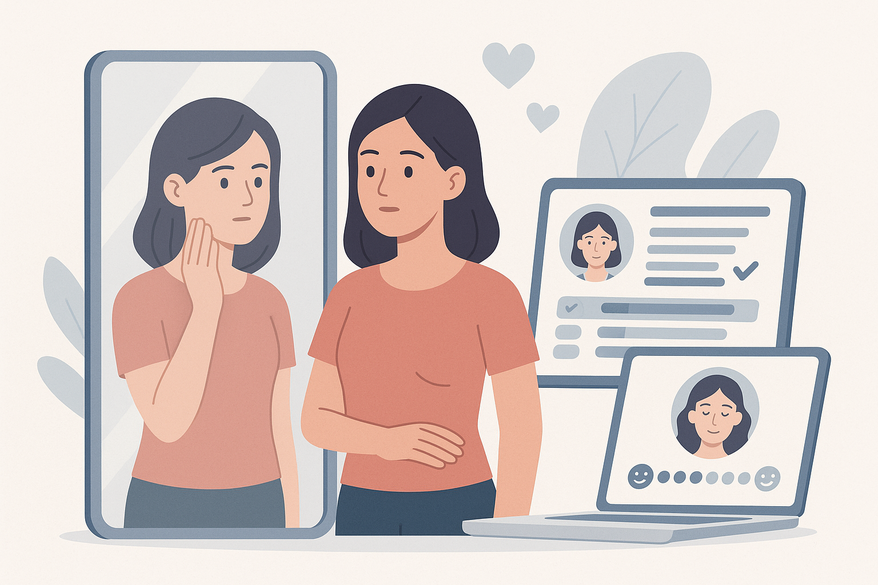
Exploring Self-Assessment Tools: body image self assessment, appearance self perception quiz, self beauty confidence test
Body Image Self Assessment Tool Details
Purpose: Gauge satisfaction with body parts, weight concerns, and avoidance behaviors. Translate vague discomfort into clear severity levels.
- 10–30 multiple-choice items on body satisfaction and social confidence.
- Feedback summary indicating potential distress levels.
- Clear disclaimer: Not diagnostic, for self-reflection only.
Benefits: Clarifies whether you need self-help strategies or professional support, encourages early help-seeking, and offers starting insights for therapy or personal change.
Appearance Self Perception Quiz for Social Evaluation
Focus: How you believe others see and judge your appearance, including photo and social media triggers that spike anxiety.
- Frequency of worry about others’ opinions.
- Shame or embarrassment in public settings.
- Dependence of mood on feeling “attractive enough.”
Benefits: Pinpoints cognitive distortions, highlights social triggers for body anxiety, and helps you develop coping strategies for both in-person and online contexts. For more on how others perceive you and bridging perception gaps, see How Others See You: Understanding and Bridging the Perception Gap.
Self Beauty Confidence Test for Strengths-Based Insights
Focus: Confidence and self-acceptance across different environments, recognition of positive qualities, and tolerance for imperfections.
- Comfort in one-on-one, group, and public contexts.
- Frequency of positive self-acknowledgment.
- Reaction to “bad days” like breakouts or weight fluctuation.
Benefits: Highlights areas of solid confidence to build on and tracks self-esteem progress over time. For more on assessing your overall confidence, try the Self Esteem Quiz Free and learn how to be more likeable with charisma and confidence.
How These Tools Interconnect
Using all three creates a three-dimensional map of your self-perception:
- Body Image Self Assessment identifies overall satisfaction, distress patterns, and avoidance behaviors.
- Appearance Self Perception Quiz clarifies how much your self-worth depends on perceived social evaluation.
- Self Beauty Confidence Test highlights your resilience and confidence anchors.
Strategies for Improving Body Image
Lifestyle Shifts
- Move for joy, not punishment: focus on function and fun in movement.
- Curate your media environment: follow body-positive, diverse, realistic feeds.
- Dress for comfort and authenticity: choose clothes that feel good now.
Cognitive-Behavioral Techniques
- Identify and challenge negative thoughts (“I look disgusting”).
- Reframe beliefs (“My worth is more than my body”).
- Gradual reduction of checking/avoidance behaviors.
Professional Guidance
- Tools are not diagnostic—seek a therapist if needed.
- Look for specialists in body image, eating disorders, and CBT.
- Consider support groups or medical evaluation for safety.
Self-Compassion and Realistic Standards
- Practice self-compassion exercises: speak kindly to yourself.
- Set humane standards: accept normal body variability.
- Focus on function: celebrate what your body allows you to do.
For ongoing insights and to gather anonymous feedback from friends on how you see yourself versus how they see you, try the Blindspot App, a free self-discovery and personal growth tool that uncovers perception gaps and offers AI-driven reports.
Conclusion
A combined body image self assessment, appearance self perception quiz, and self beauty confidence test gives you a three-dimensional view of how you see yourself, how you feel in social contexts, and where your confidence anchors lie. By matching your insights with CBT techniques, lifestyle shifts, self-compassion exercises, and professional support when needed, you can foster a kinder, more realistic relationship with your body. Retake these assessments every few months to chart your progress and refine your strategies.
FAQ
How often should I take these assessments?
For meaningful progress tracking, retake each tool every three to six months or whenever you notice significant changes in your self-perception.
Are these quizzes diagnostic?
No, they’re intended for self-reflection and insight. They do not replace professional diagnosis or treatment.
Can self-assessment replace professional help?
While these tools guide you toward understanding your body image, seeking a licensed therapist or medical professional is crucial if you experience severe distress.
How do I handle negative feelings that arise?
Use self-compassion exercises, challenge harmful beliefs, lean on supportive friends or groups, and consider professional guidance for persistent or overwhelming emotions.