What Do You Think of Me Questions: The Ultimate Guide for Friend Quizzes
Discover the best 'what do you think of me' questions, quiz ideas, and strategies to gain self-awareness with friends. Build your friend quiz today!

Estimated reading time: 15 min
Key Takeaways
- "What do you think of me" questions reveal how others perceive you, closing the self-awareness gap.
- Building a quiz for friends about yourself fosters honest, constructive feedback in a safe, anonymous way.
- Carefully crafted questions about me for friends spark insightful and sometimes surprising answers.
- Using apps like Blindspot makes the process engaging and insightful, with AI-powered feedback.
- Integrating self-discovery tools and feedback strengthens friendships and personal growth.
Table of Contents
- Section 1: Why Ask "What Do You Think of Me" Questions?
- Section 2: Crafting the Perfect Quiz for Friends About Me
- Section 3: The Best Questions to Ask Friends About Yourself
- Section 4: How to Get Honest Answers and Overcome Awkwardness
- Section 5: Using Blindspot to Quiz My Friends Effectively
- Section 6: Turning Feedback Into Self-Awareness and Growth
- Conclusion
- FAQ
Section 1: Why Ask "What Do You Think of Me" Questions?
The Power of Self-Reflection Through Others
"What do you think of me" questions go far beyond curiosity or idle conversation. They are powerful tools for self-discovery, allowing you to see yourself through the eyes of others. While we all have an internal view of who we are, our friends often notice traits, patterns, or behaviors we might overlook. These questions help reveal the gap between self-perception and external perception—a phenomenon psychologists call a "blind spot."
- Uncover hidden strengths: Friends may notice positive qualities you underestimate, such as your ability to remain calm under pressure, your knack for making people laugh, or your reliability in group projects.
- Spot growth opportunities: Constructive criticism can highlight areas for self-improvement, like your tendency to overcommit, interrupt in conversation, or avoid conflict.
- Validate your self-image: Consistent feedback boosts confidence and self-assurance—if several friends praise your creativity or leadership, it reinforces your own beliefs.
- Deepen friendships: Honest exchanges foster trust, vulnerability, and understanding, moving relationships beyond surface-level interactions.
Why Feedback From Friends Matters
Feedback from those who know us best can be more meaningful than generic personality tests. Friends have observed us in real life, across various situations—making their insights uniquely valuable. According to research, individuals who actively seek and reflect on social feedback experience greater personal growth, social intelligence, and relationship satisfaction.
For example, a study published in the Journal of Personality and Social Psychology found that people who regularly solicited honest input from their peers reported increased self-esteem and made more effective adjustments to their behavior over time. This is because friends see us at our best and worst, in casual hangouts, stressful group projects, or even difficult disagreements. Their observations are grounded in real interactions, not hypothetical scenarios.
For a deeper dive into how your social circle shapes your self-image, you might enjoy this guide on how friends shape our self-image.
Bridging the Self-Awareness Gap
Most people are unaware of certain aspects of their personalities—the so-called "blind spots." For instance, you may believe you’re a good listener, but friends might notice you tend to steer conversations back to yourself. Or you might assume your sarcasm is harmless, while others perceive it as standoffish. By regularly asking questions to ask friends about yourself, you can illuminate these hidden areas, allowing for true self-awareness and personal growth. Apps like Blindspot make this process safe and structured, ensuring you get honest, actionable feedback in a supportive environment.
Ultimately, knowing how others see you isn’t about pleasing everyone—it’s about understanding yourself more completely, so you can nurture your strengths and address your weaknesses.
Section 2: Crafting the Perfect Quiz for Friends About Me
Quiz Design: Principles for Insightful Questions
Building a quiz for friends about yourself requires more than just compiling a list of random questions. The best quizzes are thoughtfully structured to encourage honesty, cover a range of personality aspects, and maintain engagement. Here’s how to approach quiz design:
- Mix fun and serious questions: Balance light-hearted prompts (like "What’s my weirdest habit?") with deeper, reflective ones (such as "When have you seen me at my most vulnerable?") to keep friends engaged and avoid monotony.
- Use a variety of formats: Include multiple-choice (e.g., "Which word best describes me?"), rating scales (1-5 for traits like openness or reliability), and open-ended questions ("Describe a time I made you feel supported") for richer feedback.
- Ask about real scenarios: Questions grounded in shared experiences ("How did I handle the last group project?") yield more authentic answers and jog friends’ memories.
- Keep it manageable: Aim for 10-20 questions—long enough for depth, short enough to avoid fatigue. Research shows response rates drop significantly for surveys exceeding 20 questions.
Consider ordering questions to build comfort: start with easy, fun prompts before moving to more sensitive topics. This approach warms up respondents and increases honesty as they progress.
Examples of Engaging Quiz Types
Some popular quiz types include:
- Personality trait quizzes: "How outgoing am I on a scale of 1-5?" or "Do I come across as more optimistic or realistic?" These provide quantifiable feedback and are easy to analyze.
- Scenario-based questions: "What’s the first thing I do in a stressful situation?" or "How do I react when plans change last minute?" These help uncover your default patterns.
- Perception checkers: "Which word best describes me: Loyal, Adventurous, or Reserved?" or "Do you think I prefer deep conversations or light banter?" These reveal how your general vibe is perceived.
- Behavioral reflection: "Have you ever seen me go out of my way to help someone? Describe the situation." These bring out concrete examples.
Leveraging Anonymous Surveys
Anonymous formats encourage honest, unfiltered feedback. Tools like Blindspot allow friends to respond without fear of judgment, unlocking deeper insights than face-to-face conversations might elicit. In fact, studies on survey response bias indicate that people are up to 30% more likely to share critical or sensitive observations when anonymity is guaranteed.
For inspiration, check out What My Friends Think of Me Quiz: Reveal Your Blind Spots. This approach can be especially helpful if you want feedback from a mix of close friends and acquaintances, ensuring everyone feels comfortable contributing honestly.
Section 3: The Best Questions to Ask Friends About Yourself
Categories of "What Do You Think of Me" Questions
To create a comprehensive quiz my friends will find engaging and revealing, organize questions into categories. This ensures you touch on all facets of your personality and relationships. Here are some key categories, with sample questions for each:
- Personality & Character
- What’s my most admirable trait?
- Am I more introverted or extroverted?
- How would you describe my sense of humor?
- Do I tend to take initiative, or do I prefer to follow?
- How do I usually make decisions—quickly or after a lot of thought?
- Strengths & Weaknesses
- What do I do exceptionally well?
- What’s one habit I could improve?
- Do I handle criticism well?
- Where do you see me holding myself back?
- What’s something you admire, but also something you think I don’t notice about myself?
- Relationship & Social Skills
- How do I support my friends?
- What makes me a good (or challenging) friend?
- How do I handle conflicts?
- Do I tend to keep in touch, or do I drift out of contact?
- How do I react when a friend is upset?
- Habits & Preferences
- What’s one thing you think I can’t live without?
- What’s my go-to comfort activity?
- What do you think motivates me the most?
- What’s my most consistent routine?
- Is there a habit I have that you think is unique?
- Perceptions & Surprises
- What’s something about me that surprised you after we became friends?
- If you could describe me in one word, what would it be?
- What’s the biggest misconception people have about me?
- When did you first realize we’d become good friends?
- Is there a story that sums up our friendship?
Tips for Customizing Your Questions
Consider your relationship with each group of friends. For close friends, ask deeper or more personal questions—like "What’s a time I hurt you, even unintentionally, and how did you feel?" For casual acquaintances, stick to light-hearted or general prompts, such as "What’s the funniest thing you’ve seen me do?" The more context-specific you can be, the more illuminating the answers.
If you’re part of a club, sports team, or workplace, adapt questions to your shared context. For example, "What role do I play on our team?" or "How do I handle tight deadlines at work?"
Using Technology for Question Inspiration
Apps like Blindspot offer curated question banks and AI-generated suggestions, making it easy to build a compelling quiz for friends about yourself without starting from scratch. These questions are often based on psychological frameworks or community-tested prompts, ensuring they’re both insightful and engaging.
Some Blindspot users report that using varied and rotating question sets—swapping out 2-3 questions each month—keeps quizzes fresh and encourages friends to provide ongoing, thoughtful feedback.
Section 4: How to Get Honest Answers and Overcome Awkwardness
Why Honesty Can Be Hard
Even in close friendships, giving honest feedback isn’t always easy. Fear of hurting feelings, social discomfort, or uncertainty about what’s "too honest" can hold people back. In some cultures or social groups, directness is discouraged, which can further complicate open feedback. Creating the right environment is essential for gathering authentic responses to questions about me for friends.
It’s also common for friends to second-guess their answers, wondering if their perspective is valid or if their observations are too trivial to share. The more you can reassure them that all feedback is welcome, the more likely you are to receive honest and useful responses.
Strategies for Encouraging Openness
- Emphasize anonymity: Use anonymous surveys or quiz tools to remove social pressure. When people know their answers can’t be traced back to them, they’re more likely to share genuine thoughts.
- Frame feedback as a gift: Remind friends their insights help you grow and strengthen your bond. For example, say, "Your honesty will help me understand myself better and be a better friend."
- Lead by example: Offer honest feedback about yourself first to set the tone. Share a self-reflection or admit a flaw, e.g., "I know I can be stubborn—do you see it too?"
- Be specific in your request: Instead of asking "What do you think of me?", ask, "What do you think is my greatest strength in our friendship?" or "Have you ever felt I misunderstood you?"
- Express appreciation: Thank your friends for their time and openness, both before and after they respond.
Another practical tip is to provide a deadline (e.g., "Can you fill this out by next week?") and keep the quiz mobile-friendly for quick responses.
Handling Difficult or Surprising Feedback
Not all answers will be easy to hear, but uncomfortable truths often pave the way for meaningful growth. If feedback stings, pause before reacting. Take at least a few hours or a day to reflect before responding. Consider why the comment bothers you—is it because it’s unexpected, or does it touch on something you’re insecure about?
If needed, seek clarification: "Can you give me an example of when I seemed distracted?" This not only helps you understand, but shows your willingness to listen and improve.
Always thank your friends for their honesty, even if it’s hard to hear. Over time, this builds resilience and deeper trust. Remember, the goal is not to "win" the feedback process but to use it for growth.
If you’re unsure how to interpret or act on feedback, the post How to Get Honest Feedback from Friends: A Practical Guide offers actionable steps, such as journaling about your reactions and setting small, concrete goals based on what you learn.
Section 5: Using Blindspot to Quiz My Friends Effectively
How Blindspot Streamlines the Process
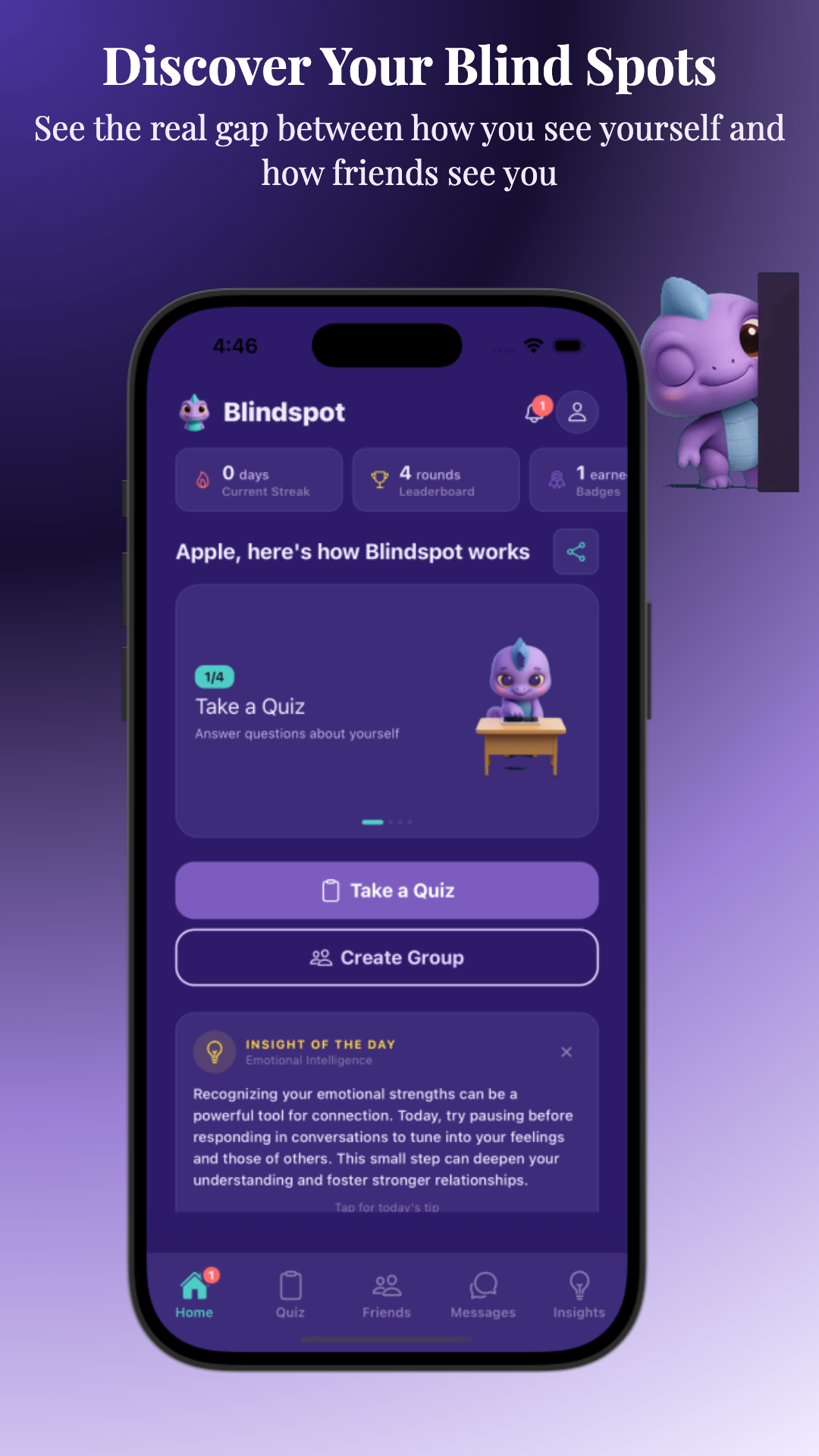
The Blindspot app is purpose-built for self-discovery through social feedback. It enables you to create quizzes, invite friends, and collect anonymous answers—all in a private, user-friendly environment. Here’s what sets it apart:
- Curated question libraries: Choose from expert-designed "what do you think of me" questions or craft your own. The app suggests questions based on your goals (e.g., self-confidence, social skills).
- Group creation & privacy controls: Form groups (e.g., "College Friends," "Work Colleagues"), set privacy levels, and manage who can see your results. You can even allow friends to answer as a group or individually.
- AI insights: Get personalized analysis and growth suggestions based on aggregated feedback. For example, the AI might highlight that 80% of your friends mention your dependability, suggesting it as a core strength.
- Progress tracking: See how your self-awareness evolves over time through visual charts and comparison with previous quiz results.
Step-by-Step: Creating a Friend Quiz in Blindspot
- Download the Blindspot app or visit the Blindspot website.
- Select from question categories or write your own quiz my friends will enjoy. The interface allows you to preview questions and edit them for tone and clarity.
- Create a group, invite friends, and set privacy preferences. You can send invitations via link, email, or social platforms.
- Send out your quiz and watch as anonymous, honest answers roll in. Blindspot notifies you when responses are received, and you can set reminders for friends who haven’t yet participated.
- Review your results—pay special attention to trends and outliers. The dashboard visually summarizes feedback, highlighting areas of consensus and divergence.
For optimal results, consider inviting friends from different circles—school, work, family, hobby groups—to get a 360-degree perspective. You can also run themed quizzes (e.g., "Work Habits," "Friendship Style") to drill down into specific areas.
Integrating Other Self-Discovery Tools
For a holistic approach, try combining your Blindspot friend quiz with established frameworks like the Johari Window. This model encourages you to explore the intersection between what you know about yourself and what others know about you, revealing both blind spots and hidden strengths. Learn more about this technique in this post on the Johari Window Test.
Other tools, such as personality or values assessments, can complement your Blindspot results by providing additional layers of self-understanding. Some users also use regular journaling or periodic check-ins with friends to see how perceptions shift over time.
Section 6: Turning Feedback Into Self-Awareness and Growth
Interpreting the Data
Once you’ve collected answers to your "what do you think of me" questions, the real work begins. Look for patterns: Do multiple friends mention the same strengths or weaknesses? Are there discrepancies between how you see yourself and how others see you? For example, if most friends describe you as "dependable," but you see yourself as spontaneous, it may be time to consider how your actions are interpreted.
- Spot consensus: Traits mentioned by several friends are likely accurate reflections and may point to core aspects of your identity.
- Identify surprises: Unexpected feedback may indicate blind spots or overlooked strengths. If a friend mentions your creativity but you’ve never considered yourself creative, try to recall specific examples and consider how you can nurture this trait.
- Track changes: Repeat the quiz periodically to monitor personal growth and shifts in perception. If feedback evolves, it’s a good sign you’re making progress.
- Notice context: Pay attention to how feedback varies by group. Are you seen differently by work friends compared to high school friends? This can reveal how your behavior adapts in different settings.
If you’re using Blindspot, the app’s analytics make it simple to visualize this data, presenting summaries such as "Top Three Strengths" or "Traits with Most Divergent Opinions."
Setting Growth Goals
Use the insights from your friend quiz to set actionable personal development goals. For example, if friends consistently highlight your reliability but express a desire for more spontaneity, you might challenge yourself to take more social risks or try new activities together. Or, if multiple friends mention you struggle with time management, you could set a goal to use a planner or digital calendar and check in with a friend for accountability.
Here’s a simple framework for turning feedback into goals:
- Identify key themes: Group similar feedback together (e.g., "good listener," "empathetic," "always there for me").
- Choose 1-2 focus areas: Don’t try to change everything at once. Pick achievable targets.
- Set specific, measurable goals: Instead of "be more spontaneous," try "initiate one new social activity each month."
- Share your intentions: Let friends know what you’re working on—they can support and encourage you.
- Re-assess regularly: Use future quizzes or check-ins to track your progress and adjust as needed.
Maintaining a Growth Mindset
Remember, the goal isn’t to "please" everyone but to better understand yourself and evolve. Share your progress with your friends—they’ll appreciate seeing the impact of their feedback. Apps like Blindspot offer built-in progress tracking and personalized AI-driven suggestions for improvement, helping you stay on course.
Maintain a curious attitude: treat feedback as data, not a verdict on your worth. Growth is a process. Celebrate your improvements, and be gentle with yourself if change takes time. The act of seeking feedback itself is a powerful step toward self-awareness—and signals to your friends that you value their perspectives.
Conclusion
In today’s hyper-connected world, understanding how others see us is more important than ever. "What do you think of me" questions, when used thoughtfully, open the door to greater self-awareness, stronger relationships, and meaningful personal growth. Whether you’re crafting a quiz for friends about yourself, searching for the perfect questions about me for friends, or leveraging tools like Blindspot to collect honest feedback, the journey of self-discovery starts with a single question.
Ready to uncover your own blind spots? Start your journey to deeper self-awareness with Blindspot—anonymously quiz your friends, gain actionable insights, and grow together.
FAQ
Q: What are the best "what do you think of me" questions to ask?
A: The best questions are specific, open-ended, and cover different aspects of your personality—traits, habits, strengths, and areas for growth. See Section 3 above for a detailed list.
Q: How can I make my friends feel comfortable answering honestly?
A: Use anonymous surveys (like Blindspot), emphasize that their feedback is valuable, and assure them there are no "right" or "wrong" answers. Keep your tone open and appreciative.
Q: Is it better to use an app or ask friends in person?
A: Apps like Blindspot are ideal for collecting honest, anonymous feedback—especially if you want candid answers. In-person works well for close friends but may lead to more filtered responses.
Q: How often should I do a quiz my friends?
A: Consider repeating your quiz every few months or after significant life changes. This helps you track your personal growth and see how others’ perceptions evolve over time.
Q: What should I do with negative or unexpected feedback?
A: Take time to reflect. Ask clarifying questions if needed, and view feedback as an opportunity for development—not a personal attack.