
Nature vs Nurture Personality: The Definitive Comparison
Explore the nature vs nurture personality debate, including genetics, environment, Big Five, MBTI, and how self-perception is shaped. Find out what truly forms who you are.

Estimated reading time: 12 min
Key Takeaways
- Both nature (genes) and nurture (environment) significantly shape personality traits.
- The Big Five and MBTI frameworks offer different ways to measure personality, each with unique strengths and limitations.
- Genetic influence explains much, but environment, parenting, culture, and experiences matter profoundly in personality development.
- Cognitive biases can distort self-perception, making honest feedback essential for self-awareness.
- Bottom line: Nature and nurture interact—no single factor determines who you are. Personality is dynamic and can change over time.
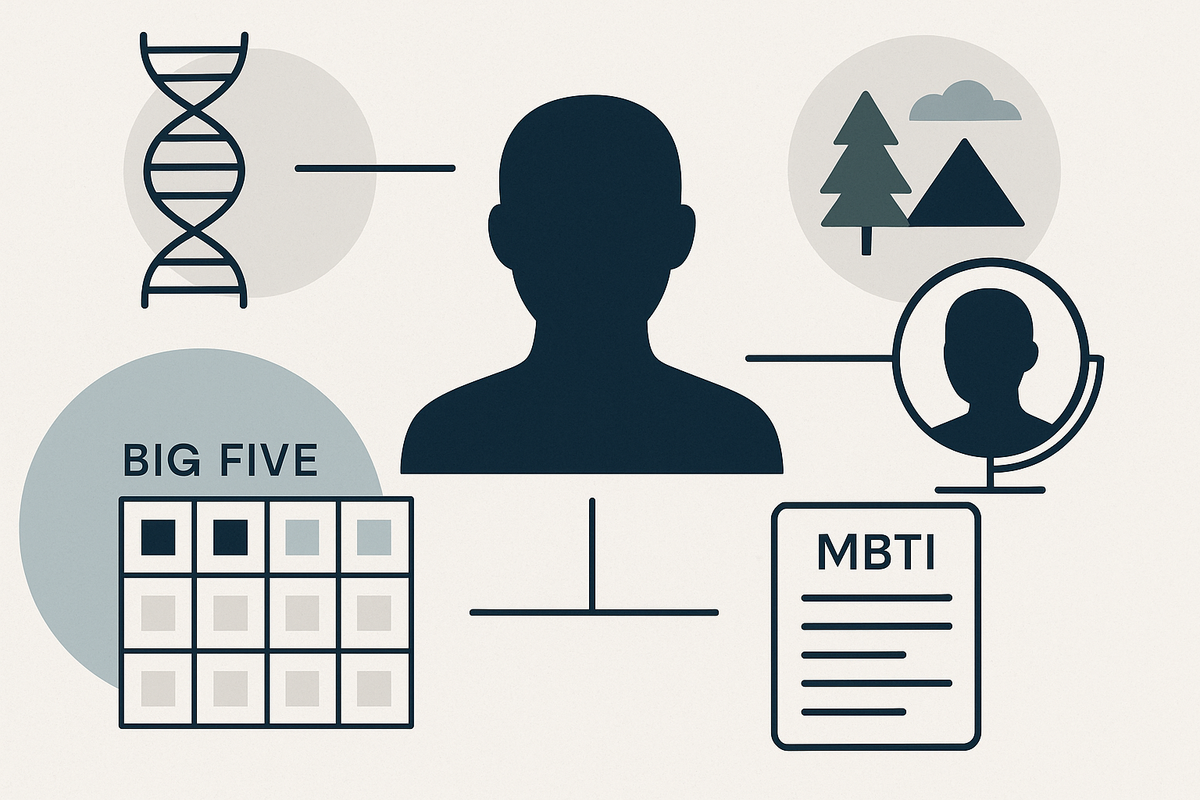
The "nature vs nurture personality" debate explores whether your genes or your environment play a bigger role in shaping who you are. The quick answer: Both are crucial—genetics set the stage, but your environment, experiences, and choices continually shape your personality throughout life.

Quick Comparison
| Dimension | Nature (Genes) | Nurture (Environment) |
|---|---|---|
| Definition | Inherited biological traits, DNA, genetic predispositions | Upbringing, culture, parental styles, life experiences |
| Key Influence | Temperament, baseline traits (e.g., extroversion) | Values, habits, beliefs, learned behaviors |
| Big Five Traits | About 40–60% heritable | Shaped by family, culture, peer feedback |
| MBTI Types | Some genetic influence (e.g., introversion/extraversion) | Influenced by environment, education, social context |
| Change Over Time | Moderate (especially in childhood and adolescence) | High—personality can shift with major life events |
| Measurement | Behavioral genetics, twin/adoption studies | Longitudinal studies, cross-cultural research |
| Examples | Shyness, impulsivity, emotional reactivity | Language, political views, coping strategies |
| Modern Consensus | Sets potential range and tendencies | Shapes expression and development within range |
Nature vs Nurture Personality: Genes and Heritability
"Nature" refers to the genetic inheritance you receive from your parents. Twin and adoption studies consistently show that genetics account for about 40–60% of the variance in core personality traits, such as those outlined in the Big Five: openness, conscientiousness, extraversion, agreeableness, and neuroticism.
- Heritability estimates indicate the proportion of trait variability due to genetics in a population—not for an individual.
- For example, studies find extraversion and neuroticism are especially heritable.
- Even MBTI traits like introversion/extraversion have a moderate genetic component, though the MBTI is less robust than the Big Five in research.
- Behavioral genetics uses twin studies (identical vs. fraternal) to estimate these effects.
However, genes are not destiny. They set parameters, but they don’t lock in your personality for life. Gene expression can be influenced by environmental factors—a field known as epigenetics.
How Nurture Shapes Personality: Environment, Parenting, and Culture
"Nurture" includes everything outside your DNA: parenting style, culture, education, peer groups, trauma, and even the era in which you live. These factors can dramatically influence which aspects of your personality flourish or fade.
- Parenting can foster resilience, curiosity, or self-doubt, depending on approaches to discipline and support.
- Cultural values affect personality expression. For example, collectivist cultures may encourage agreeableness or conformity, while individualist cultures may prize assertiveness.
- Life events—like starting a new job, moving to a different country, or experiencing loss—can significantly alter your personality trajectory.
Peer feedback is also vital. Apps like Blindspot let you gather anonymous feedback from friends, helping you recognize how much your environment has shaped your self-perception. For practical tips, see How Friends Shape Our Self-Image: The Hidden Impact.
Gene-Environment Interaction: Not an Either-Or
Modern psychology overwhelmingly rejects the idea that nature and nurture are competing forces. Instead, they interact dynamically:
- Genes set the potential; environment determines if and how that potential is realized.
- For example, a child with a genetic tendency toward anxiety may not develop an anxious personality if raised in a low-stress, supportive environment.
- Epigenetics shows that experiences (stress, nutrition, social support) can switch genes on or off, altering their influence over time.
- Personality is especially malleable in youth but can change throughout life, especially after significant experiences (career change, trauma, therapy).
This interplay is why your personality test results—whether from the Big Five, MBTI, or feedback-based tools—reflect both your inborn tendencies and your lived experiences.
Personality Tests: Accuracy, Frameworks, and Self-Perception Biases
Many seek to answer "what personality type am I" using assessments like the Big Five or MBTI (Myers-Briggs Type Indicator). Here’s how they fit into the nature vs nurture personality picture:
- Big Five is the scientific gold standard, measuring traits with strong research backing and moderate heritability.
- MBTI offers intuitive categories (e.g., INFP, ESTJ), but critics note lower reliability and weaker links to genetics.
- All tests are influenced by cognitive biases—we tend to see ourselves in a favorable light or misjudge our own traits.
- Peer feedback (as in Blindspot) and tools like the Johari Window Test help reveal blind spots and reduce these biases.
For details on test accuracy and bias, see What Is a Personality Blind Spot?.
Nature vs Nurture Examples: Traits and Lifespan Changes
Examples of personality traits with strong genetic influence:
- Level of extraversion or introversion
- Impulsivity and risk-taking
- Emotional reactivity
Traits heavily shaped by environment:
- Language and accent
- Religious or political beliefs
- Comfort with authority or independence
Across the lifespan, personality tends to "mature"—people generally become more conscientious and emotionally stable with age, reflecting the ongoing influence of nurture. But core tendencies often remain stable, highlighting the enduring role of nature.
Which Should You Choose?
If you’re seeking self-understanding or personal growth, focus on both what you were born with and what you can change:
- For self-awareness: Try feedback-based personality tools, like Blindspot, to uncover discrepancies between self-perception and others’ views.
- If you want science-backed insights: Start with the Big Five for a reliable assessment of core traits.
- If you prefer intuitive categories: MBTI can be fun and useful for team-building, but interpret results with skepticism.
- For ongoing growth: Seek honest feedback from friends, reflect on how your environment shapes you, and remember—meaningful change is possible at any age.
Ready to see your blind spots? Explore Blindspot for anonymous, actionable feedback. Or check out the Free Question Generator to get started with deeper self-discovery.
FAQ
- Is personality determined more by nature or nurture?
Neither alone—both genes and environment play crucial, intertwined roles. Modern research shows personality traits are heritable, but environment and experiences continually shape how those traits are expressed. - What personality traits are genetic?
Traits like extraversion, neuroticism, impulsivity, and general temperament show strong genetic influence, as revealed by twin and adoption studies. - How do parents influence personality development?
Parenting styles affect emotional regulation, confidence, and coping skills. A supportive or stressful home can amplify or buffer genetic tendencies. - Can personality change over time, or is it fixed at birth?
Personality is dynamic—while core tendencies are stable, significant life events, therapy, or conscious effort can lead to meaningful change throughout life. - What is the heritability of personality traits?
Heritability ranges from 40% to 60% for most Big Five traits, meaning genes explain that portion of variation across a population—not for any one individual. - How do genes and environment interact to shape personality?
Genes set the potential, but environment determines if and how traits develop. Experiences can even alter gene expression (epigenetics), especially during early development and major life changes.