
How to Spot Manipulative Behavior in Friendships: A Complete Guide
Learn how to spot manipulative behavior in friendships, understand friend group dynamics, and improve your relationships with insights from Blindspot.

Estimated reading time: 12 min
Key Takeaways
- Recognize signs of manipulative behavior such as guilt-tripping, gaslighting, and boundary pushing.
- Understand the difference between signs of a good friend and signs of a bad friend.
- Learn how friend group dynamics affect your relationships and personal growth.
- Discover how friends’ perspectives reveal your blind spots for self-awareness.
- Use practical steps to respond to manipulation, set boundaries, and foster healthier friendships.
Friendships shape much of our emotional well-being, but not all friendships are healthy. Knowing how to spot manipulative behavior in friendships is crucial for maintaining supportive, balanced connections. Manipulative friends can drain your energy, distort your self-image, and harm your mental health. This guide covers the key signs of manipulation, contrasts them with traits of good friends, explores friend group dynamics, and offers actionable strategies to improve your relationships and self-awareness.
Step 1: Identify Signs of Manipulative Behavior in Friendships
Manipulative friends often use subtle tactics to control or influence you without your informed consent. Common signs of a bad friend exhibiting manipulation include:
- Guilt-tripping and emotional blackmail: They make you feel responsible for their problems or force you to comply by inducing guilt.
- Gaslighting: They make you doubt your feelings, memories, or perceptions, causing confusion and self-doubt.
- One-way reciprocity: They take more than they give, rarely offering support when you need it.
- Boundary pushing and pressure: They ignore your "no" and push you into uncomfortable situations.
- Passive-aggression and silent treatment: They use indirect control methods, withholding communication to punish or manipulate.
- Victim-playing and blame-shifting: They avoid taking responsibility and make you feel at fault instead.
- Excessive flattery with hidden motives: Compliments may feel insincere, aiming to gain leverage.
- Isolation tactics: They discourage you from other friendships or seeking outside support.
Recognizing these behaviors early can help you protect your emotional health and set clear boundaries.
Step 2: Contrast With Signs of a Good Friend
Understanding what a healthy friendship looks like helps you spot manipulation more clearly. Signs of a good friend include:
- Respecting your boundaries and feelings without judgment.
- Offering genuine support and encouragement in both good and bad times.
- Communicating openly and honestly.
- Showing empathy and accountability for mistakes.
- Valuing mutual give-and-take, not just taking from the relationship.
- Encouraging your personal growth and other friendships.
These positive traits foster trust and emotional safety, unlike manipulative behaviors that create confusion and stress.
Step 3: Understand Friend Group Dynamics and Roles
Friend groups can have complex dynamics that influence individual friendships. Manipulation often thrives in groups where roles are unbalanced. Consider:
- The influencer: A dominant friend who sways group opinions and controls decisions.
- The scapegoat: Someone who is blamed for group issues unjustly.
- The enabler: Friends who ignore manipulative behavior, indirectly supporting it.
- The loyalist: Friends who defend the manipulator despite evidence.
Being aware of these roles helps you recognize unhealthy patterns and your place within the group. It also explains why some friendships feel draining or one-sided.
Step 4: Pay Attention to How You Feel After Interactions
Your emotional response after spending time with friends is a key indicator of the relationship’s health. Notice if you often feel:
- Drained or exhausted emotionally.
- Anxious or on edge.
- Guilty without clear reason.
- Confused about your own feelings or memories.
- Pressured to act against your will or values.
These feelings can signal manipulation, especially if repeated frequently. Healthy friendships should leave you feeling supported and valued.
Step 5: Discover What Your Friends Really Say About You
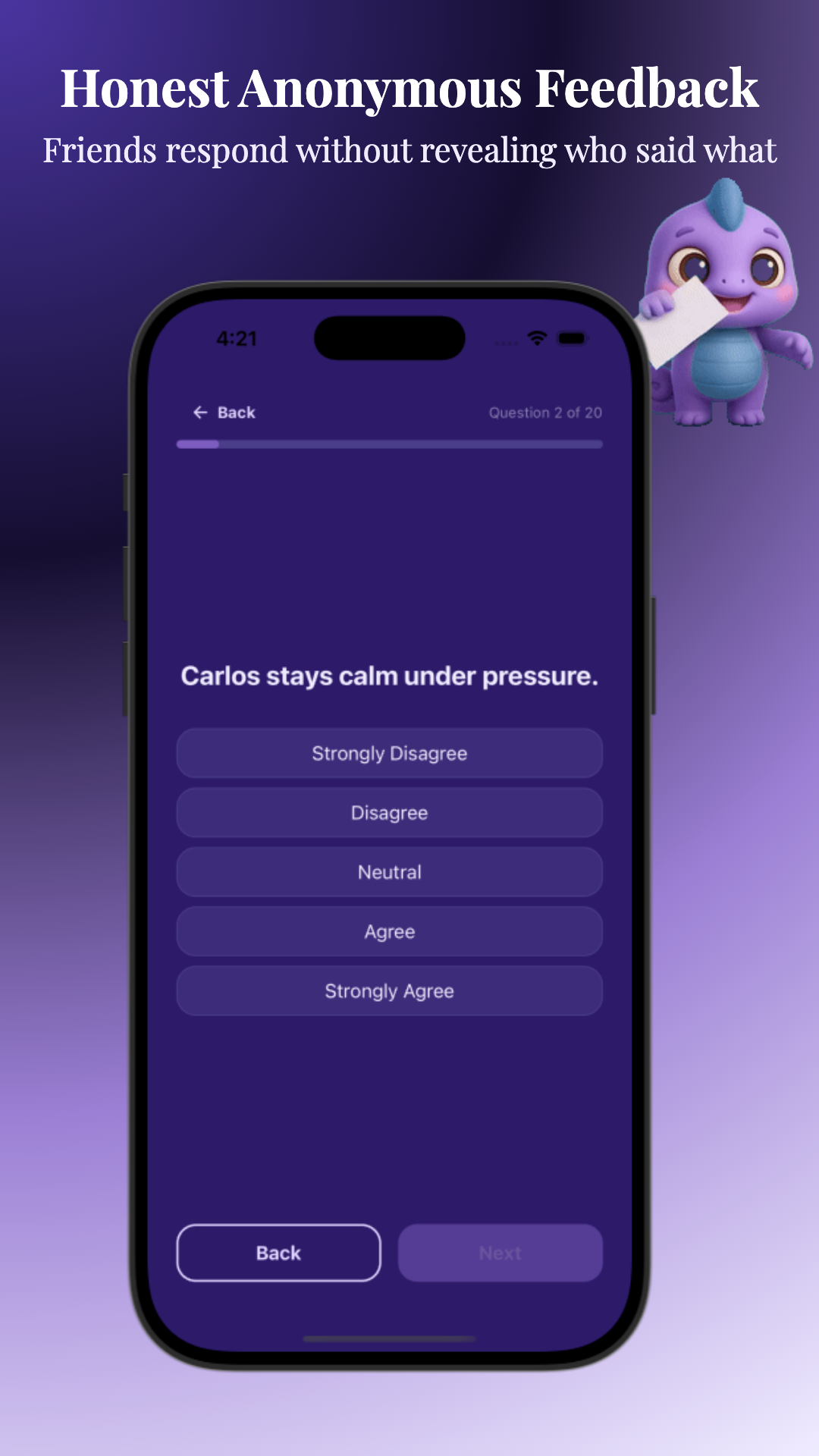
Often, there is a gap between how you see yourself and how your friends perceive you. Tools like Blindspot can help uncover these blind spots by gathering anonymous feedback from your friends. This helps you:
- Identify discrepancies in self-perception versus others’ views.
- Spot patterns of manipulation or imbalance in friendships.
- Understand your strengths and areas for growth as a friend.
Using such insights supports self-awareness and encourages healthier friend group dynamics. Explore more on understanding blind spots in the Johari Window Test.
Step 6: Learn How to Be a Better Friend
Improving your friendships starts with self-awareness and intentional behavior. Here are key ways to be a better friend:
- Communicate openly: Share your feelings honestly and listen actively.
- Respect boundaries: Accept a friend’s limits without pressure.
- Offer support: Be there in good times and bad, balancing give and take.
- Hold yourself accountable: Admit mistakes and avoid blame-shifting.
- Encourage growth: Support your friends’ goals and other relationships.
Being a good friend reduces misunderstandings and the risk of manipulation within your social circle. For a deeper dive, see How to Become More Self-Aware.
Step 7: Responding to Manipulative Behavior Effectively
Once you recognize manipulation, it’s important to respond in ways that protect your well-being and clarify boundaries. Consider these steps:
- Set clear boundaries: Calmly express what behavior you won’t accept.
- Confront patterns: Discuss specific examples of manipulation when you feel safe to do so.
- Limit contact: Reduce interaction if manipulation persists despite your efforts.
- Seek support: Talk to trusted friends, family, or a counselor for perspective.
- End the friendship: If manipulation severely harms you, it may be healthiest to move on.
Remember, prioritizing your mental health is vital. Healthy friendships are based on mutual respect and care.
Tips & Common Mistakes
When dealing with manipulative friendships, keep these tips in mind:
- Don’t ignore gut feelings: Your intuition often detects manipulation before your rational mind does.
- Avoid over-explaining or justifying: Manipulative friends may exploit these to push boundaries.
- Document incidents: Keeping notes helps clarify patterns and supports your decisions.
- Don’t isolate yourself: Maintain other friendships and social support to stay grounded.
- Be patient with yourself: Recognizing and addressing manipulation takes time and courage.
Conclusion
Spotting manipulative behavior in friendships is essential for maintaining healthy, fulfilling relationships. By understanding the signs of both good and bad friends, recognizing group dynamics, and reflecting on your feelings, you gain clarity about your social circle. Using tools like Blindspot to uncover what your friends really say about you can reveal important blind spots and help you grow as a friend and individual. Remember, prioritizing your emotional health and setting firm boundaries empowers you to cultivate friendships that uplift and support you.
FAQ
What are the signs of a manipulative friend?
Manipulative friends use tactics like guilt-tripping, gaslighting, boundary pushing, passive-aggression, blame-shifting, and isolation to control or influence you unfairly.
How do you tell if a friendship is toxic or manipulative?
If the friendship consistently leaves you feeling drained, anxious, guilty without cause, or pressured to act against your values, it may be toxic or manipulative. Look for one-sided support and lack of accountability as key signs.
What does gaslighting look like in a friendship?
Gaslighting involves making you doubt your memories, feelings, or perceptions. A manipulative friend might deny things they said or did, or claim you’re overreacting to confuse you.
Why do I feel drained after seeing my friend?
Feeling drained can indicate emotional exhaustion caused by manipulative or one-sided interactions where your needs aren’t met or your boundaries are ignored.
How do you deal with a manipulative friend?
Set clear boundaries, communicate your concerns, limit contact if needed, seek support from others, and be prepared to end the friendship if manipulation continues.
When should you end a friendship because of manipulation?
If manipulation severely harms your mental health, persists despite addressing it, or makes you feel unsafe, it’s often best to end the friendship for your well-being.
For more insights on friendship dynamics and self-awareness, explore the What My Friends Think of Me Quiz and the How to Find Out What Your Friends Really Think of You guide.