Barnum Effect: Why Vague Personality Descriptions Feel So Accurate
Discover the Barnum effect, its impact on personality tests, and why vague descriptions seem personal. Learn to recognize and avoid this common psychological bias.

Estimated reading time: 13 min
Key Takeaways
- The Barnum effect (also called the Forer effect) explains why people accept vague personality descriptions as uniquely true for them.
- This effect is key to the popularity of horoscopes, fortune telling, and many personality tests.
- Key conditions include vagueness, positivity, perceived authority, and personal relevance.
- Understanding the Barnum effect helps you become more critical of generic feedback and self-assessments.
- You can reduce your susceptibility by learning to spot vague statements and seeking honest, specific feedback from others.
Table of Contents
- Section 1: What is the Barnum Effect?
- Section 2: The Origins and History of the Barnum (Forer) Effect
- Section 3: Key Conditions That Amplify the Barnum Effect
- Section 4: Barnum Effect Examples in Daily Life
- Section 5: The Barnum Effect in Personality Tests and Quizzes
- Section 6: Psychological Mechanisms and Related Biases
- Section 7: How to Recognize and Avoid Barnum Statements
- Section 8: The Barnum Effect’s Impact on Self-Awareness and Growth
- Conclusion
- FAQ
Section 1: What is the Barnum Effect?
Definition and Core Mechanism
The Barnum effect—also known as the Forer effect or Barnum–Forer effect—is a psychological phenomenon where individuals believe that vague, general personality descriptions apply specifically to them. The effect is named after the famous showman P.T. Barnum, who was known for his ability to appeal to a wide audience with statements that "have a little something for everybody." The term "Forer effect" comes from psychologist Bertram R. Forer, who demonstrated this tendency in a classic experiment.
How Does the Barnum Effect Work?
The core mechanism relies on the use of statements that are:
- General enough to apply to almost anyone
- Framed positively or ambiguously
- Presented as personalized feedback
People tend to accept these statements because they want to believe positive things about themselves and because the descriptions seem to come from an authority figure or expert.
Alternative Names and Synonyms
Besides the Barnum effect, you may hear it called the Forer effect, after Forer’s pivotal study, or the Barnum–Forer effect. All terms refer to the same basic phenomenon: the acceptance of vague personality statements as uniquely personal.
Section 2: The Origins and History of the Barnum (Forer) Effect
P.T. Barnum’s Influence
P.T. Barnum, the legendary 19th-century showman, famously claimed to have “something for everyone” in his circus acts. Psychologists later borrowed his name to describe the effect whereby general statements seem personally meaningful to most people. Barnum’s insight into human psychology laid the groundwork for understanding why people are drawn to such descriptions.
The Forer Experiment: Scientific Roots
In 1948, psychologist Bertram R. Forer conducted a now-famous experiment with his students. He gave each student what they thought was a unique personality analysis, supposedly based on a test they had taken. In reality, everyone received the exact same set of vague statements, such as:
- You have a great need for other people to like and admire you.
- While you have some personality weaknesses, you are generally able to compensate for them.
- At times you are extroverted, affable, sociable, while at other times you are introverted, wary, reserved.
The students rated the accuracy of their feedback at an average of 4.26 out of 5, demonstrating just how convincing such generic statements can be—a phenomenon now called the Forer effect.
The Barnum–Forer Effect in Modern Psychology
The Forer experiment has been replicated many times, consistently showing that people believe general personality descriptions are uniquely about them, especially when presented by an authority figure. This has profound implications for how we interpret feedback from personality tests, horoscopes, and even everyday conversations.
Section 3: Key Conditions That Amplify the Barnum Effect
Vagueness and Ambiguity
The effectiveness of the Barnum effect hinges on the use of vague and ambiguous language. Statements like “You have a tendency to be critical of yourself” or “You sometimes doubt whether you made the right decision” are so broad that almost anyone can relate to them, especially when they’re searching for meaning or truth about themselves.
Positivity and Flattery
Positive framing is another key ingredient. People are more likely to accept statements that flatter them or confirm their desired self-image. Descriptions tend to emphasize strengths, hidden talents, or unique qualities, encouraging people to agree with the feedback.
Perceived Authority and Personalization
When statements come from a source perceived as an authority—a psychologist, a fortune teller, or a sophisticated quiz—they gain credibility. The illusion of personalization (such as using your name or referencing your birth date) also boosts belief in the accuracy of the description.
- Vague language makes statements universally relatable.
- Positive feedback increases acceptance.
- Authority figures or scientific trappings make claims more convincing.
- Personalization cues ("This is your unique result") heighten belief.
Personal Validation Fallacy
This refers to the tendency to accept information as correct if it has any personal significance, even if it’s objectively generic. The Barnum effect exploits this cognitive bias, making us more likely to buy into generic feedback.
Section 4: Barnum Effect Examples in Daily Life
Horoscopes and Astrology
One of the most common Barnum effect examples is the daily horoscope. Statements such as “You are seeking more stability in your life” or “You will have an encounter that brings new opportunities” are designed to be applicable to nearly everyone. Yet, many believe these predictions are tailored specifically for them, fueling the enduring popularity of astrology.
Fortune Telling and Psychic Readings
Fortune tellers and psychics rely on the Barnum effect to convince clients they have special insight. Typical readings include broad statements like “You have experienced loss, but you are resilient,” or “You have untapped creative potential.” These resonate with most people, leading them to perceive accuracy and depth in the reading.
Personality Quizzes and Social Media
Online quizzes, including those that claim to reveal your hidden strengths or match you with a celebrity, often use Barnum statements. For example, “You are friendly, but you sometimes need time alone to recharge,” applies to a huge percentage of people. The sense of personal relevance is manufactured through clever wording.
Marketing and Product Descriptions
Advertisers use the Barnum effect in product descriptions to make items feel uniquely suited to each customer. Phrases like “Designed for people who value quality and individuality” or “Perfect for anyone seeking to improve their life” are intentionally broad, appealing to a wide market while feeling personalized.
Section 5: The Barnum Effect in Personality Tests and Quizzes
Why Are Personality Tests Accurate?
If you’ve ever wondered, why are personality tests accurate, the Barnum effect is a big part of the answer. Many popular personality tests (especially those found online or in magazines) use statements so broad that almost anyone can identify with them. This creates the illusion of accuracy and personal insight, even if the test lacks scientific validity.
Are Personality Tests Real?
This raises a crucial question: Are personality tests real, or are they just exploiting our cognitive biases? Some, like the Johari Window Test, are rooted in psychological research and structured feedback. Others, especially those that provide instant, sweeping judgments, often rely on Barnum statements rather than rigorous science.
Barnum Effect Examples in Personality Feedback
- "You have a strong need for people to like and respect you."
- "You are sometimes introverted, but can be outgoing in the right situation."
- "You value honesty in your relationships, but sometimes hold back your true feelings."
These could apply to nearly anyone, yet they sound insightful when presented as the result of a personality test.
Social Feedback and Blind Spots
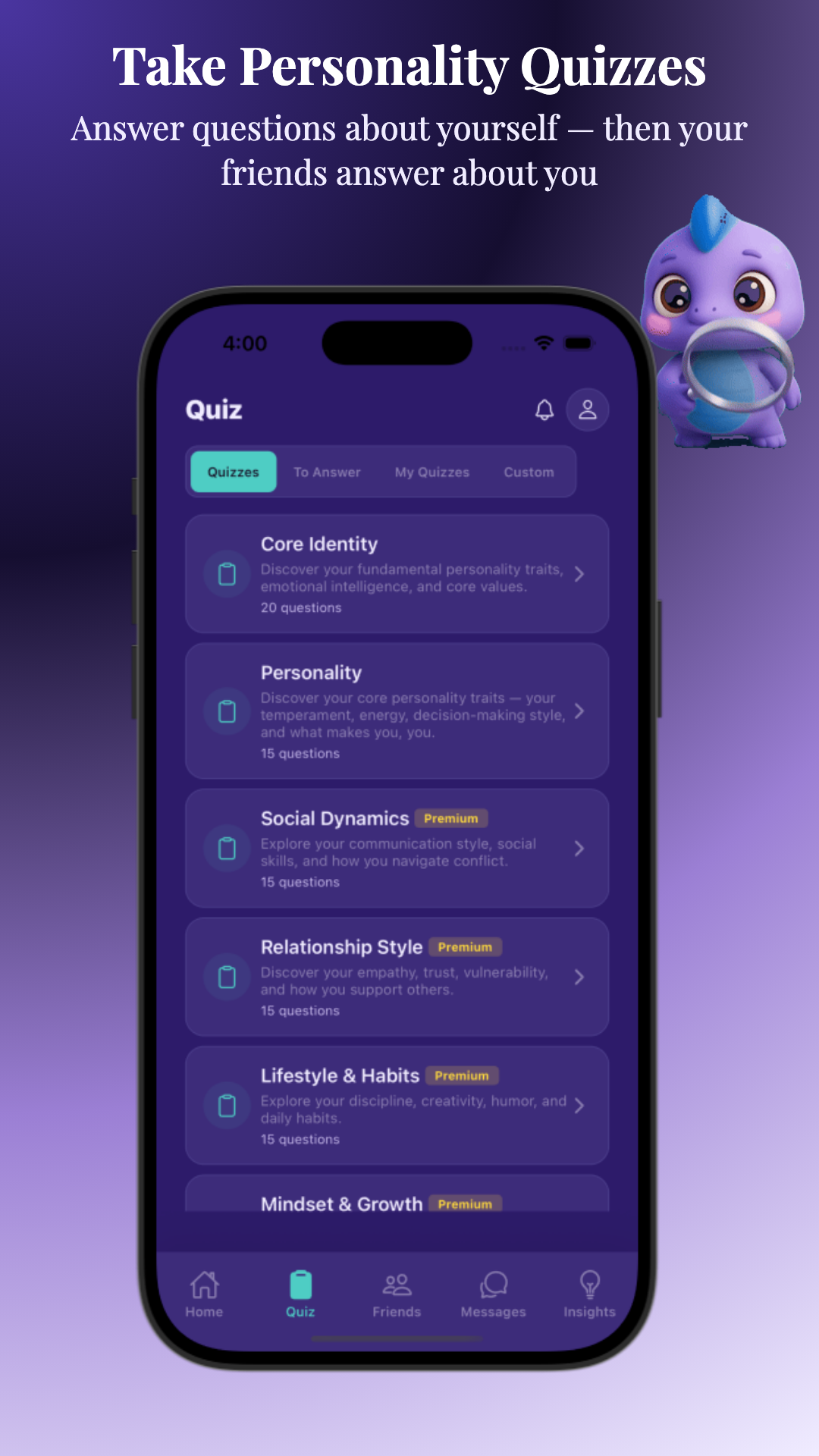
Apps like Blindspot aim to move beyond the Barnum effect by gathering anonymous feedback from friends, creating a more accurate and actionable picture of your personality. To learn how genuine feedback differs from generic statements, check out the What My Friends Think of Me Quiz, which highlights the value of honest input over vague affirmations.
Section 6: Psychological Mechanisms and Related Biases
Subjective Validation and Acceptance Phenomenon
The Barnum effect is closely linked to subjective validation, the tendency to accept information as true if it appears personally meaningful or confirms existing beliefs. When you read a statement and recognize a kernel of truth—even if it’s just a coincidence—you’re more likely to accept the entire statement as valid.
Personal Validation Fallacy
This cognitive bias leads people to believe that their experiences are unique and that general statements are actually specific to them. This fallacy is particularly strong when feedback is presented in a personalized or authoritative way, as in many online quizzes or fortune telling sessions.
Confirmation Bias and Self-Image
Confirmation bias further amplifies the Barnum effect: we seek out and remember information that supports our existing self-concept, while dismissing what doesn’t fit. This helps explain why we see ourselves differently than others see us, and why outside feedback can be so valuable in breaking the cycle of self-reinforcing beliefs.
- Subjective validation: Accepting feedback that feels true.
- Personal validation fallacy: Believing generic statements are uniquely about you.
- Confirmation bias: Noticing evidence that fits your self-image and ignoring the rest.
Section 7: How to Recognize and Avoid Barnum Statements
Spotting Vague and Generic Feedback
Developing a critical eye is key to resisting the Barnum effect. Ask yourself:
- Does this statement apply to most people?
- Is the language broad or ambiguous?
- Could someone else with a different personality also agree with this?
Statements that could fit nearly anyone are classic Barnum statements. Be especially wary when feedback is overwhelmingly positive or lacks specific examples.
Seek Out Specific, Honest Feedback
Instead of relying on automated quizzes or horoscope-like advice, seek feedback that is concrete and comes from people who know you. Tools like How to Get Honest Feedback from Friends provide actionable steps for soliciting genuine, detailed input. Apps such as Blindspot use anonymous group feedback to minimize bias and reveal blind spots—helping you see yourself more clearly without falling for generic affirmations.
Be Mindful of Context and Authority
Remember that the source matters. A reputable psychologist using a validated tool is different from a random online quiz. Always check whether personality tests cite scientific research or rely on generic, flattering descriptions.
- Ask for detailed examples, not just labels.
- Compare feedback from multiple sources.
- Use tools designed for honest, actionable insights.
Section 8: The Barnum Effect’s Impact on Self-Awareness and Growth
Self-Discovery vs. Self-Deception
While the Barnum effect explains why personality quizzes and horoscopes feel so accurate, it can also lead to self-deception. Relying on vague statements may create a false sense of self-understanding, causing you to overlook important areas for growth.
Benefits of Genuine Feedback and Group Insight
True self-awareness requires moving beyond generic feedback. Group-based feedback platforms, like Blindspot, allow you to receive anonymous, honest input from people who know you well. This approach helps you uncover blind spots—the gaps between your self-perception and how others see you. For more on this, read How Friends Shape Our Self-Image.
Growth Through Specific, Actionable Insights
Specific, actionable feedback is essential for personal growth. Instead of generic praise (“You are creative”), look for examples (“Your solution to last week’s project was innovative and effective”). This type of feedback supports meaningful change and self-improvement.
- Self-awareness grows from honest, detailed feedback.
- Group comparison tools can reveal patterns and discrepancies.
- Apps that use anonymous peer input help you avoid the pitfalls of the Barnum effect.
Conclusion
The Barnum effect is a powerful psychological phenomenon that explains why so many people believe vague personality descriptions are uniquely accurate for them. Recognizing this effect can help you become more skeptical of generic feedback, from horoscopes to online quizzes. For genuine self-discovery, seek out honest, specific input—ideally from people who know you well and from tools designed to expose blind spots, like Blindspot. By learning to spot Barnum statements and valuing detailed feedback, you can build a deeper, more accurate understanding of yourself and foster real personal growth.
FAQ
Q: What is the Barnum effect and how does it work?
A: The Barnum effect is a psychological phenomenon where people accept vague, general personality descriptions as uniquely true for themselves, especially when presented as personalized feedback. It works by exploiting our desire for self-understanding and the tendency to interpret ambiguous statements in a way that fits our personal experience.
Q: Why do people believe vague personality descriptions apply specifically to them?
A: People are drawn to vague statements because they want to see themselves positively and believe in individualized insight. The statements are broad enough to fit most people, but are worded in ways that feel personal, especially when delivered by an authority or in a flattering context.
Q: What is the difference between the Barnum effect and the Forer effect?
A: There is no practical difference; the terms are used interchangeably. The "Forer effect" refers to Bertram Forer's classic experiment demonstrating this phenomenon, while "Barnum effect" references the showman P.T. Barnum's philosophy of appealing to everyone with broad statements.
Q: How do horoscopes and fortune tellers use the Barnum effect?
A: Horoscopes and fortune tellers use the Barnum effect by crafting statements that are general, positive, and seemingly personalized. These statements resonate with most people, giving the illusion of accuracy and special insight.
Q: What are real-life examples of the Barnum effect in everyday situations?
A: Real-life examples include horoscopes, psychic readings, many online personality quizzes, and even marketing slogans that feel personally relevant but are actually very broad. These all use vague, flattering language to appeal to a wide audience.
Q: How can you avoid being influenced by Barnum statements?
A: To avoid the Barnum effect, critically evaluate whether a statement is truly specific to you or could apply to most people. Seek honest, detailed feedback from trusted sources, and use self-discovery tools that rely on specific, actionable input rather than generic affirmations.