
How to Use a Habit Tracker for Self Awareness to Build Powerful Daily Routines
Discover how a habit tracker for self awareness can help you identify behaviors and build effective daily routines aligned with your personal goals.

Estimated reading time: 10 minutes
Key Takeaways
- Reveal true patterns: Habit trackers bridge the gap between perception and reality.
- Accelerate growth: Daily logging fuels a feedback loop of action, reflection, and adjustment.
- Boost motivation: Streaks and visual progress make routines rewarding.
- Keep it simple: Pick 3–5 habits and the format you’ll actually use.
- Review regularly: Weekly check-ins help refine habits and align them with goals.
Table of Contents
- Introduction
- Understanding Self-Awareness and Daily Routines
- The Role of a Habit Tracker for Self Awareness
- Building Effective Routines with a Habit Tracker for Self Awareness
- Best Practices for Habit Tracking for Self Awareness
- Overcoming Common Challenges with Habit Tracker for Self Awareness
- Conclusion and Actionable Takeaways
- FAQ
Introduction
A habit tracker for self awareness is any app, journal, calendar, or spreadsheet you use to log daily behaviors. It records what you actually do, rather than what you think you do, and turns raw actions into clear data. Habit tracking boosts self-awareness and accelerates personal growth by showing your real-life patterns and progress. Learn more about building daily self-awareness habits in our guide.
Understanding Self-Awareness and Daily Routines
Defining Self-Awareness
Self-awareness is your ability to observe and understand your own thoughts, emotions, behaviors, and patterns—and how they affect your life. It’s a cornerstone of personal development and lifelong learning. For a deeper dive into building a self-awareness routine, see our guide. You can also explore the definitive guide to understanding yourself for a comprehensive overview of self-awareness concepts and practices.
Importance of Self-Awareness
- Aligns your daily actions with your core values and goals.
- Reveals unhelpful patterns like procrastination, emotional eating, or phone overuse.
- Improves decision-making and emotion regulation by making triggers obvious.
Role of Daily Routines and Habits
- Routines are repeated patterns that structure your day (wake-up, work blocks, rest).
- Habits are automatic behaviors within those routines (brushing teeth, checking email).
- Consistent routines create stable conditions that make mood and energy changes easier to spot.
Impact of Small Daily Actions
- Micro-habits (5 minutes of journaling, 10 minutes of meditation) accumulate to big insights.
- Tracking small actions helps you see cause and effect: better sleep links to sharper focus; meditation days feel calmer.
- Pattern recognition is the core of applied self-awareness and personal growth.
Sources: Greater Good article on self-awareness, NCBI article on self-awareness, Akiflow Habit Tracker Guide
The Role of a Habit Tracker for Self Awareness
What Is a Habit Tracker?
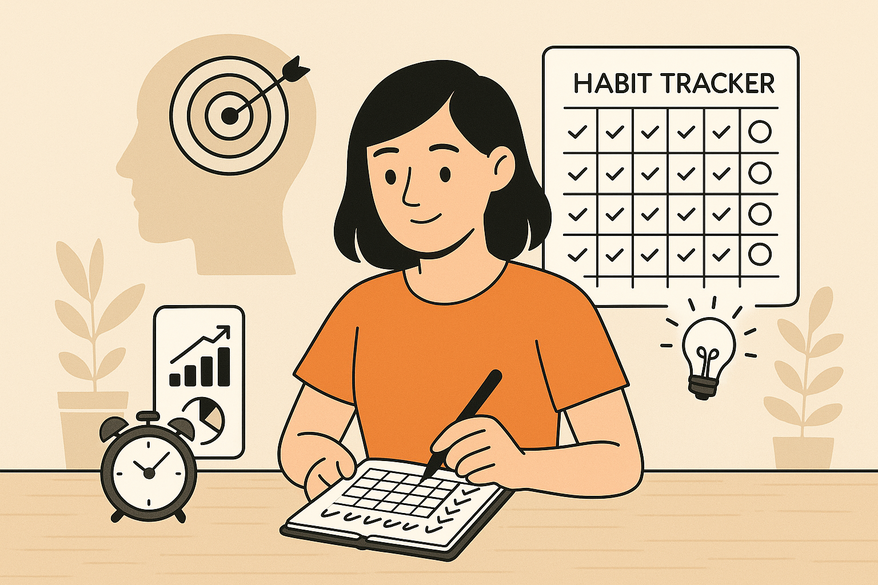
A habit tracker is a system—digital or analog—for daily recording of whether you completed a chosen behavior. It:
- Clarifies intentions by listing specific habits.
- Records actions with simple checkmarks, taps, or calendar X’s.
- Enables review by showing trends, streaks, and gaps.
Benefits for Self-Awareness
- Pattern Detection: Spot clusters of good or bad days and identify enabling conditions.
- Mood & Emotion Tracking: Link behaviors (sleep, exercise, screen time) to emotional states.
- Realistic Self-Perception: Confront biases about how often you actually exercise or snack by understanding how others see you and bridging the perception gap.
- Motivation & Accountability: Visual streaks and progress bars keep you engaged.
- Concrete Feedback: Transform vague intentions into measurable behaviors.
Types of Habit Trackers
- Apps: Dedicated habit apps offer reminders, stats, mood logs, and streak counters.
- Journals/Bullet Journals: Custom layouts combine habit grids with reflective writing.
- Spreadsheets: Use formulas and charts to analyze behavior over time.
Choose the format that you will use consistently—simplicity beats complexity. If you want to compare different tracking tools and see which daily practices work best, check out our Self Awareness Habit Tracker Reviews for practical insights and recommendations.
Sources: Ness Labs: Habit Trackers, Akiflow Habit Tracker Guide, Greater Good article on self-awareness, Intuity Performance on daily tracking, The Mindfulness App on self-care habits
Building Effective Routines with a Habit Tracker for Self Awareness
Step-by-Step Setup
- Clarify Self-Awareness Goals
Decide what you want to learn: stress triggers, focus patterns, energy cycles. - Choose a Tracking Format
Pick an app, journal, or spreadsheet that feels easy to maintain. - Select 3–5 Habits to Track
Start small to avoid overwhelm and boost consistency. - Define Habits Clearly
Example: “Meditate 5 minutes after waking,” “Write 3 journal lines at bedtime.” - Schedule Daily Check-In
Log in morning or evening—consistent timing ingrains the habit. - Add Mood/Energy Ratings
Use a 1–5 scale or simple high/medium/low to correlate feelings with behaviors. - Plan Weekly Review
Block 10–20 minutes each week to analyze patterns and adjust.
Choosing Self-Awareness Habits
- Direct Habits: Journaling, meditation, reflection questions (“What energized me today?”).
- Supportive Habits: Exercise, consistent sleep schedule, mindful eating, screen-time limits.
- Identity Alignment: Frame habits around the person you want to be (e.g., “I am a calm person”). For tips on how to be more likeable and confident, consider our complete guide to charisma and confidence.
Evaluating & Adjusting Routines
- Correlate Habits and Mood/Energy: Compare days you meditate with stress levels the next day.
- Identify Bottlenecks: Note missed habits, time conflicts, or environmental obstacles.
- Use Three Levers:
• Simplify: Make habits smaller (2 minutes vs. 10).
• Reschedule: Move habit to a better time slot.
• Stack: Attach new habit to existing routine (“after lunch”).
Sources: Greater Good article on self-awareness, Ness Labs: Habit Trackers, Akiflow Habit Tracker Guide, The Mindfulness App on self-care habits
Best Practices for Habit Tracking for Self Awareness
Realistic, Measurable Goals
- Start Small and Specific: Behavioral science shows small wins build momentum.
- Track Behaviors, Not Outcomes: Log “read 5 pages” instead of “be more knowledgeable.”
- Ensure Clarity: You must know unequivocally if you did it today or not.
Maintain Consistency & Motivation
- Visual Streaks & Progress Bars: Seeing your streak grow fuels engagement.
- “Never Miss Twice” Rule: Allow one miss, but avoid two in a row.
- Reminders & Cues: App alerts, calendar prompts, or leaving a journal on your desk.
- Accountability: Share your tracker with a friend or group for social support.
- Connect to Your “Why”: Link each habit to deeper values (e.g., calm, confidence, energy).
Periodic Self-Reflection Sessions
- Weekly/Monthly Reviews: Highlight wins, obstacles, and patterns.
- Ask “What” Questions: “What usually happens when I skip my walk?” instead of “Why am I lazy?”
- Recalibrate Habits: Drop or refine habits as priorities evolve.
Sources: Akiflow Habit Tracker Guide, Ness Labs: Habit Trackers, Intuity Performance on daily tracking, Greater Good article on self-awareness
Overcoming Common Challenges with Habit Tracker for Self Awareness
Common Obstacles
- Overloading with Too Many Habits: Leads to fatigue and drop-off.
- Waning Motivation: Initial excitement fades after a few weeks.
- Inconsistent Tracking: Forgetting to log daily.
- Perfectionism & Guilt: Missing a day triggers all-or-nothing thinking.
Troubleshooting Tips
- Reconnect with Your “Why”: Remind yourself why each habit matters and shrink habit size if needed.
- Anchor to Existing Routines: Tie logging to a stable habit (after breakfast or before bed).
- Switch Formats: Move from an app to paper or vice versa if it fits your style better.
- Practice Self-Compassion: Treat slips as data, not moral failings, and focus on long-term trends.
Facing challenges with flexibility and kindness turns obstacles into opportunities for deeper self-awareness. For more strategies on overcoming personal growth challenges, see overcome personal growth challenges.
Conclusion and Actionable Takeaways
Using a habit tracker for self awareness transforms your behaviors into data you can act on. It reveals the truth about your routines, helps you spot patterns, and guides you to build powerful daily habits aligned with your goals and values.
Immediate Next Steps
1. Choose Your Tracking Tool (app, journal, or spreadsheet).
2. Select 3–5 Self-Awareness Habits (journaling, meditation, movement).
3. Define Each Habit and Add a Simple Mood/Energy Rating.
4. Track Daily and Review Weekly for at Least Four Weeks.
Further Exploration
- Read more on identity-based habits and habit stacking to make routines automatic.
- Explore self-monitoring techniques from psychology for deeper insight.
- Experiment with different tracking formats and reflection questions to find your best fit.
For an interactive way to uncover more blind spots in your self-awareness journey, try the Blindspot App, a free self-discovery tool that compares your self-perception with anonymous friend feedback.
FAQ
- Q: What is a habit tracker for self-awareness?
A habit tracker is a digital or analog tool that helps you record and review your daily behaviors to boost self-awareness and guide personal growth. - Q: How many habits should I start with?
Begin with 3–5 key habits to avoid overwhelm and establish consistency before adding more. - Q: Which format should I choose?
Pick the one you’ll actually use—apps for reminders, journals for reflection, or spreadsheets for in-depth analysis. - Q: When will I see results?
Give it at least four weeks of daily tracking and weekly reviews to notice meaningful patterns and progress. - Q: What if I miss a day?
Use the “Never Miss Twice” rule—allow one miss, but aim to log the next day to maintain your streak.