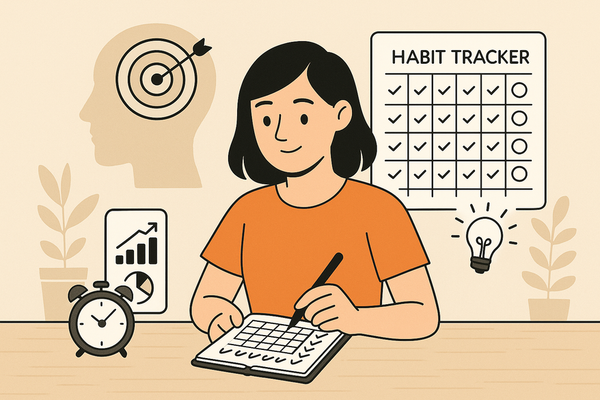
How to Build a Self-Awareness Routine: A Step-by-Step Guide
Learn how to build a sustainable self-awareness routine with clear steps and tools. Turn self-awareness from a vague idea into a daily habit.

Estimated reading time: 7 minutes
Key Takeaways
- Daily self-awareness routines transform vague intentions into concrete habits.
- Core practices include journaling, mindfulness, self-reflection, and goal review.
- A structured schedule (morning, mid-day, evening) and micro-habits boost consistency.
- Tools like the Blindspot App and tracking apps enhance external feedback and progress monitoring.
- Progress relies on consistency and self-compassion more than perfection.
Table of Contents
- Understanding Self-Awareness
- The Need for a Self-Awareness Routine
- Key Components of a Self-Awareness Routine
- Step-by-Step Guide to Build Your Routine
- Personalizing Your Routine
- Benefits & Long-Term Impact
- Conclusion
- FAQ
Understanding Self-Awareness
What Is Self-Awareness?
Self-awareness is the capacity to notice your inner world—thoughts, feelings, values—and see how they shape your actions. Psychologists distinguish between internal self-awareness (knowing your strengths, weaknesses, and emotions) and external self-awareness (understanding how others perceive you). For more on identifying blind spots in your self-perception, see our guide to the Johari Window Test.
Benefits of a Self-Awareness Routine
- Better decision-making and judgment
- Higher job satisfaction and performance
- Stronger relationships and communication
- Greater emotional resilience and stress management
- Enhanced sense of purpose and life satisfaction
How Routines Reinforce Self-Awareness
- Capture patterns over time—not just one-off “aha” moments.
- Turn reflection into an automatic habit, much like brushing your teeth.
- Regular check-ins reduce the influence of mood swings on insight.
The Need for a Self-Awareness Routine
Common Challenges
- Running on autopilot without any reflection.
- Avoiding difficult emotions and honest feedback.
- Only engaging in self-awareness after a crisis.
Why Routine-Based Practice Works
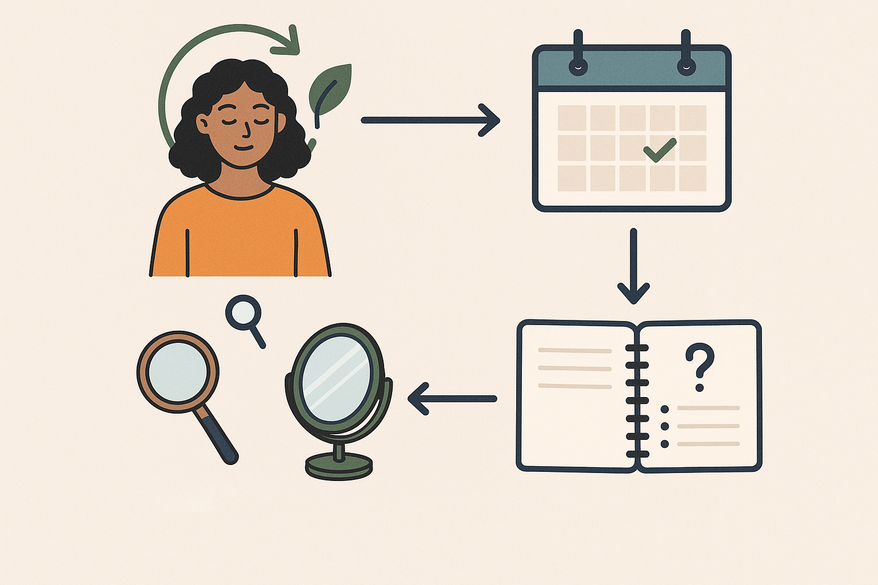
By cycling through Act → Reflect → Learn → Adjust every day, you build deeper and more reliable insight.
Key Components of a Self-Awareness Routine
1. Journaling for Self-Awareness
- Free writing: Write nonstop for 5–10 minutes without editing.
- Prompt-based: Answer set questions daily:
- What made me happiest today, and why?
- What upset me most, and how did I respond?
- When did I feel most—and least—like myself?
- What am I avoiding right now?
- What lesson did I learn today?
2. Mindfulness Practices
- Meditation: 3–5 minutes focusing on your breath; notice thoughts and gently return to the breath.
- Micro-practices: A 60-second body scan on waking; a one-minute breathing exercise before meetings.
3. Self-Reflection Exercises
- Emotion Labeling: Name what you feel—“I feel anxious,” “I feel excited.”
- Trigger Mapping: Document what happened → Your thoughts → Feelings → Actions → Underlying needs.
- Perspective Shifting: Ask, “How would an outsider describe my reaction?”
4. Goal Setting & Habit Review
- Set weekly or monthly goals based on your reflections (e.g., “Pause for 3 seconds before responding”).
- Track these habits in a simple table or app.
- Conduct a weekly review: note successes, struggles, and insights.
Step-by-Step Guide to Build Your Routine
4.1 Start Small (Micro-Habits)
- 3-minute journaling each day.
- 60-second body scan upon waking.
- Quick emotion check at lunch.
4.2 Create a Structured Schedule
Morning (5–10 min):
- 60-second body scan.
- Name three current emotions.
- Set one awareness intention for the day.
Mid-day (3–5 min):
- Quick emotion check before lunch.
- Note any triggers or emerging patterns.
Evening (5–10 min):
- Journal using 2–3 prompts.
- Review goals and update your habit tracker.
4.3 Overcoming Obstacles
- “No time?” Stack micro-habits onto existing routines.
- “I forget.” Use phone alarms or place your journal on your pillow.
- “It feels silly.” Start privately; awkwardness fades with practice.
- “I’m inconsistent.” Aim for “most days” and restart without guilt.
4.4 Tools & Resources
- Physical journals or digital spreadsheets for habit tracking.
- Apps like Toggl for time tracking and mood-tracker apps.
- Guided mindfulness via Headspace, Calm, or free breathwork audios.
- Learn how to integrate the Blindspot App into your routine.
- Read about the best self-awareness app of 2026 and how Blindspot stacks up.
Personalizing Your Routine
Tailor your practice to fit your energy peaks, preferred medium (writing, audio, silent reflection), and available time. Swap prompts as you learn and evolve your focus areas—whether emotions, energy levels, or time management.
Benefits & Long-Term Impact
Short-Term Benefits
- Clearer thinking and decision-making.
- Better control over your emotions.
- Reduced reactive stress responses.
Long-Term Benefits
- Deeper, healthier relationships.
- Career growth and leadership skills.
- Stronger resilience to setbacks.
- A clearer sense of purpose.
Conclusion
Building a sustainable self-awareness routine boils down to three core steps:
- Notice through journaling, mindfulness, and check-ins.
- Reflect with prompts, mapping exercises, and reviews.
- Adjust by setting goals and tracking habits.
FAQ
How long should I spend on each self-awareness practice?
Start with 3–10 minutes per practice. Adjust duration as it becomes part of your daily routine.
What if I miss a day?
Missing a day doesn’t derail progress. Simply restart the next day—consistency over perfection.
Can I use digital tools instead of pen and paper?
Absolutely. Apps like Toggl, dedicated mood trackers, and the Blindspot App work well for digital journaling and feedback.
How soon will I see benefits?
Many people notice immediate clarity in 1–2 weeks; deeper insights and long-term change emerge over months of consistent practice.