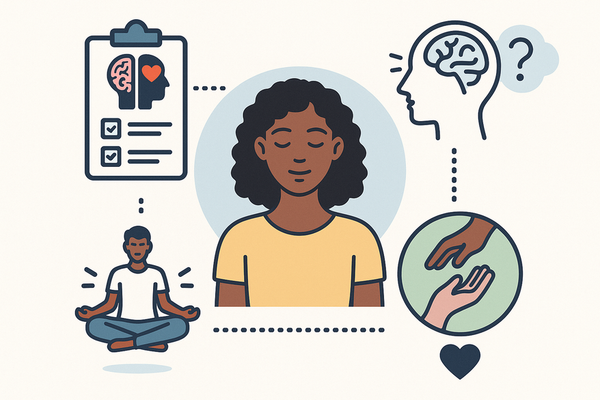
Self Awareness Meditation Techniques: Enhance Mindfulness and Personal Growth
Explore self awareness meditation techniques for mindfulness and personal growth. Discover methods to reduce stress and improve emotional balance.

Estimated reading time: 12 minutes
Key Takeaways
- Self-awareness meditation sharpens emotional insight and decision-making.
- Four core techniques: mindfulness meditation, breath-focused body awareness, guided visualization, and body scan.
- Science shows these practices reduce stress, boost resilience, and reshape the brain.
- Consistency and micro-practices are key to habit formation and lasting growth.
- Long-term benefits include deeper self-understanding, emotional balance, and improved relationships.
Table of Contents
- Introduction
- 1. Understanding Self-Awareness and Mindfulness
- 2. Core Meditation Techniques for Self-Awareness
- 3. The Science and Psychology Behind the Techniques
- 4. Practical Tips for Daily Integration
- 5. Personal Growth and Long-Term Benefits
- Conclusion
Introduction
Self-awareness meditation helps you observe your thoughts, emotions, and behaviors—revealing how inner experiences shape your choices. Mindfulness means paying attention on purpose, without judgment, while meditation trains your focus for clarity and balance.
For a digital approach to uncover blind spots and how others perceive you, explore the Blindspot App, which uses anonymous feedback and AI insights to deepen self-awareness.
In this guide, you’ll learn techniques that bridge mindfulness and growth. You’ll discover simple practices to catch stress early and act with more ease. Studies show mindfulness meditation reduces cortisol and lowers stress (Harvard Health), building habits for balance and clear decision-making. Let’s begin.
1. Understanding Self-Awareness and Self Awareness Meditation Techniques
Self-awareness is the skill of noticing yourself in two ways:
- Internal: Your values, passions, reactions, and patterns.
- External: How others see you.
The American Psychological Association defines self-awareness as “the capacity for introspection and the ability to recognize oneself as an individual separate from the environment and other individuals.” (APA Dictionary)
Benefits of higher self-awareness include improved emotional regulation, better decision-making, stronger relationships, greater resilience, and alignment with personal values (JAMA).
Practicing mindfulness—observing thoughts and feelings without judgment—creates a pause between stimulus and response, giving you more choice (Greater Good Science Center).
For more on how mindfulness fosters self-discovery, see our guide on Mindfulness Self Discovery for Personal Growth.
2. Exploring Core Self Awareness Meditation Techniques for Self-Awareness
Below are four foundational techniques. For detailed instruction, check our Meditation for Self Awareness guide.
2.1 Mindfulness Meditation
Definition: Focus on the breath as an anchor and label passing thoughts.
Steps:
1. Sit comfortably with a straight spine.
2. Close your eyes or soften your gaze.
3. Notice the inhale and exhale.
4. Label distractions (“thinking,” “feeling anger”) and return to the breath.
Why it works: You observe patterns instead of being swept away. Research on Mindfulness-Based Stress Reduction shows lasting clarity and stress relief (UMass Memorial Health).
2.2 Breathing Exercises Focused on Body Awareness
Definition: Track bodily sensations with each breath.
Steps:
1. Sit or lie comfortably and breathe slowly.
2. Notice the breath at nostrils, chest, or belly.
3. Expand awareness to warmth, tension, tingling.
4. On each exhale, “soften” tense areas.
Benefit: Boosts interoceptive awareness—spotting stress signals early (PMC).
2.3 Guided Imagery and Visualization
Definition: Use mental images to explore emotions and goals.
Examples: Visualize a peaceful sanctuary or meet your “wiser self.”
Steps:
1. Choose an audio guide or script.
2. Close your eyes and follow prompts.
3. Observe imagery and emotions.
Benefit: Taps subconscious beliefs and values (JAMA).
2.4 Body Scan Meditation
Definition: Systematically move attention through the body.
Steps:
1. Lie down or sit comfortably.
2. Focus from toes to head, noting sensations.
3. Acknowledge tension and soften around it.
Benefit: Enhances interoceptive insight for emotional awareness (PMC).
3. The Science and Psychology Behind Self Awareness Meditation Techniques
Mental Health Impact:
- Reduces stress and anxiety by calming the amygdala (JAMA).
- Strengthens emotional regulation via the prefrontal cortex (PMC).
- Builds self-compassion and lowers self-criticism (APA).
- Improves self-knowledge—spotting triggers and thought patterns.
Psychological Theories:
- Metacognition: Thinking about thinking improves self-monitoring (Cambridge Dictionary).
- Decentering: Observing thoughts as events reduces over-identification (Contextual Science).
- Interoceptive Awareness: Body-focused meditation refines internal signal detection.
Meditation fosters neural plasticity, growing brain regions linked to attention, empathy, and self-regulation. These findings show why these techniques build lasting change.
4. Practical Tips for Integrating Self Awareness Meditation Techniques
Consistency over duration: Short daily sessions beat occasional long sits. For reminders and guided practices, see our Daily Mindfulness for Growth guide.
Start small & build habits:
- Begin with 5-minute sessions.
- Pair practice with routine tasks (e.g., coffee, brushing teeth).
- Use apps like Insight Timer, Headspace, or Calm.
Choose time & environment:
- Morning for an intentional tone.
- Midday for a quick reset.
- Evening body scan before sleep.
- Quiet spot, silence your phone, use a dedicated mat or chair.
Overcoming obstacles:
- Racing mind? Label thoughts and return to your anchor.
- Time constraints? Try micro-practices (1–3 minutes).
- Boredom? Notice restlessness as part of practice.
- Self-criticism? Apply kindness when judgment arises.
5. Personal Growth and Long-Term Benefits of Self Awareness Meditation Techniques
How consistency drives growth:
- Deeper self-understanding: clarity on values and strengths.
- Intentional living: choices aligned with awareness.
- Emotional maturity: holding complex feelings with equanimity.
Long-term benefits:
- Enhanced resilience and emotional regulation (Springer).
- Reduced chronic stress and anxiety.
- Improved focus and mental clarity.
- Greater empathy and relationship quality.
- Increased overall life satisfaction.
Over time, these techniques become a powerful investment in your well-being and growth.
Conclusion
Self-awareness is key to personal growth. You’ve learned core techniques—mindfulness meditation, breath and body awareness, guided imagery, and body scan—backed by science. By weaving these practices into daily life, you’ll lower stress, sharpen insight, and build emotional balance. Embrace these methods for growth, stress reduction, and a life aligned with your deepest values.
FAQ
- What is self-awareness meditation? A set of practices that cultivate the ability to observe your thoughts, emotions, and bodily sensations without judgment.
- How long should I practice daily? Start with 5 minutes and gradually increase. Even micro-practices of 1–3 minutes can help build consistency.
- Can beginners try these techniques? Absolutely. Techniques like guided imagery and body scans are beginner-friendly and require no prior experience.
- Do I need special equipment? No—just a quiet spot and comfortable seating. Apps and audio guides can enhance your practice.
- How soon will I see benefits? Many people notice reduced stress and clearer thinking in just a few sessions. Long-term changes emerge with regular practice over weeks and months.