
Creative Self Reflection: Unlocking Personal Growth Through Art and Expression
Discover how creative self reflection using art, writing, and music can enhance self-discovery, emotional well-being, and personal growth.

Estimated reading time: 8 minutes
Key Takeaways
- Creative self reflection uses artistic activities as a mirror to explore emotions, identity, and values.
- Combining creativity with intentional reflection boosts emotional regulation, stress relief, and well-being.
- Six flexible methods—from visual journaling to music exploration—help you discover and express inner experiences.
- Overcoming barriers like perfectionism and creative blocks cultivates a playful, non-judgmental mindset.
- Regular micro-rituals and themed sessions build sustainable habits for ongoing self-awareness.
Table of Contents
- Introduction
- Defining Creative Self Reflection
- Importance of Self-Discovery Through Creativity
- Creative Methods for Self-Discovery and Personal Expression
- Overcoming Common Barriers
- Integrating Creative Self Reflection into Daily Life
- Conclusion and Call to Action
- FAQ
Introduction
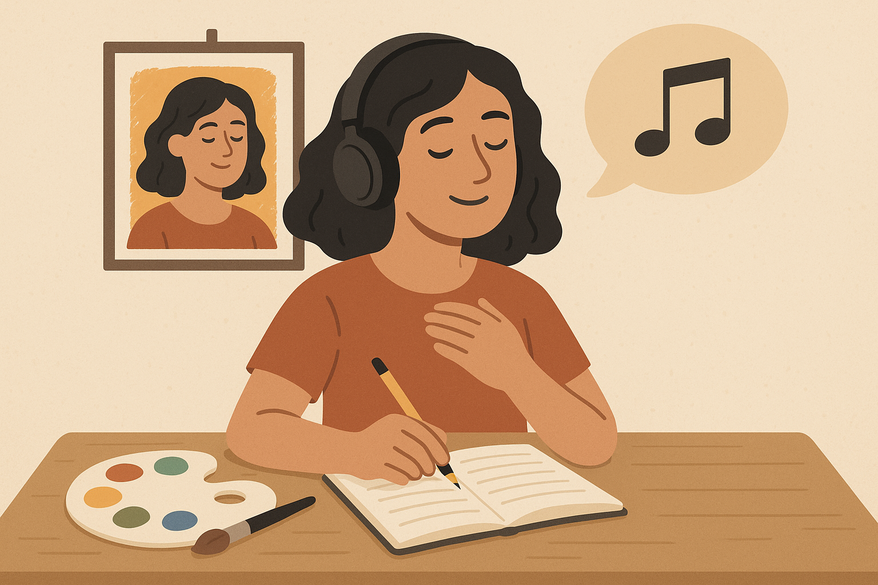
Creative self reflection is the intentional practice of using creative activities—writing, drawing, music, photography—as a mirror to explore your inner world (Why Is Art Making Such a Powerful Tool for Self-Discovery). When you blend creativity with focused reflection, you gain deeper insight into your emotions, identity, and values while also supporting emotional regulation, stress relief, and overall well-being (Creativity for Self-Care). Creative self reflection helps you symbolically process feelings and build resilience in ways that thinking alone cannot.
Defining Creative Self Reflection
Creative self reflection uses art, metaphor, and sensory expression to notice and explore inner experiences. Unlike traditional reflection—which often relies on structured writing or logical analysis (Reflection as a Tool for Professional Growth)—creative self reflection values process over product, engaging body, senses, and imagination (Why Is Art Making Such a Powerful Tool for Self-Discovery).
Three simple steps to integrate it into daily life:
- Set aside 5–10 minutes for a “micro-ritual” (visual journaling, doodling).
- Use creative prompts or methods to explore specific reflection questions.
- Keep a combined word-image notebook or digital space to track evolving insights.
Importance of Self-Discovery Through Creativity
Research shows that creativity:
- Boosts emotional regulation and reduces stress, making reflection feel safer (PMC10228263).
- Transforms reflection from a chore into a mindful, enjoyable practice (Creativity for Self-Care).
Uncover hidden insights by exploring social identities through creative choices, revealing implicit assumptions and blind spots (Digital Thriving Playbook).
Creative Methods for Self-Discovery and Personal Expression
Below are six engaging techniques. Tailor each to your style and time constraints.
- 1. Journaling with Visuals
Combine words with drawings or collage. Write a sentence about how you feel, then add colors or sketches. Reflect: “What stands out?” - 2. Mind Mapping
Create a visual map of ideas radiating from a central theme. Step back and ask: “What themes emerge?” - 3. Art-Based Reflection
Use drawing, painting, or collage to express inner states. Prompt yourself (e.g., “today’s mood”) and then journal: “What does each shape or color represent?” - 4. Creative Writing
Free write, craft poetry, or pen a letter to yourself. Underline significant lines and ask: “What does this reveal about my values?” - 5. Photography as Reflection
Capture images around a theme (comfort, joy), then review: “Why did I choose these scenes?” - 6. Music Exploration
Build a themed playlist, listen mindfully, and note body sensations. Reflect: “Which song felt most like me?”
Explore additional techniques in our previous posts: Art Therapy for Self-Awareness and Creative Self-Discovery Approaches.
Overcoming Common Barriers
Approach creative self reflection with curiosity, play, and self-compassion:
- Perfectionism: Value process over product and set micro-goals. Ask: “What if no one sees this?”
- Creative Blocks: Take a nervous-system break (walk, music) before low-stakes doodling.
- Hesitation: Create privately, use metaphorical forms, and time-box sessions (10 minutes), then ground with tea or a short walk.
Integrating Creative Self Reflection into Daily Life
Three sustainable rituals:
- Daily 5–10-Minute Check-In: Sketch your mood, write one sentence, or pick a song. Add a reflection like “What do I notice about myself?”
- Weekly 30–60-Minute Session: Combine a mind map, drawing, and a few paragraphs. Use guided questions like “What surprised me?”
- Theme-Based Months: Spend a month on identity (visual journals) and another on self-care (photography, music) (Digital Thriving Playbook).
Join online or local art-therapy workshops for shared learning and support (Why Is Art Making Such a Powerful Tool for Self-Discovery).
Apps like Blindspot App can reveal gaps between your self-perception and how friends see you.
Conclusion and Call to Action
Creative self reflection leverages art, writing, and music to deepen self-discovery, support well-being, and foster growth. Choose one method—perhaps a 5-minute visual journal or a reflective playlist—and try it within the next 48 hours. Treat it as an experiment, not a test. Share which method you tried, insights or emotions that surfaced, and any questions about adapting these practices to build a compassionate community of self-discovery.
FAQ
How much time do I need for creative self reflection?
Just 5–15 minutes a day can spark valuable insights and establish a sustainable habit.
What if I’m not artistic?
Creative self reflection values process over product. Start with simple doodles or colors, treat it as play, and remember that no one needs to see your work.
Can I share my creative reflections?
Absolutely—but only if you feel comfortable. You can also choose to keep them private to foster deeper honesty.