Somatic Awareness Exercises: Unlocking Your Body's Wisdom with Yoga and Mindfulness
Discover the power of somatic awareness exercises to enhance body awareness, manage stress, and improve well-being through yoga self-awareness and a movement mindfulness quiz.

Estimated reading time: 12 minutes
Key Takeaways
- Somatic awareness exercises cultivate internal sensing—proprioception, interoception, and exteroception—to deepen body–mind connection.
- Yoga self awareness builds on somatics by tuning into felt experience during asanas, pranayama, and transitions.
- A movement mindfulness quiz offers a baseline for assessing and tracking your growth in body awareness.
- Integrating short daily practices supports stress regulation, posture alignment, and emotional well-being.
Table of Contents
- Understanding Somatic Awareness Exercises
- Exploring Yoga Self Awareness
- Interactive Engagement: Movement Mindfulness Quiz
- Practical Exercises & Daily Routine Tips
- Summary & Next Steps
- FAQ
Understanding Somatic Awareness Exercises
Definition & Key Sensory Processes
Somatic awareness exercises develop conscious, moment-to-moment sensing of muscles, breath, posture, heartbeat, and gut sensations. Source: News Medical.
They rely on three core sensory processes:
- Proprioception – sensing body position and movement in space.
- Interoception – noticing internal signals like heartbeat, breath, tension, and gut “butterflies.”
- Exteroception – feeling external stimuli such as touch, pressure, and temperature.
Sharpening these senses strengthens your internal “body map” and boosts your ability to notice and respond to stress early. More details at News Medical.
Benefits of Somatic Awareness Exercises
- Improved balance, strength, and flexibility (Cleveland Clinic)
- Enhanced posture and alignment through better body awareness (Cleveland Clinic)
- Reduced stress and muscle tension via nervous-system regulation (Charlie Health)
- Support for pain relief and more efficient movement patterns (Cleveland Clinic)
- Increased emotional awareness and trauma healing (One Peloton; Somatic Therapy Partners)
Common Somatic Awareness Exercises
Many everyday activities become somatic when performed with internal focus:
- Gentle stretching that highlights muscle sensations (Cleveland Clinic)
- Body scan meditation, moving awareness from toes to head (One Peloton)
- Slow, conscious walking with attention to each step (Charlie Health)
- Free-form expressive dance without performance goals (One Peloton)
- Yoga or Pilates practiced with inward attention rather than perfection (News Medical)
Specific Somatic Awareness Exercises to Try
- Diaphragmatic Breathing Check-In
Sit or lie comfortably, hand on chest and belly. Inhale through the nose for 4 seconds; feel the belly rise. Pause 2 seconds. Exhale through the mouth for 6 seconds. Notice tension, temperature shifts, or emotions that arise. (One Peloton) - Full Body Scan (10-Minute Sense Check)
Lie on your back in a quiet spot. Close your eyes. Move attention slowly from toes to head, observing tightness or numbness without trying to fix anything. When you find tension, breathe into that area, imagining it softening. (Charlie Health) - Seated Somatic Twist Stretch
Sit on a chair edge, feet flat. Left hand on seat behind you, right hand on right thigh. Inhale to lengthen spine; exhale to twist gently left. Hold 3–5 breaths, focusing on spinal and rib sensations. Repeat on the other side. (One Peloton) - Child’s Pose with Body Sensing
Kneel and sit back on heels, then fold forward. Forehead on the mat, arms extended or resting by sides. Notice body contact points, areas of stretch or pressure in hips, back, and shoulders. Stay for several breaths, tracking changes over time. (One Peloton)
Exploring Yoga Self Awareness
Definition & Components of Yoga Self Awareness
Yoga self awareness is the mindful observation of how each asana, breath, and transition feels in your body and mind. (One Peloton)
Key components include:
- Asanas (physical postures) that stretch and strengthen while mapping sensation.
- Pranayama (breathwork) to bring awareness to inhalation and exhalation patterns. (Charlie Health)
- Mindfulness and relaxation through restorative poses and guided attention. (Charlie Health)
How Yoga Self Awareness Complements Somatic Awareness Exercises
- Emphasizes the mind–body connection and internal sensing over external performance. (News Medical)
- Promotes slow, intentional movement with sensory feedback. (One Peloton)
- Supports nervous system regulation and emotional processing. (Somatic Therapy Partners)
A somatic lens in yoga teaches you to:
- Drop pose comparisons and focus on your felt experience.
- Use breath as an internal gauge—tight breathing signals tension, free breathing signals ease.
- Notice emotional or mental shifts tied to particular postures.
Yoga Self Awareness Poses & Routines
- Mountain Pose Check-In (Tadasana)
Stand feet hip-width apart. Feel weight distribution across heels, balls, and outer edges of feet. Notice tension in shoulders, jaw, or glutes. Adjust for a sense of grounded ease over 5–10 breaths. (Charlie Health) - Cat–Cow with Spinal Sensing
On hands and knees, inhale to arch (Cow), exhale to round (Cat). Move slowly. Ask: “Where do I feel most movement? Where is there stiffness?” Track each vertebra. (One Peloton) - Slow Sun Salutation
Flow through Mountain → Forward Fold → Half Lift → Plank → Cobra/Upward Dog → Downward Dog → Stand. Sync each transition with inhale or exhale. Note effort vs. openness, and where breath feels constricted or free. (One Peloton) - Restorative Poses for Deep Interoception
Hold Child’s Pose, Reclined Bound Angle, or Legs Up the Wall for 3–5 minutes. Scan for heart rate shifts, muscle releases, warmth, and changing emotional tone. (Charlie Health)
Interactive Engagement: Movement Mindfulness Quiz
Movement Mindfulness Quiz Definition & Purpose
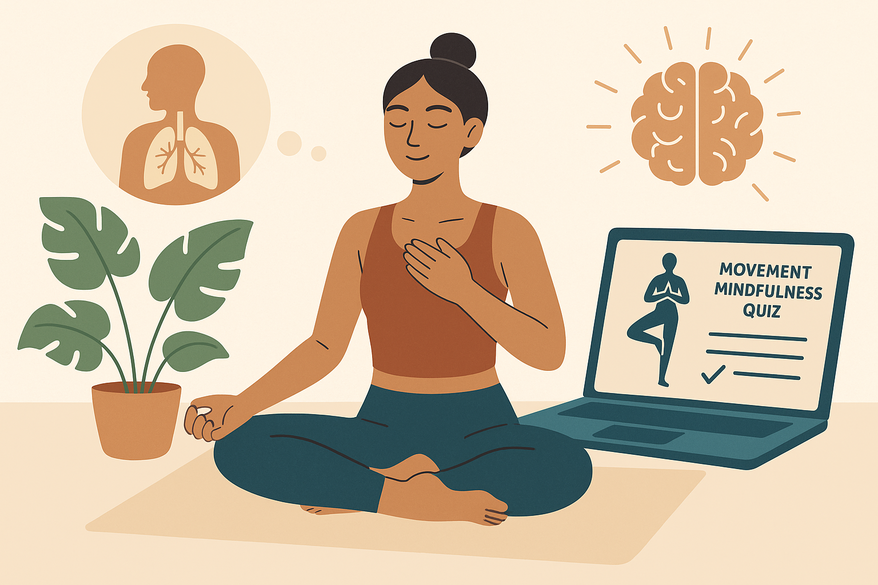
A movement mindfulness quiz is a self-assessment that gauges how aware you are of bodily sensations during daily life and exercise. It’s a reflection tool, not a pass-fail test. (One Peloton)
Its goals:
- Reveal your strengths and blind spots in body awareness.
- Offer a baseline to track growth in somatic awareness exercises and yoga self awareness.
To further explore perception gaps in your practice, consider using Blindspot App to gather anonymous feedback from friends on how they see your embodied mindfulness in action. You can also take a self perception bias quiz for honest self-reflection to identify areas where your self-view may differ from how others perceive you.
Movement Mindfulness Quiz Sample Questions
- “When I exercise, I pay attention to how my body feels on the inside.” (Never / Sometimes / Often / Always)
- “I can identify where in my body I hold stress (jaw, chest, stomach).”
- “I notice small signals of fatigue or pain before they intensify.”
- “I adjust my movements based on bodily feedback, not just goals.”
Benefits of Movement Mindfulness Quiz
- Clarifies patterns in breath awareness, tension recognition, and movement adaptation.
- Highlights areas where you may ignore early signs of strain.
- Provides a measurable baseline for future comparison.
Applying Movement Mindfulness Quiz Insights
- Choose one or two focus areas (e.g., breath tracking or tension scanning).
- Match each to a specific exercise (e.g., body scan, diaphragmatic breathing). (One Peloton)
- Revisit the quiz monthly to measure progress and refine your practice. (Charlie Health)
Practical Exercises & Daily Routine Tips
Step-by-Step Somatic Awareness Exercises
- 5-Minute Sensory Body Scan
Sit, stand, or lie comfortably. Close your eyes if safe. Take three slow, grounding breaths. Move awareness from feet to head, naming sensations at each point. Note one surprise finding (e.g., jaw tension). (One Peloton; Charlie Health) - Somatic Walking Practice
Walk slowly in a hallway or outside. Focus on heel-to-toe foot contact, arm swing, and breath. Every 10–15 steps, ask: “What can I soften by 5%?” (shoulders, jaw). (Charlie Health) - Somatic Breath Awareness
Sit upright. Place a hand where you feel breath most (belly or chest). Observe natural breathing for 1–2 minutes. Extend your exhale by 1–2 counts. Observe any relaxation or restlessness. (One Peloton) - Temperature & Touch Drill
Alternate cool and warm water over your hands. Fully focus on shifting sensations—cold-to-warm, tingling, pulse points. Trains both interoception and exteroception. (Charlie Health)
Accessible Yoga Self Awareness Practices
- 3-Minute Mountain Pose Check-In
Stand in Mountain Pose. Scan from feet to head for tension. Adjust knees, shoulders, and jaw for ease. Breathe 5–10 cycles, noticing stability shifts. - Mini Cat–Cow at Desk
Sit at front of your chair. Inhale to arch the back, exhale to round it. Do 10 slow cycles, tracking stiff or relaxed areas. - Restorative Child’s Pose Wind-Down
Hold Child’s Pose for 1–3 minutes before bed or after work. Notice breath in the back ribs and emotional tone. (One Peloton) - Intentional Breath in Any Pose
In any posture, maintain continuous breath awareness. Use breath quality to gauge effort—tight breath means ease off, calm breath means you can explore more.
Sample Daily Routine Integrating These Practices
Morning (5–7 min)
3-Minute Mountain Pose check-in. 2–4 minutes of Cat–Cow or gentle stretching with somatic attention.
Midday (5 min)
Somatic walking practice between tasks. 2-Minute breath awareness at your desk.
Evening (5–10 min)
5-Minute supine body scan on a mat or bed. (One Peloton; Charlie Health) 2–3 minutes in Child’s Pose or another restorative pose, noticing shifts in tension and mood.
Weekly
Quick movement mindfulness quiz check-in to refine your routine.
Summary & Next Steps
Somatic awareness exercises, yoga self awareness, and a movement mindfulness quiz form a powerful, integrated framework for deepening body–mind connection and supporting mental and physical well-being.
Key Points:
- Somatic awareness exercises train you to notice internal sensations and regulate your nervous system. (Cleveland Clinic)
- Yoga self awareness deepens sensory exploration through mindful asanas and breathwork. (One Peloton)
- A movement mindfulness quiz provides clear metrics to assess and track your growth. (One Peloton)
Next Steps:
- Practice the outlined exercises consistently for 2–3 weeks.
- Journal weekly on changes in stress levels, posture, and emotional awareness.
- Explore further resources like guided body scans, somatic-focused yoga classes, or professional somatic therapy. (Blueprint.AI blog)
To complement your quiz insights, explore more on mind–body self assessments at mind–body self assessments and build consistent daily mindfulness habits with daily mindfulness for growth guide. For a deeper dive into the foundations of self-understanding, see our definitive guide to understanding yourself. You may also find inspiration in these self reflection apps for mindfulness to boost your daily well-being, or explore self awareness meditation techniques to enhance mindfulness and personal growth. If you’re interested in building emotional strength alongside body awareness, check out these evidence-based resilience building exercises for practical strategies. For a creative approach to personal growth, you might enjoy exploring creative self reflection through art and expression as a complement to somatic and mindfulness practices.
By returning your attention to your body with curiosity and kindness, you build resilience, self-regulation skills, and a foundation for lasting personal growth.
FAQ
What are somatic awareness exercises?
Somatic awareness exercises are mindful movements and sensory-focused practices designed to enhance internal body awareness by tuning into breath, posture, tension, and other bodily sensations.
How does yoga self awareness differ from regular yoga practice?
Yoga self awareness emphasizes the felt experience of each posture and breath rather than striving for external alignment or performance, deepening mind–body connection. For those interested in personality and self-discovery aspects that influence how you engage with such practices, our personality types guide offers valuable insights.
Who can benefit from a movement mindfulness quiz?
Anyone looking to improve their body awareness, from athletes and yoga practitioners to individuals seeking stress relief and emotional regulation. To enhance your communication and interpersonal effectiveness alongside body awareness, consider taking our communication style quiz. For improving your likeability and confidence in social settings, you might also explore the complete guide to charisma & confidence.
How often should I practice these exercises?
Try integrating short sessions daily or at least 3–4 times a week to build consistency and notice gradual improvements in body awareness and stress management.