How to Measure Your Kindness to Yourself: A Self Compassion Quiz Guide
Discover how a self compassion quiz can enhance your self-care. Learn to measure self-kindness, mindfulness, and shared humanity with expert tips.

Estimated reading time: 6 minutes
Key Takeaways
- A self-compassion quiz offers insight into how kindly you treat yourself in tough moments.
- The quiz uses a Likert scale to measure self-kindness, mindfulness, common humanity, and reverse-scored dimensions like self-judgment.
- Your results highlight strengths (e.g., high self-kindness) and areas for growth (e.g., self-judgment or isolation).
- You can boost self-compassion through mindfulness, kind self-talk, journaling, and periodic retesting.
Table of Contents
- Introduction
- What Is a Self Compassion Quiz?
- The Importance of Self Compassion
- How the Self Compassion Quiz Assesses Your Levels
- Interpretation of Quiz Results
- Steps to Enhance Self Compassion Post-Quiz
- Conclusion
- FAQ
Introduction
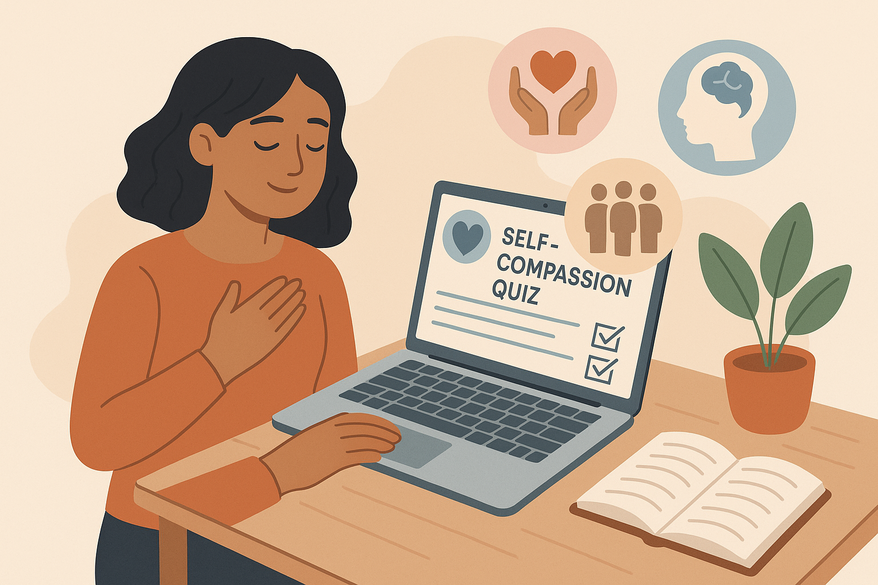
A self compassion quiz helps you see how kindly you treat yourself when you’re down. Self-compassion means responding to your own suffering with kindness, mindful awareness, and a sense of shared humanity. In plain terms, it’s about being as warm to yourself as you would to a good friend.
Why self-compassion matters:
- Builds emotional resilience.
- Speeds up recovery from failures or setbacks.
- Reduces harsh self-criticism.
Using a self compassion quiz gives you a practical tool to measure your current level of self-care and resilience. You answer questions about how often you practice self-kindness, mindful awareness, and feel connected to others in your tough moments. The results point out your strengths—like high self-kindness—and areas for growth, such as self-judgment.
For an interactive self-awareness experience, try the Blindspot App, which combines personalized quizzes with anonymous friend feedback to uncover blind spots and guide your growth journey.
What Is a Self Compassion Quiz?
A self compassion quiz is a self-report tool that estimates how often you treat yourself with compassion. It asks you to rate statements from “almost never” to “almost always.” This format is known as the Self-Compassion Scale (SCS). It is used worldwide to gauge kindness toward oneself.
Core elements of the quiz:
- Self-Compassion Scale (SCS): 26 statements to rate.
- Likert response: “Almost never,” “Sometimes,” “Almost always.”
- Self-report: You answer based on your own experience.
Question categories on the SCS:
- Self-kindness vs. self-judgment
- Mindfulness vs. overidentification
- Common humanity vs. isolation
Some items are negatively worded and are reverse-scored. These balance out responses and ensure accuracy in measuring both compassionate and less compassionate tendencies.
The Importance of Self Compassion
Self-compassion means treating yourself like a friend in moments of failure or stress. It’s offering yourself the same warmth and understanding you’d give to someone you care about.
Key benefits of self-compassion:
- Supports healthier coping strategies under pressure.
- Reduces harsh self-criticism and shame.
- Promotes emotional balance and strong resilience.
- Linked to less guilt, lower shame, and better mental health outcomes.
When you practice self-compassion, you notice your emotions without overreacting. You stop isolating yourself and connect with a shared sense of humanity. This leads to faster recovery from setbacks.
How the Self Compassion Quiz Assesses Your Levels
The quiz uses a Likert scale to ask how often you experience certain thoughts or behaviors. Each answer shows your tendency toward self-kindness or self-judgment.
Methodology:
- Likert-type rating from 1 (almost never) to 5 (almost always).
- Subscale scores for:
- Self-kindness
- Mindfulness
- Common humanity
- Self-judgment (reverse-scored)
- Overidentification (reverse-scored)
- Isolation (reverse-scored)
Scoring process:
- Average each subscale score.
- Combine subscales for an overall self-compassion score.
- Interpret your level:
- Low (1.0–2.5)
- Moderate (2.5–3.5)
- High (3.5–5.0)
Quiz results reveal:
- Strengths (e.g., high self-kindness).
- Growth areas (e.g., high self-judgment).
- Overall level of compassionate self-care.
Interpretation of Quiz Results
Understanding your self compassion quiz results helps you reflect on your inner dialogue. It is a tool for self-awareness, not a clinical diagnosis.
High vs. low subscale scores:
- High compassionate scores:
- Self-kindness, mindfulness, common humanity.
- Indicates you tend to respond gently to yourself.
- High negative scores:
- Self-judgment, overidentification, isolation.
- Reflects vulnerability to shame, rumination, and isolation.
Moderate scores often mean you show self-compassion in some situations but not always. Use your results as a starting point for change, not a label on your character.
Steps to Enhance Self Compassion Post-Quiz
After taking the self compassion quiz, you can boost your self-kindness through simple practices.
- Mindfulness practices
- Notice painful thoughts without judgment.
- Use breathing exercises to stay present.
- Kind self-talk
- Imagine advising a friend in your situation.
- Replace harsh inner criticism with supportive words.
- Common humanity reminders
- Recall that everyone struggles sometimes.
- Write a note: “I am not alone in this.”
- Meditations and reflective exercises
- Guided self-compassion meditations.
- Journaling prompts to observe feelings.
- Calming visualizations
- Picture a safe, warm place.
- Hold that image when stress arises.
- Periodic retesting
- Take the quiz every few months.
- Track improvements in your self-compassion score.
Looking to deepen your resilience? Try our Emotional Resilience Quiz for a focused assessment on mental strength.
Conclusion
A self compassion quiz offers a clear snapshot of how kindly you treat yourself. By understanding your score—whether low, moderate, or high—you gain insights into your self-kindness, mindfulness, and sense of shared humanity. Use this guide to interpret your results and follow the steps outlined to nurture self-compassion day by day. Retest periodically to celebrate your growth in resilience, self-acceptance, and emotional well-being. You can also bolster your confidence by taking this Self Esteem Quiz Free, and for a broader look at mental wellness, explore the Psychological Well-Being Scale Guide.
FAQ
Q1: What does a self compassion quiz measure?
A: How often you treat yourself with kindness, mindful awareness, and a sense of shared humanity.
Q2: How many questions are in a typical self-compassion scale?
A: The Spanish Self-Compassion Scale has 26 questions.
Q3: Are there right or wrong answers?
A: No. It measures your usual reactions, not correct behavior.
Q4: Can I take the quiz anonymously?
A: Yes. Many online versions let you complete it without giving personal details.
Q5: What does a low score mean?
A: It may indicate strong self-criticism, isolation, or difficulty staying mindful.
Q6: Can self-compassion be improved?
A: Absolutely. You can cultivate it through mindfulness, reflection, and practice.