Self Awareness Beginner Guide: Start Your Journey to Personal Growth
Discover a self awareness beginner guide with definitions, benefits, and exercises to enhance personal growth and emotional intelligence.

Estimated reading time: 10 minutes
Key Takeaways
- Define self-awareness and its core components.
- Understand the benefits of heightened self-awareness.
- Learn simple reflection techniques and exercises.
- Discover tools and resources to support your practice.
- Overcome common challenges and maintain consistency.
Table of Contents
- Introduction
- Defining Self-Awareness
- The Importance of Self-Awareness
- Simple Self-Reflection Techniques
- Tools and Resources
- Overcoming Common Challenges
- Practicing Consistency and Patience
- Conclusion
- FAQ
Introduction
Welcome to this beginner’s guide on self-awareness, where we’ll explore what it means to truly know your thoughts, feelings, and behaviors in real time. You’ll discover why *awareness* is the crucial first step toward change—because you can’t transform what you can’t observe. By the end, you’ll be equipped with clear definitions, common myths debunked, simple reflection methods, and practical tools to kickstart your journey to personal growth.
Defining Self-Awareness
Experts describe self-awareness as:
“The ability to consciously notice and understand your own thoughts, feelings, motives, behaviors, and how they impact yourself and others.”
At its core, it means paying attention to:
- Thoughts: inner dialogue and mental images
- Emotions: feelings like joy, anger, or sadness
- Bodily sensations: tension, butterflies, warmth
- Triggers: events or words that spark a reaction
- Habitual reactions: auto-pilot responses
Self-awareness vs. self-reflection: awareness is a moment-to-moment notice; reflection is a deliberate review, like journaling. Together, they build deeper insight. For a comprehensive overview, see Self-Awareness: The Definitive Guide to Understanding Yourself.
The Importance of Self-Awareness
Heightened self-awareness unlocks key life benefits:
- Improved emotional intelligence – Recognize triggers and name emotions before reacting.
- Better decision-making – Align choices with core values and spot biases.
- Enhanced mental well-being – Catch negative self-talk and reframe unhelpful thoughts.
- Stronger relationships – Communicate clearly and show empathy.
- Easier habit change – Identify triggers to reshape routines.
Real-life mini-scenarios show how a quick pause or a journal note can transform conflict, boundaries, and workout habits alike.
Simple Self-Reflection Techniques for Beginners
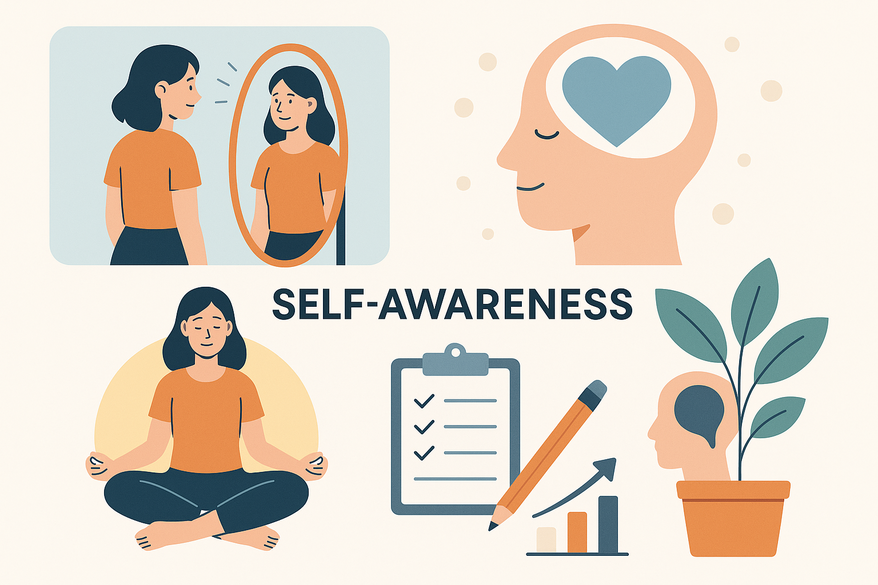
Try these four easy practices today:
- Journaling (5–10 mins/day): Use prompts like “What happened today?” and “What did I feel?” to stay curious, not judgmental.
- Mini Check-Ins (1 min): Pause, breathe, then label sensations: “Shoulders are tight; I feel impatient.”
- Mindfulness Meditation (3–5 mins): Sit, focus on the breath, note “thinking” when thoughts arise, and return to the breath. You can explore more self-awareness meditation techniques to deepen your mindfulness practice.
- Third-Person Perspective Review: After an event, imagine watching yourself in a movie and observe your tone and body language objectively.
Set an intention—“whatever I notice is data, not judgment”—and practice self-compassion when insights feel uncomfortable. If you want to learn more about foundational self-reflection methods, check out this beginner’s guide to self-reflection techniques.
Tools and Resources
Equip yourself with books, apps, and courses:
- Emotional Intelligence by Daniel Goleman – science-backed insights on awareness and emotion control.
- Insight by Tasha Eurich – exercises on internal vs. external self-awareness.
- The Mindful Way Through Depression – learn non-judgmental observation skills.
- Apps like Headspace, Calm, and Insight Timer for guided mindfulness.
- Journaling apps such as Day One or Journey with prompts and mood tagging.
- Habit and mood trackers (e.g., Moodpath, Habitica).
For an engaging way to gather honest insights, check out the Blindspot App, which uses anonymous friend feedback and AI-generated reports to reveal blind spots you might never notice on your own. You can also find a curated list of the best self help books for self awareness to further support your journey. If you're interested in exploring different frameworks for understanding yourself, learning about personality types like MBTI and the Big Five can provide valuable insights into your patterns and preferences.
Overcoming Common Challenges
Four hurdles and how to address them:
- Difficulty observing feelings: Start with body sensations and an emotion-word list.
- Resisting uncomfortable truths: View insights as neutral data and practice self-compassion.
- Fear of judgment: Keep reflections private and pair awareness with acceptance.
- Inconsistency: Make practices tiny (2-minute check-ins) and anchor them to daily habits.
Practicing Consistency and Patience
Self-awareness is a lifelong journey:
- Set realistic goals (e.g., one 3-minute check-in daily).
- Schedule weekly reviews of recurring emotions; monthly reflections on stress points.
- Normalize plateaus—quiet spells often precede breakthroughs.
Patience and steady practice cultivate deep self-understanding over time. If you're just beginning, you might find this gentle beginner’s guide to starting your self-awareness journey especially helpful. For more answers to common questions and tips for newcomers, see our Self Discovery FAQs: A Beginner’s Guide to Self-Awareness & Reflection.
Conclusion
Self-awareness is the ongoing practice of noticing your inner world—and understanding its impact on your life. You now have clear definitions, key benefits, simple techniques, and tools to overcome challenges. Choose one small practice—today’s 3-minute check-in or a brief journal entry tonight—and commit to it for a week. Each moment of honest noticing brings you closer to personal growth, healthier relationships, and wiser decisions. If you want to dive deeper into how others perceive you and bridge the gap between your self-view and external feedback, explore our guide on understanding and bridging the perception gap.
FAQ
- What is self-awareness?
It’s the ability to notice your thoughts, feelings, and behaviors in real time and understand their impact. - How long until I see results?
Even a week of daily check-ins can boost clarity; deeper insights often emerge over months. - Do I need special tools?
No—simple journaling or mindfulness apps are enough to get started. - What if I miss a day?
View it as data—ask what prevented your practice and adapt. There’s no perfect streak.