Introduction to Self-Reflection Techniques: A Beginner’s Guide to Building Self-Awareness
Learn self-reflection techniques to build self-awareness and personal growth. This beginner's guide offers journaling, meditation, and mindfulness exercises.

Estimated reading time: 9 minutes
Key Takeaways
- Self-reflection is the practice of examining your inner thoughts, feelings, and behaviors to make more intentional choices.
- Techniques like journaling, meditation, mindfulness, and guided questions can be easily integrated into daily life.
- Regular self-reflection boosts decision-making, emotional balance, and resilience.
- Consistent habits start small—5 minutes of journaling or a brief breathing exercise can spark lasting change.
- Combining self-reflection with feedback tools like the Blindspot App uncovers hidden growth areas.
Table of Contents
- Introduction
- Section 1: What Is Self-Reflection?
- Section 2: The Role of Self-Awareness in Personal Growth
- Section 3: Beginner-Friendly Self-Reflection Techniques
- Section 4: Step-by-Step Implementation in Daily Life
- Section 5: Benefits of Regular Self-Reflection and Self-Awareness
- Section 6: Practical Examples & Beginner Exercises
- Section 7: Overcoming Common Challenges & Staying Consistent
- Section 8: Summary, Resources & Next Steps
- FAQ
Self-reflection is the intentional practice of turning your attention inward to notice and explore your thoughts, feelings, behaviors, and motivations. It means pausing the “autopilot” of daily life and asking key questions:
- What am I thinking?
- Why am I feeling this way?
- How am I behaving, and does it align with who I want to be?
When you practice regularly, you make better decisions, feel less stress, and choose actions that match your values. This beginner’s guide shows clear steps and tools—journaling, meditation, mindfulness, and question-based exercises—to build insight and turn reflection into a lasting habit.
For many people, combining self-reflection with external feedback can accelerate growth. Try the free Blindspot App to uncover the blind spots between how you see yourself and how your friends see you.
Section 1: What Is Self-Reflection?
Self-reflection starts when you turn your focus inward. In psychology, it’s a key tool for therapy and personal growth. It helps you notice, examine, and learn from your inner world through three core aspects:
- Noticing thoughts
- Examining feelings
- Evaluating behaviors and motivations
Over time, this practice deepens your self-awareness and helps you steer life with more care.
Section 2: The Role of Self-Awareness in Personal Growth
Self-awareness means seeing your emotions, values, strengths, and weaknesses clearly. By reflecting on daily events, you spot patterns that guide better choices. Over time, self-reflection and self-awareness form a virtuous cycle: the more you look inward, the clearer you see your path.
Section 3: Beginner-Friendly Self-Reflection Techniques
Each method invites you to notice thoughts, feelings, and behaviors in a kind, curious way.
1. Journaling
- Prompt-based: “What went well today?” or “What did I learn?”
- Brain-dump: Free-write everything on your mind for 5–10 minutes.
- Gratitude journaling: List 3–5 things you’re grateful for.
Benefits: Helps process events, spot habits, and find areas for change.
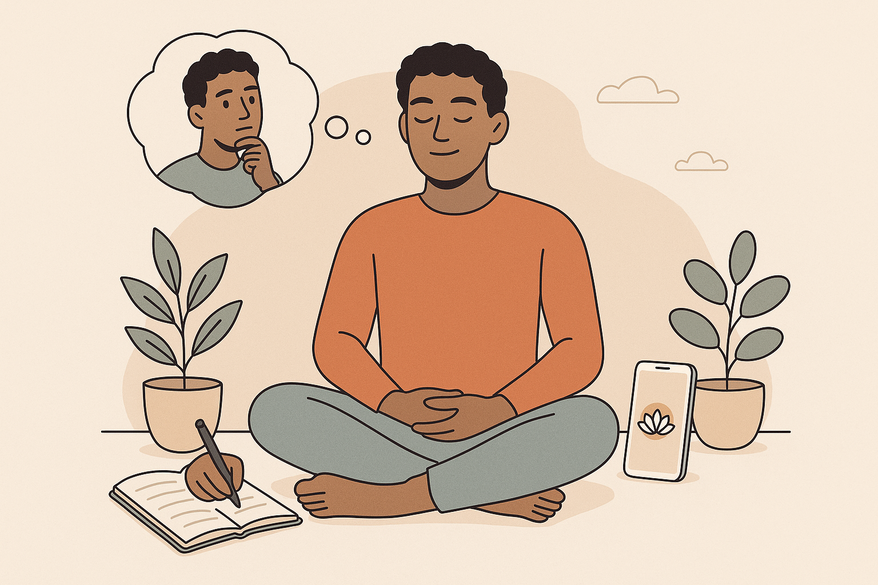
2. Meditation for Self-Reflection
- Sit in a quiet, low-distraction space.
- Close your eyes or lower your gaze.
- Focus on inhalation and exhalation.
- Notice thoughts and emotions; label them, then return to your breath.
- End with a gentle question: “What do I need most today?”
3. Mindfulness Exercises
- Mindful walk: Notice sights, sounds, and body sensations.
- One-word mood check: Pause and name your feeling in one word.
4. Question-Based Self-Reflection
- “Am I doing what makes me happy?”
- “What could I have done differently today?”
- “What am I taking for granted?”
Section 4: Step-by-Step Implementation in Daily Life
Building consistent habits is key. Start small and attach reflection to an existing routine.
A. Daily Journaling Routine
- Time/place: Morning with coffee or evening before bed.
- Prompts: Pick 1–3 simple questions.
- Write for 5–10 minutes with a timer.
- Optional review: Reread after weeks to spot patterns.
For a deeper dive into building your own self-reflection routine, see building your self-reflection routine.
B. Five-Minute Meditation for Beginners
- Follow the 5-step routine above.
- Gradually increase time to 10+ minutes.
C. Mindfulness in Everyday Moments
- Choose an activity: walking, showering, dishes.
- Focus your senses; return mind to the present when it wanders.
- Add a one-word mood check and end with an action question.
To explore more daily self-awareness habits, check out daily self-awareness habits.
Section 5: Benefits of Regular Self-Reflection and Self-Awareness
- Better decision-making by aligning actions with values.
- Emotional balance and regulation through labeling feelings.
- Improved relationships via clearer communication and empathy.
- Greater resilience by learning from challenges.
- Stronger identity and purpose by clarifying who you are.
Section 6: Practical Examples & Beginner Exercises
Exercise 1: Today’s Snapshot (5 min journaling)
- Write the date.
- Answer: What went well? What was difficult and why? What did I learn about myself?
- End: “One thing I’d do differently tomorrow is…”
Exercise 2: One-Word Mood Scan
Pause, ask “What’s my overall feeling right now?” and name it in one word.
Exercise 3: The Five Whys
- Write down a challenge.
- Ask “Why?” five times to reach the root cause.
Exercise 4: Gratitude Walk
- Walk slowly, notice your senses.
- List things you appreciate as you move.
Section 7: Overcoming Common Challenges & Staying Consistent
- “I don’t have time.” → Start with 5 minutes and link it to an existing habit.
- Racing thoughts → Practice self-compassion and focus on actionable insights.
- Self-judgment → Treat reflection as a nonjudgmental safe space.
- Inconsistency → Schedule it like an appointment and keep tools visible.
Section 8: Summary, Resources & Next Steps
Start with one small practice—5-minute journaling, a brief breathing meditation, or a one-word mood check—and build a routine that feels realistic. Approach each session with curiosity and kindness to turn self-reflection into a lasting habit.
Ready to take your self-awareness further? Explore How to Start Your Self-Awareness Journey.
FAQ
What is self-reflection?
Self-reflection is the intentional process of observing your own thoughts, feelings, and behaviors to gain clarity and insight.
How often should I journal for self-reflection?
Aiming for 5–10 minutes daily can build the habit, though even 2–3 times a week can be effective.
How can I stay consistent with these techniques?
Link reflection to an existing routine (e.g., after morning coffee) and treat it like a scheduled appointment.
Are there tools to enhance self-reflection?
Yes—digital apps like the Blindspot App provide feedback and uncover blind spots.