Understanding the Family Identity Test: Definition, Methods, and Benefits
Explore the family identity test to understand roles, perceptions, and dynamics that shape self-awareness and family cohesion. Improve communication and belonging.

Estimated reading time: 7 minutes
Key Takeaways
- Definition: The family identity test maps how relatives view your roles, values, and emotional connections.
- Impact: It influences self-esteem, communication, and a sense of belonging.
- Methods: Qualitative interviews, quantitative surveys, and mixed approaches reveal diverse insights.
- Benefits: Enhances self-awareness, strengthens family bonds, and clarifies hidden dynamics.
Table of Contents
- Section 1: Definition and Scope
- Section 2: Personal Development
- Section 3: Test Methodologies
- Section 4: Psychological and Social Implications
- Section 5: Practical Applications and Stories
- Section 6: Tips for Taking the Test
- Conclusion
Section 1: Definition and Scope of the Family Identity Test
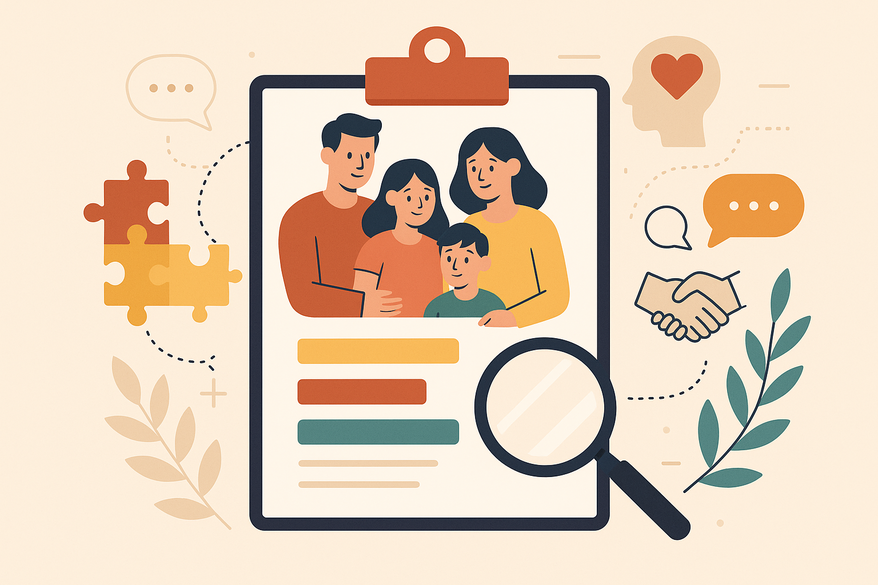
A family identity test is a set of reflective questions, surveys, or exercises that reveal how your relatives perceive your roles, values, communication patterns, and emotional closeness. This tool enables you to compare self-perception with family perception for deeper insight.
- Identify perceived family roles (leader, peacemaker, helper)
- Compare self-perception vs. family perception — see how others see you and bridging the perception gap
- Uncover shared values and expectations
This exercise shines a light on roles and hidden rules in your family system. It’s not a clinical diagnosis but a guided self-discovery tool to strengthen family bonds and personal insight. Source: Psychology Today
Section 2: The Role of Family Identity in Personal Development
Family identity shapes self-esteem, confidence, and a sense of belonging. According to APA family systems theory, “Family relationships are the first mirror in which identity is formed.” Source: American Psychological Association
- Emotional support and expectations anchor self-worth.
- Patterned communication habits guide reactions.
- Role assignments can become self-fulfilling prophecies.
- Deeper self-awareness uncovers strengths and blind spots.
- Improved family communication reduces misunderstandings.
- Stronger sense of belonging boosts emotional well-being.
Understanding your family image quiz helps you see how labels like “responsible one” or “funny one” influence choices and feelings. For a broader perspective on how relatives shape your self-perception, see how family self image feedback affects your identity. You might also find it helpful to explore how personality types and self-discovery play a role in shaping your identity within the family context.
Section 3: Test Methodologies and Approaches
The family identity test uses qualitative, quantitative, and mixed methods to map perceptions.
1. Qualitative Approaches
- Family interviews: Select participants from each generation; prepare open-ended questions; record and transcribe responses.
- Guided reflection prompts: “Describe me in three words.” “Which family tradition matters most to you?”
- Genograms/family maps: Draw a three-generation family tree; label roles and emotional links.
Source: Harvard Family Research Project
2. Quantitative Approaches
- Likert-scale questionnaire: Sample statement: “My family knows the real me.” Rate 1–5.
- Self-rating vs. family-member matrix: Compare your score with each relative.
- Measurement categories: Closeness, role satisfaction, communication quality.
Source: Journal of Social and Personal Relationships
3. Mixed Methods
- Combine a brief survey with follow-up family discussion.
- Step sequence: survey → individual debrief → group dialogue.
Source: Family Process Journal
Section 4: Psychological and Social Implications
The family identity test uncovers hidden family dynamics and brings them into focus.
Hidden Dynamics Revealed
- Authority roles and who makes decisions.
- Conflict mediators vs. peacekeepers.
- Emotional labor bearers and neglected members.
Personal & Social Benefits
- Enhanced self-understanding and fewer blind spots.
- Healthier boundaries and smoother conflict resolution — see our Relationship Boundary Test: Step-by-Step Self-Assessment Guide for more on setting boundaries.
- Stronger family cohesion and realistic expectations.
- Greater emotional clarity and genuine belonging.
Source: Mayo Clinic
Section 5: Practical Applications and Personal Stories
Interpretation Guidance
- Spot recurring themes, not single comments.
- Ask: “Is this role always accurate or situation-specific?”
- Question: “What makes me feel most understood?”
Three Mini Case Studies
- The Peacemaker
Insight: Discovers over-accommodation. Outcome: Sets healthy boundaries, voices needs. - The Overlooked Child
Insight: Family sees them as independent and aloof. Outcome: Shares deeper needs, gains support. - The Achiever
Insight: Feels pressure due to high expectations. Outcome: Learns to separate self-worth from performance.
These stories show how a family identity test can turn vague feelings into clear actions for growth. To explore a hands-on approach to family dynamics, check out this guide on How a Family Perception Quiz Can Transform Your Family Dynamics. If you're interested in understanding the broader context of your relationships, you may also want to read about friendship dynamics and deeper insight, which relates closely to understanding friendship dynamics & self-awareness.
Section 6: Tips for Taking the Family Identity Test
Before the Test
- Define purpose: self-reflection or family discussion.
- Reflective prep: “What role do I think I play?”
- Decide privacy level: solo journaling or group exercise.
During the Test
- Encourage honesty over “right” answers.
- For group sessions: practice active listening.
- Note emotional reactions like surprise or defensiveness.
After the Test
- Analyze patterns, not one-off remarks.
- Hold respectful dialogue; avoid blame.
- Create an action plan: set one new boundary or conversation.
Conclusion
A family identity test is a powerful tool to map how family relationships shape self-understanding and belonging. By defining roles, comparing perceptions, and exploring dynamics, you gain clarity and improve communication.
For a free way to uncover the gaps between how you see yourself and how friends and family see you, try the Blindspot App, which offers quizzes and anonymous feedback to guide personal growth.
Call to Action
Try a self-guided family identity test today or share your experience in the comments. Download our free sample questionnaire or join a family workshop to dive deeper. Embrace the journey to clearer understanding and stronger bonds.
FAQ
What is a family identity test?
A family identity test is a reflective exercise that uncovers how your relatives perceive you, highlighting roles, values, and emotional connections for deeper self-awareness.
Who can participate in the test?
Anyone interested in family dynamics can participate—individually or with relatives across generations to gather diverse perspectives.
How long does it take?
A basic questionnaire can be completed in 10–15 minutes, while a full mixed-method session with discussions may take 1–2 hours.
What should I do with the results?
Review patterns, discuss insights with family members, and create an action plan to improve communication, set boundaries, or reinforce positive roles.