Take the Cognitive Biases Self Test: Reveal How You Really See Yourself
Discover hidden thought patterns with our cognitive biases self test. Uncover systematic distortions in self-perception and improve decision-making.

Estimated reading time: 7 minutes
Key Takeaways
- Reveal hidden distortions: A self-test can expose systematic errors in how you view yourself.
- Five major biases: Confirmation, self-serving, availability, hindsight, and halo/horn shape your self-perception.
- Step-by-step process: Mini-quiz, score interpretation, targeted reflection, and action steps.
- Evidence-based strategies: Journaling, challenging assumptions, diverse perspectives, mindfulness, and experiments.
- Helpful resources: Blindspot App, Johari Window framework guide, and more.
Table of Contents
- Defining Cognitive Biases
- Importance of Self-Assessment
- What Is a “Cognitive Biases Self Test”?
- Step-by-Step: How to Do the Cognitive Biases Self Test
- How to Understand and Use Your Results
- Practical Strategies to Mitigate Cognitive Biases
- Conclusion
- FAQ
Defining Cognitive Biases
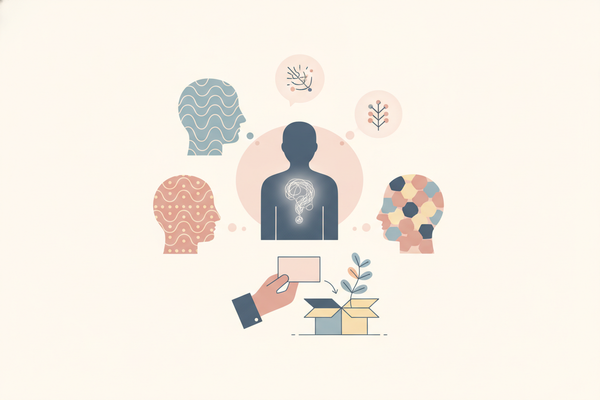
Cognitive biases are systematic errors in thinking that skew how we process and interpret information. When it comes to self-perception, these mental shortcuts can create predictable distortions, tilting your self-image without your awareness. A structured self-test shines a light on these hidden patterns.
- Confirmation bias
– You notice only evidence that matches your self-story. Example: Believing “I’m bad at sports,” you recall every missed goal and ignore your successes. - Self-serving bias
– You credit yourself for wins and blame others for losses. Example: “I aced that project because I’m skilled,” versus “It failed because my teammates slacked off.” - Availability heuristic
– You judge based on what springs to mind. Example: One shaky presentation makes you believe you’re always terrible at public speaking. - Hindsight bias
– You insist you “knew it all along” after an event. Example: After a breakup, you oversimplify and claim you always saw the red flags. - Halo/horn effect
– One trait colors your entire self-evaluation. Example: Struggling in math leads you to see yourself as “not smart” in all areas.
Importance of Self-Assessment
Self-assessment is the cornerstone of personal growth and deliberate choice. By measuring your biases, you gain:
- Better decisions: Avoid skewed risk and reward judgments.
- Healthier relationships: Take accountability instead of deflecting blame.
- Enhanced learning: Embrace feedback rather than ignore it.
- Emotional well-being: Balance negative and positive self-views for accurate self-compassion.
Awareness is the first step toward values-based action instead of autopilot reactions. For a deeper dive into understanding yourself, see our comprehensive guide to self-awareness.
What Is a “Cognitive Biases Self Test”?
A cognitive biases self test is a set of reflective scenarios and questions, usually rated on a 1–5 scale, that brings automatic thought patterns into conscious view. You’ll identify which biases dominate your self-talk and pause before assuming they’re facts.
For another approach, explore our Johari Window framework guide to uncover blind spots from external feedback.
Key components of this self-test:
- Everyday scenarios that feel relevant
- Reflective questions rated 1 (rarely) to 5 (almost always)
- A brief interpretation guide for bias subscores
- Next steps for deeper self-inquiry
Step-by-Step: How to Do the Cognitive Biases Self Test
You’ll need a notebook or digital doc, honesty, and about 15 minutes. There’s no pass/fail—only insight.
Step 1: Rate Your Reactions (Mini-Quiz)
For each statement, circle how often it feels true: 1=Rarely … 5=Almost always.
If you’re interested in a quick way to spot your own self-perception distortions, try our Self Perception Bias Quiz for Honest Self-Reflection for additional insight.
Step 2: Review Your Scores by Bias
Group Q1–3 for confirmation bias, Q4–6 for self-serving bias, and so on. Add each trio for a subscore (3–15) to see which biases are strongest.
Step 3: Interpret Your Patterns
- 3–6 (low): This bias plays a smaller role.
- 7–11 (moderate): Influences you sometimes.
- 12–15 (high): Shapes your self-perception strongly.
Step 4: Reflect with Targeted Questions
Pick your top bias and answer two prompts to translate scores into actionable insight. For more on how your self-view may differ from how others see you, read about bridging the perception gap.
How to Understand and Use Your Results
Your scores are starting points for curiosity, not diagnoses. Everyone has biases; high scores simply show where to focus growth. Gathering outside perspectives matters—see our best practices for gathering honest feedback from friends.
If self-reflection feels overwhelming, consider professional support or share insights with a trusted friend or mentor to build accountability and compassion. You might also benefit from exploring advanced self-reflection exercises for personal insight to deepen your understanding.
Practical Strategies to Mitigate Cognitive Biases
Use these proven methods to reduce bias impact:
- Reflective Journaling – Label events, thoughts, and suspected biases to reveal patterns.
- Challenge Assumptions – Ask “What evidence am I ignoring?” to counter confirmation bias.
- Seek Diverse Perspectives – Invite input from colleagues, family, and friends.
- Mindfulness Practices – Pause or meditate before key decisions.
- Test Disconfirming Evidence – Run small experiments to validate or refute your strong beliefs.
Conclusion
Self-assessing your cognitive biases empowers you to make wiser decisions, forge stronger relationships, embrace continuous learning, and cultivate genuine self-compassion. Start with the mini-quiz above, interpret your results, and commit to one mitigation strategy—such as journaling or mindfulness—to rebalance your self-view. Small, consistent steps in bias awareness fuel meaningful growth. To further explore how personality frameworks can aid your journey, check out our complete guide to MBTI, Big Five, and self-discovery.
For an app-based solution that packages quizzes, anonymous friend feedback, AI insights, and progress tracking, explore The Best Self Awareness App 2026: Your Ultimate Guide to Personal Growth.
FAQ
- What if I score high on multiple biases?
Focus on one bias at a time. Use the targeted reflection questions for your top score and apply one mitigation strategy before moving to the next. - How often should I retake the self-test?
Aim to repeat it every 3–6 months or after major life changes to track your progress and adjust strategies. - Can I eliminate biases completely?
Biases are universal mental shortcuts. The goal is not elimination but awareness and management—so they inform rather than dictate your self-perception. For a deeper understanding of how these mental shortcuts shape your self-image, explore the ultimate guide to self-perception and personality.